

Audio By Carbonatix
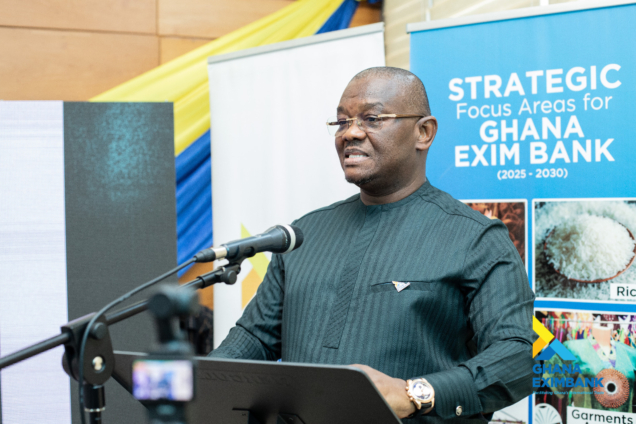
The Chief Executive Officer of the Ghana Export–Import Bank (Ghana EXIM Bank), Mr Sylvester Mensah, has assured that the bank has been fundamentally repositioned to play a leading role in reducing Ghana’s heavy import bill on rice and poultry, while driving export-led growth under the new administration.
Addressing Ghanaian journalists at the Bank’s end-of-year gathering on Tuesday, December 23, Mr Mensah gave a detailed account of the institution’s condition at the time the new government assumed office and outlined the strategic reset underway to restore the Bank’s mandate as a development finance institution.
He disclosed that as of December 31, 2024, Ghana EXIM Bank faced serious structural and governance challenges, including weak internal controls, high concentration risk, and a loan portfolio burdened by non-performing loans (NPLs). Gross loans stood at about GH¢1.5 billion, with just 30 borrowers accounting for nearly 80 per cent of total NPLs.

According to him, 18 of those borrowers were fully disbursed but had refused to repay, while 12 were partially disbursed. He attributed the situation to poor risk management, weak collateral structures, breaches of loan conditions, and what he described as “dysfunctional management decisions” in the past.
Mr Mensah said the new management responded by rolling out a comprehensive Reset Agenda to fix legacy weaknesses, restore discipline in lending, strengthen governance, and refocus the Bank on impact rather than loan volumes.
“We have reset Ghana EXIM Bank to focus on what truly matters — building productive value chains, supporting import substitution, expanding exports and creating jobs,” he said.
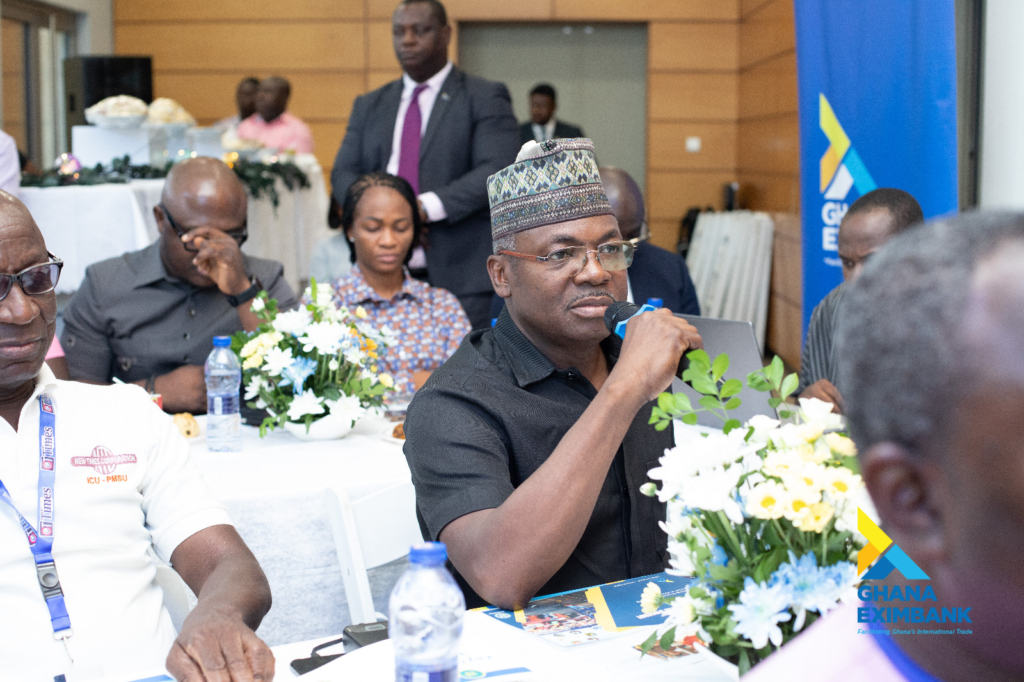
Central to the reset is a strategic shift away from scattered financing towards priority sectors with the highest economic impact. Mr Mensah said the Bank is now concentrating on rice, poultry, apparel and selected non-traditional exports such as oil palm, cashew, shea and cocoa processing.
He explained that rice and poultry were deliberately prioritised because of their significant contribution to Ghana’s import bill. Under the Bank’s five-year export-led growth strategy (2025–2030), Ghana EXIM Bank is targeting a 40 to 50 per cent reduction in rice and poultry imports within five years, alongside more than 50 per cent growth in domestic food production.
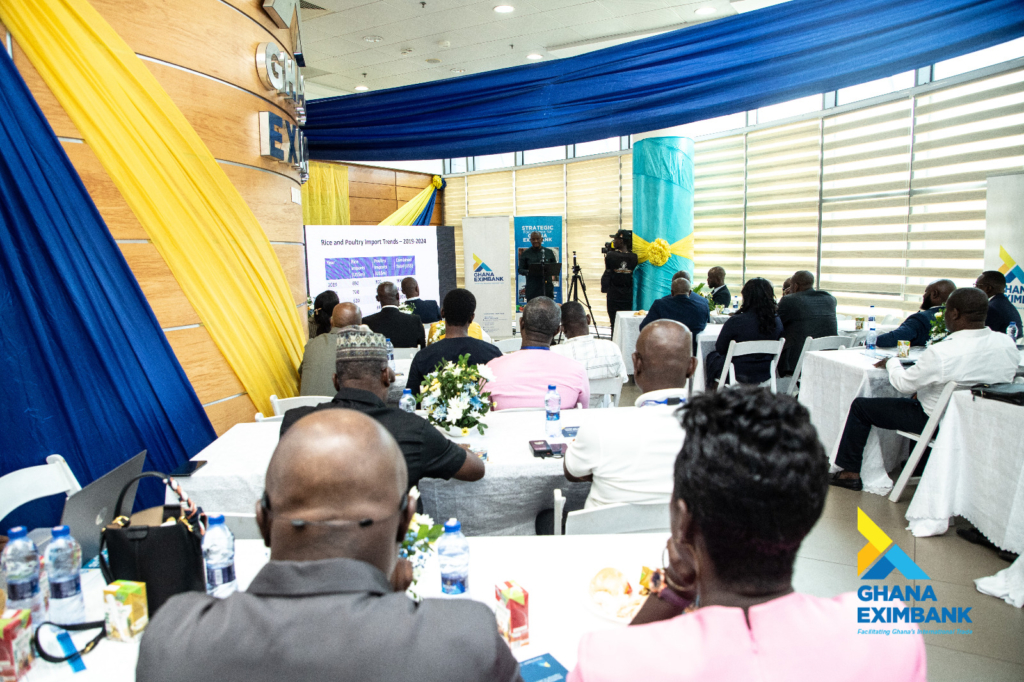
To achieve this, the CEO said lending is now aligned with production cycles, with phased and milestone-based disbursements to minimise idle funds and execution risk. The Bank has also tightened credit appraisal processes, introduced new policy guidelines and a Code of Ethics, and strengthened audit, risk and internal control functions.
On legacy loans, Mr Mensah said partially disbursed facilities are being restructured, while fully disbursed loans are being pursued through recovery and legal processes, with some cases referred to state agencies.
Beyond agriculture, he said the Bank is positioning itself to support Ghana’s participation in the African Continental Free Trade Area (AfCFTA), with a strong focus on garments and agro-processing to drive exports and earn foreign exchange.
Looking ahead, Mr Mensah disclosed that Ghana EXIM Bank is targeting over US$1 billion annually in agro-export earnings from non-traditional exports, the creation of more than 100,000 jobs across key value chains, and a gradual but sustained reduction in non-performing loans.
He added that governance reforms are also underway to deepen collaboration with the Ministry of Finance and the Bank of Ghana, while legal reforms are being considered to place the Bank under dual oversight to enhance accountability.
“By strengthening domestic production of rice and poultry, supporting SMEs and expanding exports, Ghana EXIM Bank will help improve food security, reduce food inflation, boost foreign exchange inflows and support cedi stability,” Mr Mensah assured.
He stressed that the reset is already yielding results and that by 2026, the Bank expects stronger loan performance, improved sustainability and a clearer development impact aligned with national economic priorities.
Latest Stories
-
Health Ministry engages Ga Mantse ahead of Free Primary Healthcare launch
12 minutes -
We can tackle multiple priorities – Sam George defends Anti-LGBTQ Bill push
47 minutes -
Statement: Ghana Chamber of Mines’ Response to Claims in Joe Jackson’s “Ananse Stories about the Economy of Ghana”
49 minutes -
GES opens 2026 teacher recruitment for licensed B.Ed graduates
51 minutes -
Ghana must value skilled trades, build resilient learners — Ibn Chambas
59 minutes -
Ghana must rethink education around relevance, resilience and responsibility — Ibn Chambas
1 hour -
Prince Harry faces defamation lawsuit from charity he co-founded
1 hour -
South Korea deploys thermal cameras to track escaped zoo wolf
1 hour -
Calls for royal meeting with Epstein survivors grow ahead of US visit
1 hour -
Ibn Chambas advocates blend of technology and human values in education
1 hour -
UMA improves healthcare access in Asutifi North with GH₵700k ‘Kim Taylor Legacy’ Walkway
1 hour -
Scholarships Authority and Fanaka University offer sponsorship for procurement and supply chain studies
1 hour -
Bisa Kdei drops new single ‘Go N Look’ featuring Medikal
1 hour -
Benin facing rising terrorism in north as French military presence faces growing criticism
1 hour -
UEW Public Lecture Series 2026: Education debate ‘about the soul of Ghana’s future’ — Dr Ibn Chambas
1 hour