

Audio By Carbonatix
Ghana will begin refining one metric tonne of gold locally each week from February 2026, following a landmark agreement between the Ghana Gold Board and Gold Coast Refinery Limited aimed at strengthening value addition in the country’s gold industry.
The initiative represents a major policy shift from exporting gold in its raw form to processing it domestically, a move expected to increase export earnings, retain refining fees within the local economy and create additional jobs.
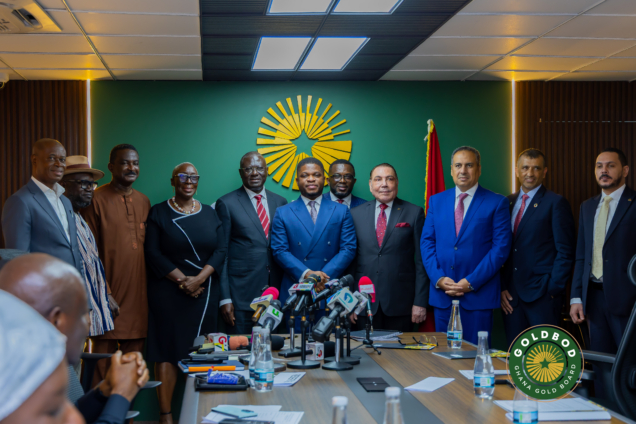
Speaking at the signing ceremony on Tuesday, January 20, Chief Executive Officer of the Ghana Gold Board, Sammy Gyamfi, described the agreement as a turning point in the management of Ghana’s mineral resources.
“This is a historic step that will fundamentally change how we manage our gold resources, especially in terms of value addition and full optimisation,” he said.
Under the agreement, up to 1,000 kilogrammes of gold exported by the Gold Board will be refined locally each week, with plans to gradually scale up production towards full local refining of Ghana’s gold exports.
Mr Gyamfi explained that the decision followed concerns that Ghana continued to export almost all its gold unrefined, despite having local refining capacity.
“It is worrying that nearly all the gold we export leaves the country in its raw state, even when we have the facilities to refine locally,” he noted.
He added that the policy direction was guided by President John Mahama’s vision to move Ghana from resource extraction to full value optimisation.
The agreement also gives the Republic of Ghana a 15 per cent free carried interest in Gold Coast Refinery, held by the Ghana Gold Board on behalf of the state, making the government a direct stakeholder in the refinery.
According to Mr Gyamfi, the partnership will ensure refined gold meets a minimum purity of 99.5 per cent, with capacity for higher international standards, while also attracting technical support from Rand Refinery of South Africa to help Ghana work towards London Bullion Market Association accreditation.
Beyond value addition, the deal is expected to retain millions of dollars in refining fees locally, boost tax and dividend revenues, support 24-hour refinery operations and strengthen Ghana’s position in the global gold value chain.
Latest Stories
-
At least 30 feared dead in crush at Haitian tourist site
1 hour -
Four arrested over murder of Scottish businessman in Kenya
1 hour -
New Mainoo deal closer, says Man Utd boss Carrick
1 hour -
Sinner beats Alcaraz to return to world top spot
2 hours -
An inappropriate joke nearly ended his career. Now he’s back with more humour
2 hours -
GPL 2025/26: Dreams FC stage stunning comeback to hammer Eleven Wonders
3 hours -
Livestream: The Probe examines Kumasi’s looming water crisis
3 hours -
MTN Ghana gears up to lead Africa’s AI revolution
3 hours -
Philanthropist Alhaji FuZak donates Da’wah bus to Ambariya Sunni community
3 hours -
GUTA calls for suspension of Publican AI system over trade disruptions
3 hours -
TTAG raises alarm over proposed recruitment of 7,000 teachers, demands national posting roadmap
4 hours -
Civilians feared killed after reports of air strike on Nigerian market
4 hours -
Bishop Simon Kofi Appiah installed as new Jasikan Diocese Bishop
4 hours -
Trump’s Strait of Hormuz blockade threat raises risks and leaves predicaments unchanged
4 hours -
US Court backs extradition of former MASLOC CEO Sedina Tamakloe-Attionu to Ghana
4 hours