

Audio By Carbonatix
The Minister for Energy and Green Transition, John Abdulai Jinapor, has disclosed that the government has successfully reached a new agreement with Independent Power Producers (IPPs), expected to save the country about US$300 million.
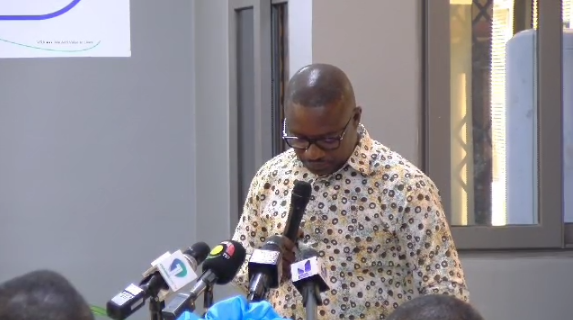
Speaking during an engagement with officials of the Volta River Authority (VRA) as part of a working visit, the minister underscored the need to depoliticise the energy sector, describing it as a critical national asset that requires unity and professionalism rather than political rivalry.
Mr Jinapor explained that while the previous administration made some progress in renegotiating IPP contracts, the current government has further improved the terms to secure greater benefits for the nation.
“So far, this sector is experiencing some significant progress,” he said. “We’ve negotiated with the IPPs, and based on the numbers I’m seeing, I’m confident that we can save a lot of money. So far, what the IPP renegotiating team has done tells me that we are saving about 300 million US dollars from the IPPs.”
Mr Jinapor commended the efforts of the previous government in initiating the process, noting that energy challenges must be approached as a shared national responsibility rather than a partisan issue.
“The previous administration did their bit. We’ve also come to improve on it—and that is what we ought to be doing,” he said. “It’s not always about politics. Let’s sometimes put the nation’s interests first. If we do it, we do it for Ghana. I don’t care about your political affiliation as you sit here. Before the next four years, let’s put VRA first, let’s put Ghana first, and let’s work together to turn around this sector.”
The minister expressed concern about the growing financial burden in the energy sector, revealing that this year’s GH¢28 billion allocation is being used primarily to clear energy sector shortfalls rather than to fund new investments.
“This year’s budget is giving us 28 billion, not for investments, but to pay energy sector shortfalls,” he cautioned. “If it continues like that, next year will be 35 billion. If we don’t stop it, what it means is that eventually energy sector shortfalls alone will consume the whole budget.”
Mr Jinapor further noted that the high cost of IPP payments over the years could have been better utilised to expand the VRA’s generation capacity, which would have allowed Ghana to produce and sell power more affordably.
"If you do the economics, and today you look at how much we pay to IPPs every month, if we're taking a bold decision and decide that, look, the tariffs we are charging today, let's escrow those amounts into an account, we're talking about 70 million every month, US dollars.
"That is on the back of the envelope: 700, 140, 840 million dollars every year, not cedis, multiply the number of years the IPPs have been operated. Don't you think that if we had escrowed this money, we could have built more thermal plants with VRA and sell the power at a cheaper price?"
He also criticised the inconsistency in tariff policies that favour private power producers over state-owned utilities.
“But the reality is that we all pretend. But when it's IPPs, we are compelled to charge the tariffs. We are compelled to collect the money. So why can't we do the same with VRA?”
Latest Stories
-
A source of excellence across generations – Vice President Opoku-Agyemang lauds Mfantsipim
19 minutes -
(Photos) Mfantsipim School launches historic 150th anniversary
42 minutes -
Knights and Ladies of Marshall group backs Catholic Bishops’ stance on anti-LGBTQ+
2 hours -
Bright Simons writes: All the Filla in the Ibrahim Mahama/E&P – Gold Fields Saga
2 hours -
Monetise Idiocy In Ghana
2 hours -
The Ghanaian prophet and the mysterious death of his scottish wife Charmain Speirs
3 hours -
Nearly 400 sentenced in Nigeria for links to militant Islamists
3 hours -
Ghana’s recovery supported by gold strength despite global oil price pressures – Standard Bank Research
3 hours -
Methodist Church hails Mfantsipim@150; calls for “fresh consecration” to excellence
4 hours -
‘Excellence is our inheritance’ – Nana Sam Brew-Butler hails Mfantsipim’s 150-year reign in leadership
4 hours -
Kwaku Azar writes: A-G vs OSP
4 hours -
Mfantsipim–Adisadel rivalry built excellence, not division – Sam Jonah
4 hours -
Vice President launches Mfantsipim’s 150 years of shaping Ghana’s greatest mind
5 hours -
I assure Otumfuo, Mahama will join him to commission KNUST Teaching Hospital by end of this year – Haruna Iddrisu
5 hours -
Barcelona dominate derby to extend La Liga lead
6 hours