

Audio By Carbonatix
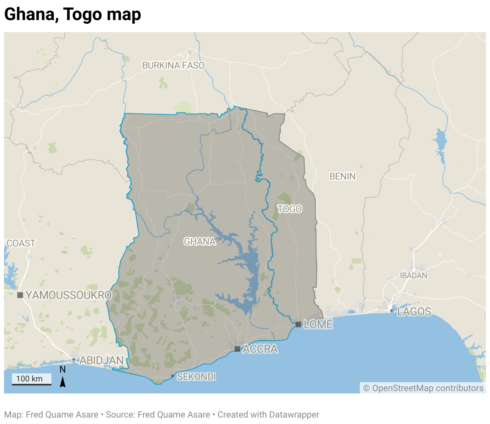
The Ghana and Togo governments have come to a consensus to reaffirm their international borderlines to indicate a clear demarcation of the land borders of both countries.
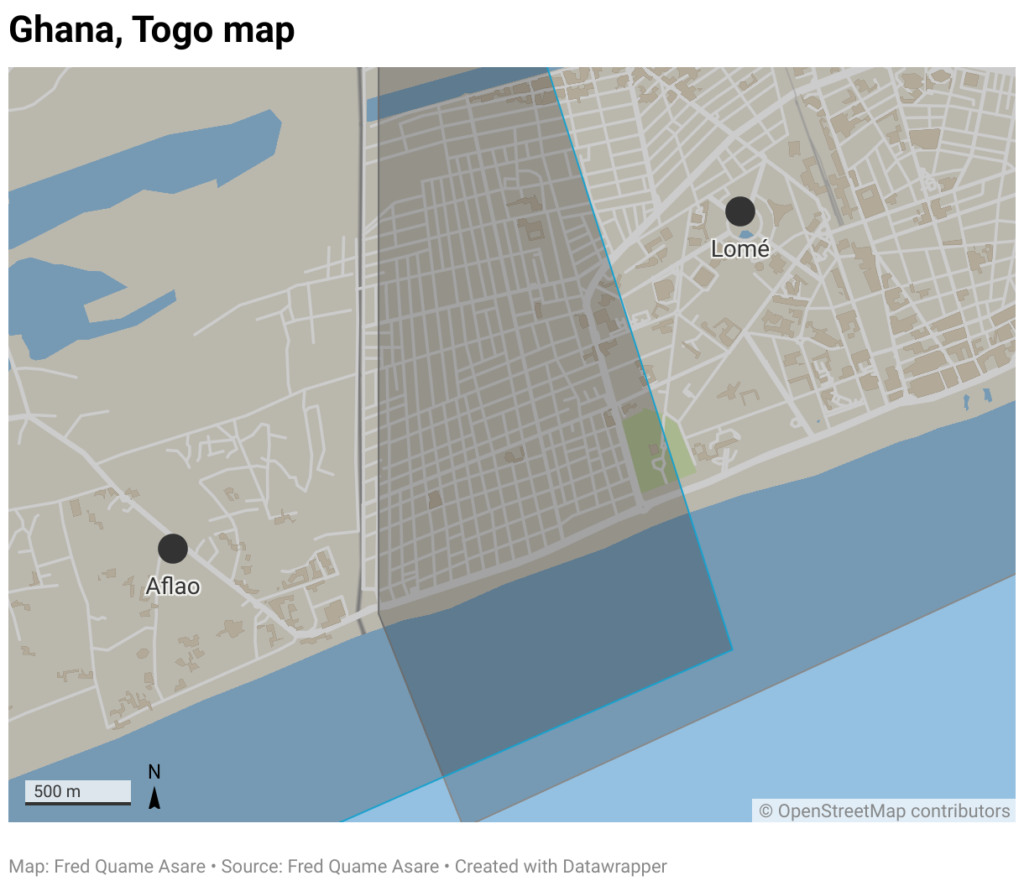
With support from the GIZ-Africa Union Border Programme (AUBP), 50 international boundary pillars would be constructed along the international boundary lines from Aflao to Akanu in Ghana and from Lome to Noepe in Togo.
This forms the first phase of the reaffirmation exercise.
Pillars were first erected on the international boundary lines of Ghana and Togo in the West African Subregion in 1929 and modified in 1975.
However, human and natural activities have eroded or blurred most of the pillars erected on the international boundary lines.
In line with this, both countries saw the need to reaffirm the International boundary lines, clearly indicate the land borders, help security officials identify their limits, and prevent land encroachment.
A Joint Land Boundary Reaffirmation Technical Committee has thus been constituted, tasked to undertake the reaffirmation exercises.
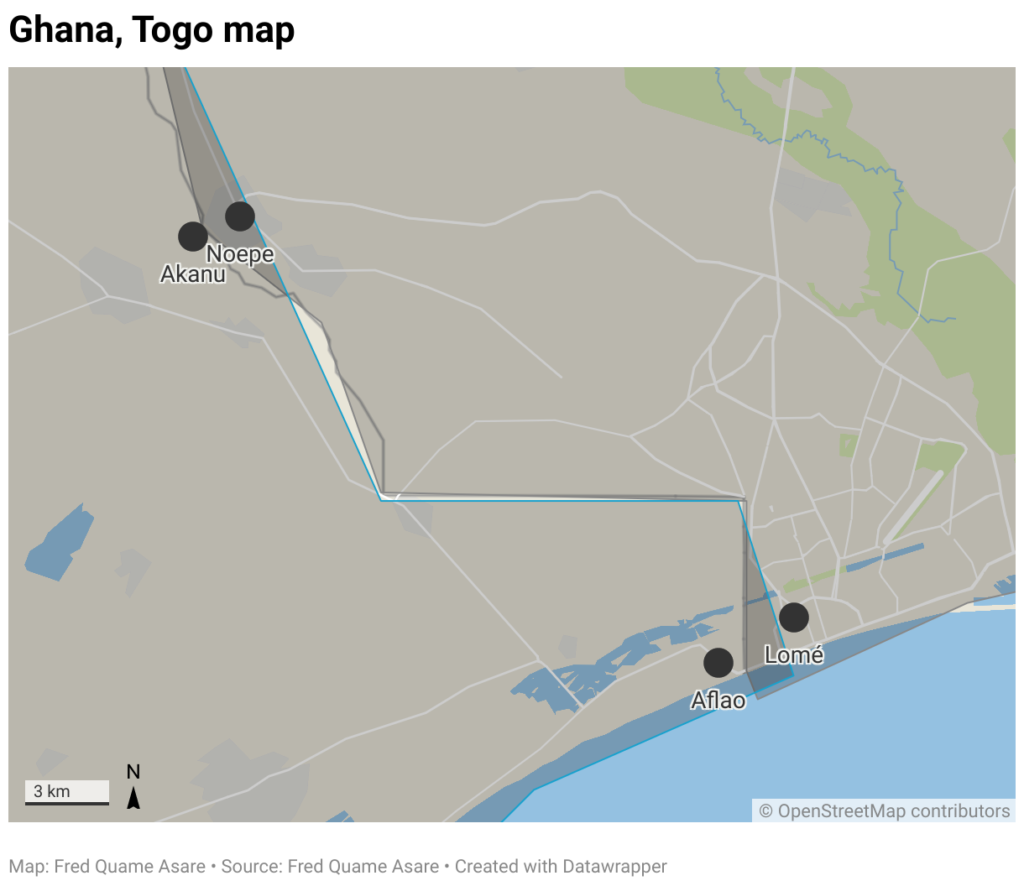
As part of the exercise, the Committee would undertake a sensitisation programme in Ghana and Togo, launch and supervise the construction of 50 international boundary pillars, from Aflao to Akanu in Ghana and from Lome to Noepe in Togo.
Speaking at the sensitisation programme in Aflao, The German Ambassador to Ghana, HE Daniel Krull, detailed that the German government, through the GIZ-Africa Union Border Programme (AUBP), supported the exercise with the sole aim of preventing conflict.
He said they hoped that the historic initiative would impact residents' livelihoods in border communities.
The National Coordinator of the Ghana Boundary Commission, Major General Emmanuel Kotia, detailed that four kinds of international boundary pillars would be erected.
He said the Main Pillar (Pillar 1) would be erected at the Aflao/Lome Border, which “terminates into the maritime domain.”
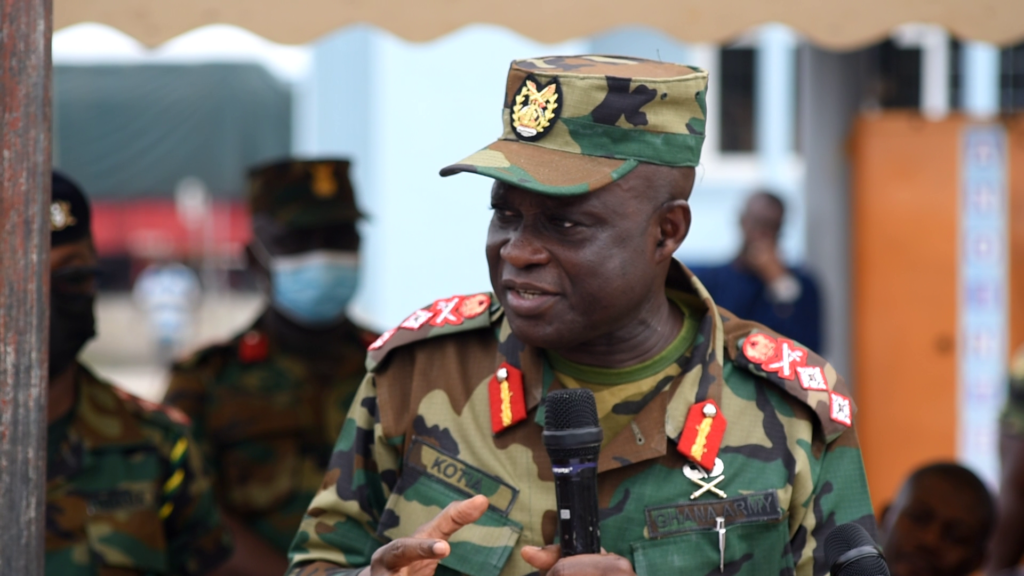
He added that there are three main boundary pillars between Aflao and Amani with intermediary pillars.
“We have introduced another new dimension; probably this is the first time we are introducing it in Africa between Ghana and Togo.”
He said the pillars help border security officials determine the boundary pillar and crossing points, “irrespective of the intermediary boundary pillar or the main pillar”.
The Volta Regional Minister, Dr Archibald Letsa, underscored the importance of the boundary reaffirmation exercise.
He detailed that the international boundary lines must be reaffirmed to prevent conflicts between residents in the border communities, who share similar ethnic groups and the same cultural values and traditions.
“The joint reaffirmation of the international boundary lines will also serve as a tool for safeguarding the peace and security of both Ghana and Togo, considering the nature of emerging security threats emanating along the West African Regain.”
The Representative of the Togolese Local Government Minister, Bakai Baoebadi, assured of the corporation and support of the Togolese government towards the success of the exercise.
Citizens along the boundaries were urged to report activities that may threaten the existence of the International boundary pillars.
The Joint Land Boundary Reaffirmation Technical Committee would undertake the construction of the 50 international pillars between 12th and 28th May 2022.
Latest Stories
-
GAUA to consult members before deciding whether to suspend two-month university strike
40 seconds -
Moody’s upgrades Ghana’s credit ratings to B3, but changes outlook to stable
7 minutes -
‘I want to raise well-rounded individuals, not just men’ – Kate Addo on parenting boys
11 minutes -
Yaa Konadu Agyeman’s ‘Exceptionally Yours’ is the perfect romance read for the holiday season
20 minutes -
‘You have to man up’ – Kobby Kyei on the hidden cost of silence for Ghana’s boys
24 minutes -
DVLA extends regional office hours to 10pm under 24-Hour Economy
28 minutes -
‘Ghanaians are becoming like Kweku Ananse’ – Agyinasare warns against culture of lies
29 minutes -
‘The nation failed us’ – Okada Riders’ PRO defends young riders caught between survival and the law
30 minutes -
DVLA plans demerit point system, real-time monitoring of testing stations
31 minutes -
Health Committee Chair lauds NHIA’s swift disbursement of insurance claims
31 minutes -
Okada Association says it’s preparing training centre as gov’t works on new regulations
32 minutes -
Imperial General Assurance backs Team Auto Racing Ghana ahead of historic Angola showrun
40 minutes -
Before they failed the BECE, did Ghana fail them?
41 minutes -
Photos: Mahama swears in Emelia Afi Agbenyo, Joseph Kwaku Asamoah as EC Deputy Commissioners
43 minutes -
Centre for CSR, West Africa partners with Climate x Culture Summit to champion corporate sustainability at Google AI Centre
49 minutes