

Audio By Carbonatix
Ghana’s building construction sector recorded a further slowdown in inflation in November 2025, offering relief to contractors, developers and households, amid easing cost pressures.
According to the latest Prime Building Cost Index (PBCI) released by the Ghana Statistical Service (GSS), overall building construction inflation declined to 5.9% in November 2025, down from 7.8% in October 2025. This marks the seventh consecutive month of decline in construction inflation.
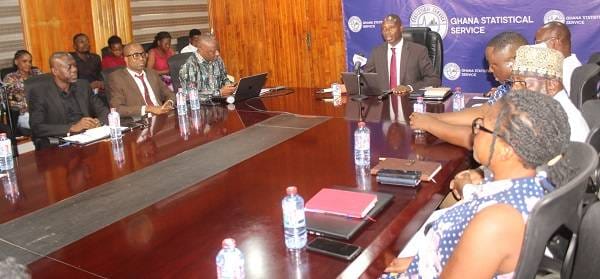
The data was presented in Accra by Omar Seidu, Acting Deputy Government Statistician, who highlighted improving cost conditions across key components of the construction industry.
Despite the year-on-year slowdown, the overall prices of building inputs rose marginally by 0.4% month-on-month between October and November 2025, reflecting moderate price adjustments within the sector.

Labour and Materials Costs Ease
The report showed a significant easing in labour-related pressures. Year-on-year labour inflation fell sharply to 12.7% in November 2025, from 13.7% in October 2025. On a month-on-month basis, labour prices increased by 2.6%, suggesting continued demand for skilled labour, albeit at a slower pace.
Materials inflation also showed improvement. Year-on-year materials inflation declined to 4.2% in November 2025, down from 6.3% in October 2025, while materials prices recorded a slight 0.1% decrease month-on-month.
Similarly, inflation for plant slowed, with year-on-year plant inflation easing to 5.3%, from 7.0% in October 2025. However, plant prices declined by 0.7% month-on-month, indicating reduced short-term cost pressures in that category.
Equipment Records Highest Inflation
At the sub-group level, the report revealed mixed trends. Equipment recorded the highest inflation rate at 15.2%, reflecting continued cost pressures in machinery and tools used in construction.
In contrast, reinforcement materials recorded the lowest inflation rate of minus 7.3%, suggesting falling prices for key inputs such as steel reinforcement.
Outlook for Construction Sector
The sustained decline in construction inflation is expected to support ongoing infrastructure projects, private real estate development and housing affordability, particularly if the trend continues into early 2026.
The Ghana Statistical Service noted that the Prime Building Cost Index remains a critical tool for monitoring cost movements in the construction industry and guiding policy, investment and contract adjustments.
Latest Stories
-
Ecowas Bank for Investment and Development targets SMEs in Ghana with fresh funding for 2026
43 seconds -
A-Plus claims independent candidates can defeat NPP, NDC with strong organisation
26 minutes -
A-Plus backs Mahama’s leadership but rejects NDC label
30 minutes -
Ghanaian women divided over natural and permed hair choices
32 minutes -
Supreme Court to launch month-long 150th anniversary events
33 minutes -
Volta chiefs condemn EOCO over alleged disregard for court ruling in Kwamigah-Atokple case
34 minutes -
Ghana steps up fight against banana, plantain diseases
35 minutes -
Women farmers need tailored pensions – Zanetor
39 minutes -
MP, MCE provide street bulbs and solar panels to lighten Evaloe Adjomoro-Gwira constituency
41 minutes -
ECG upgrades infrastructure, assures reliable, stable power supply
42 minutes -
Aggrieved cocoa farmers urge Parliament intervention
48 minutes -
Ghana launches first maternal mental health policy
51 minutes -
Mahama issues three calls to action at One Health Summit
56 minutes -
KNUST secures $2.3m funding for research activities
1 hour -
Ayigboe residents fear disaster as ECG delays repairs on live faulty cables
1 hour