

Audio By Carbonatix
Ghana’s cocoa sector, long regarded as a pillar of the national economy, is facing a deepening crisis marked by funding shortfalls, weak sales strategies, policy inconsistencies, and political interference, the Licensed Cocoa Buyers Association of Ghana (LICOBAG) has warned.
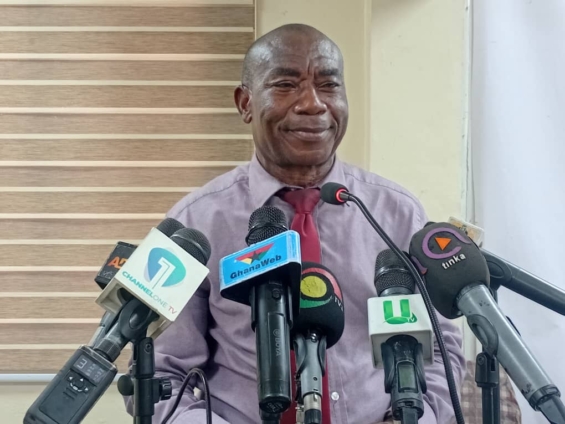
At a press conference in Accra on Thursday, February 5, LICOBAG Executive Secretary Victus Dzah said the industry—particularly the post-harvest segment from the farm gate to the terminal stage—is in a fragile state and could collapse if urgent corrective measures are not taken.
“We invited you this morning for a conversation on current developments in the cocoa value chain, which, if not addressed seriously, will collapse the industry,” Mr Dzah said, explaining that the Association had repeatedly sought engagement with the Ghana Cocoa Board (COCOBOD) without success.
According to LICOBAG, the most critical challenges confronting the sector are funding constraints, a flawed sales strategy, a lack of commitment to structural reform, and excessive political interference.
On funding, Mr Dzah described a sector under severe financial strain since the 2023/2024 cocoa season, following COCOBOD’s failure to secure its traditional syndicated financing facility.
“Instead of the usual annual syndication of about US$1.3 billion or more, COCOBOD was only able to raise a paltry US$500 million, and that was secured six months after the opening of the season,” he said.
This shortfall, LICOBAG explained, forced Licensed Buying Companies (LBCs) to pre-finance cocoa purchases through commercial banks at extremely high interest rates, with the Ghana Reference Rate standing at 29.8 per cent at the time.
“COCOBOD made its first payment for cocoa delivered to port on 26 January 2024, six clear months after deliveries, while LBCs had already paid farmers in full,” Mr Dzah noted.
He said the delay plunged many buying companies into unsustainable debt, leading to the collapse of several firms—a situation that persists as promised compensation for high financing costs has not materialised.
The crisis worsened in the 2024/2025 season when COCOBOD was unable to raise any syndicated facility at all, prompting the introduction of the so-called 60/40 funding model. While the model eased short-term cash flow pressures, LICOBAG said it created new distortions.
“COCOBOD no longer controls funding to the industry because it has no funds of its own, effectively reducing it to a moderator in client–LBC partnerships,” Mr Dzah said.
He said the consequences included stranded LBCs without funding, a lack of off-takers for cocoa stocks, delayed payments for cocoa delivered to port, and increased smuggling due to inadequate financing.
The continuation of the funding model in the 2025/2026 season, revised to an 80/20 structure, has also failed to stabilise the market, with many clients halting purchases by November, the peak of the season.
Turning to sales strategy, LICOBAG blamed COCOBOD, the Cocoa Marketing Company (CMC), and traders for failing to align pricing and sales decisions with market realities.
“Why should we move from a period of roll-overs in one season because COCOBOD could not deliver on contracts, to a situation where we cannot buy cocoa produced by farmers because our pricing mechanism is not competitive enough?” Mr Dzah asked.
He argued that traders failed to sell aggressively when global prices were favourable, despite credible intelligence warning of an impending surplus and a fall in terminal market prices.
The fallout, he said, has been severe: cocoa delivered to port since December 2025 remains unpaid; stocks in upcountry warehouses have not been settled; and farmers are holding unsold cocoa, some stored in fertiliser bags with serious quality risks.
Mr Dzah further disclosed rising tensions at the grassroots, including reports of farmers arresting purchasing clerks for failing to pay for cocoa already bought.
Beyond operational challenges, LICOBAG accused successive governments of lacking genuine commitment to revamping the cocoa industry.
“Various governments took loans to revamp the industry, but these efforts were largely cosmetic, while the core structural problems remained,” Mr Dzah said.
He cited policy inconsistencies, the collapse of cocoa think-tanks with changes in government, and the misapplication of funds meant for industry reform, warning that without a paradigm shift, the cocoa sector risks being overtaken by illegal mining.
LICOBAG also decried what it described as excessive political interference at COCOBOD, saying the institution has gradually lost its professionalism and institutional memory.
“Since 2013, COCOBOD has become a dumping ground for political foot soldiers,” Mr Dzah said, adding that sweeping personnel changes with every change of government have eroded morale and service delivery.
To stem the decline, the Association proposed a series of reforms, including a review of the current funding model, the establishment of a limited seed fund to support LBCs, emergency financing to pay for an estimated 300,000 metric tonnes of cocoa, and the ring-fencing of funds meant strictly for cocoa purchases.
LICOBAG also called for an urgent determination of the farmgate price, improved sales oversight, enhanced professional capacity at CMC, divestment from non-core COCOBOD activities, stronger engagement with stakeholders, and the fast-tracking of a new pricing mechanism law.
Mr Dzah maintained that with decisive, non-partisan action, Ghana’s cocoa sector can still be rescued.
“If serious efforts are made beyond rhetoric and theatrics, the industry can be realigned and restored to its glorious days,” he said.
Latest Stories
-
Church of Pentecost supports over 2,000 BECE candidates in Obuasi with career guidance seminar
58 minutes -
Brandon Asante and Coventry all but promoted to Premier League despite Sheffield Wednesday draw
1 hour -
GPL 2025/26: Late Kwartemaa strike downs Hearts in Tema
1 hour -
Ghana Faces Sierra Leone Moment as Prosecutorial Powers come under strain
2 hours -
Don’t consume fish or seafood from Tema Shipyard until further notice – FDA warns
2 hours -
Why volunteering might be Africa’s most underrated career accelerator
2 hours -
ActionAid Ghana raises concern over gender gaps in Feed Ghana Programme
2 hours -
Windstorm wreaks havoc in Gushegu, displacing nearly 2,000 residents and damaging schools
2 hours -
Friends of Bridget Bonnie Marks her 35th birthday with donation to Kasseh Model Health Centre
3 hours -
From Ekumfi Kokodo to the Pulpit Stage: Essi Donkor’s gospel journey takes shape
3 hours -
Landfilling waste management creates no value, it’s an economic waste
3 hours -
Photos: Speaker Bagbin Commissions MPs constituency office under parliamentary decentralisation programme
3 hours -
Black Stars technical advisor Winfried Schäfer sacked as GFA shakes up backroom staff
3 hours -
Wenchi water project almost complete, critical to gov’t agenda – GWL MD
4 hours -
Anti-LGBTQ+ bill not part of government’s legislative agenda – Inusah Fuseini
4 hours