

Audio By Carbonatix
Agriculture remains the backbone of Ghana’s economy, employing more than 30 per cent of the population. Yet for many young people, it is still seen as a last resort rather than a field of innovation and prosperity. If Ghana is to achieve food security, resilience, and inclusive growth, this perception must change. The future of our food systems depends on how effectively we empower youth to lead the transformation.
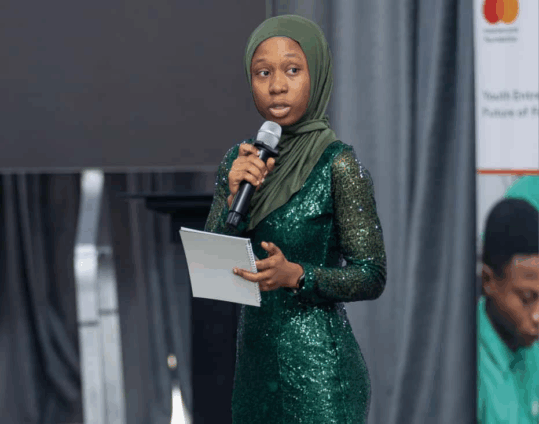
Across Africa, a new generation is reimagining agriculture. From digital platforms to climate-smart enterprises, young innovators are turning challenges into opportunities. In Ghana, this shift was clear during the AGRA Youth in Agriculture National Webinar, where young agripreneurs, policymakers, and financiers explored practical ways to make farming more profitable and attractive.
Through the Youth Entrepreneurship for the Future of Food and Agriculture (YEFFA) initiative, a partnership between AGRA and the Mastercard Foundation, this transformation is taking root. YEFFA connects young people to finance, mentorship, and markets, creating pathways to job opportunities and sustainable livelihoods, while building their skills, confidence, and economic empowerment along the way. With a target of 70 per cent young women, YEFFA also prioritises inclusion by ensuring that youth with disabilities and those in vulnerable situations are equipped with equal access to skills, finance, and opportunities across the agricultural value chain. It is not just about employment; it is about ownership, creativity, and leadership.
Dr John Jagwe, AGRA Ghana’s Country Program Lead, highlighted areas ripe for youth investment — from seed and fertiliser multiplication to horticulture, tree nurseries, livestock, and agri-fintech. Certified seeds, for instance, sell at nearly ten times the price of grain, while Ghana imports about 342,000 metric tons of poultry each year. These gaps represent untapped business potential for young Ghanaians ready to innovate and invest.
Access to finance remains one of the biggest hurdles. Rev. Kofi K. Nyanteng, Managing Director of Agri Invest Ltd., noted that nearly half of youth-led enterprises are unregistered and many lack bank accounts — cutting them off from credit and grants. He urged young entrepreneurs to formalise their businesses and embrace financial discipline as a first step toward growth. Several programs are helping to bridge this gap. These include the Adwumawura Programme, which is training and supporting more than 10,000 youth to venture into entrepreneurship, the work of the Ghana Entrepreneurship Agency (GEA), the Microfinance and Loans Centre (MASLOC), and the National Entrepreneurship and Innovation Programme (NEIP). YEFFA complements these by linking young agripreneurs to finance, mentors, and market opportunities.
Across Ghana, youth are already proving that agriculture is more than subsistence. They are using mobile apps to manage farms, developing organic fertilisers, and leading climate-resilient projects that create jobs in their communities. What they need now is a supportive ecosystem — access to land, affordable credit, digital infrastructure, and policies that recognise agriculture as a driver of innovation, not tradition.
These dialogues are not one-off events but part of a sustained national effort to build momentum around youth-led agricultural transformation. By connecting young people, policymakers, financiers, and private sector actors, they create shared understanding, unlock partnerships, and generate practical solutions for youth employment in agribusiness. Over time, this series will nurture a network of informed, confident, and connected young leaders who can drive inclusive growth and lasting change within Ghana’s food systems.
At AGRA, we believe the transformation of African agriculture will not come from the outside; it will come from within — from the energy, resilience, and creativity of our young people. Through YEFFA, AGRA and the Mastercard Foundation are laying the foundation for a generation ready to feed their communities and fuel economic growth.
As Dr Betty Annan, AGRA Ghana Country Director, reminds us: “Agriculture is no longer the field of the past — it is the field of the future. And that future belongs to Ghana’s youth.” It is now our time to seize it.
******
The author is an Associate Program Officer for Youth, Gender and Enterprise Development at AGRA Ghana. She is passionate about amplifying youth and women’s voices in Africa’s agricultural transformation.
Latest Stories
-
Ghana to begin camping with 12 athletes after Accra Open Championships – Bawa Fuseni
16 minutes -
Anthony Joshua declines showdown with Tyson Fury but admits they ‘probably’ clash next
29 minutes -
Tyson Fury dominates Makhmudov, calls out Joshua next
48 minutes -
I have supported highway authority financially to fix roads in my constituency – A Plus
2 hours -
US, Iran fail to reach peace agreement after marathon talks in Pakistan
2 hours -
ECG kicks off Phase Two of transformer upgrades at Lashibi; brief outages expected
3 hours -
Port crises loom as 11,000 drivers threaten four-day strike
4 hours -
A source of excellence across generations – Vice President Opoku-Agyemang lauds Mfantsipim
5 hours -
(Photos) Mfantsipim School launches historic 150th anniversary
5 hours -
Knights and Ladies of Marshall group backs Catholic Bishops’ stance on anti-LGBTQ+
6 hours -
Bright Simons writes: All the Filla in the Ibrahim Mahama/E&P – Gold Fields Saga
6 hours -
Monetise Idiocy In Ghana
6 hours -
The Ghanaian prophet and the mysterious death of his scottish wife Charmain Speirs
7 hours -
Nearly 400 sentenced in Nigeria for links to militant Islamists
8 hours -
Ghana’s recovery supported by gold strength despite global oil price pressures – Standard Bank Research
8 hours