

Audio By Carbonatix
The Ghana Health Service (GHS), in collaboration with the Oti Regional Coordinating Council and under the guidance of the Ministry of Health, has launched an emergency response to a concerning rise in Typhoid Fever cases across several districts in the Oti Region.
According to GHS, the affected areas include Biakoye, Krachi East, Krachi West, and Krachi Nchumuru, where health authorities have reported a significant increase in suspected cases over the past weeks.
In a statement issued on Thursday, August 28, the GHS confirmed that a National Case Management Rapid Response Team has been deployed to support the regional health team in assessing the situation and coordinating a swift response.
“The Ghana Health Service, with support from the Ministry of Health, has deployed the National Case Management Rapid Response Team to support the regional team to ascertain the situation,” the statement read.
Typhoid fever is endemic in Ghana and is caused by the Salmonella Typhi bacteria. It spreads through the faecal-oral route, typically when people consume food or water contaminated with the faeces or urine of an infected person.
Health officials warn that individuals infected with the bacteria may not always show symptoms but can still spread the disease.
Common symptoms include:
- Persistent fever
- Chills
- General malaise
- Headache
- Sore throat
- Abdominal pain (with or without diarrhoea)
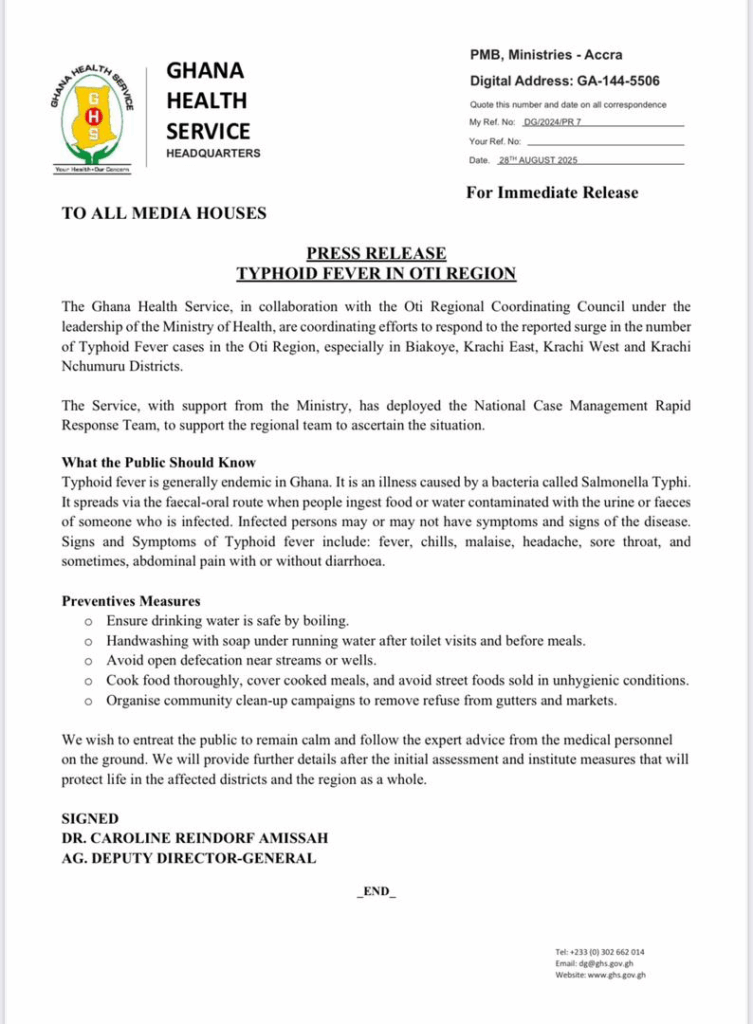
The GHS is urging the public, particularly residents in the affected districts, to observe the following preventive measures:
- Ensure all drinking water is safe, preferably by boiling.
- Wash hands with soap under running water after using the toilet and before eating.
- Avoid open defecation, especially near water sources.
- Cook food thoroughly, cover cooked meals, and avoid street food prepared in unhygienic conditions.
- Take part in community clean-up campaigns to eliminate refuse from public spaces, gutters, and market areas.
Authorities are encouraging residents to remain calm and cooperate with health personnel on the ground.
The GHS has assured the public that comprehensive measures will be rolled out following the team’s initial assessment to contain the outbreak and protect lives.
“We wish to entreat the public to remain calm and follow the expert advice from the medical personnel on the ground. We will provide further details after the initial assessment and institute measures that will protect life in the affected districts and the region as a whole,” the statement concluded.
Latest Stories
-
Video: Awoshie-Anyaa Highway: Years of fatal crashes caused by faulty traffic lights
3 minutes -
No financial transactions with Ghana Card yet, says NIA
9 minutes -
Former Netherlands Fire Chief engages GNFS Tema Command on capacity building
10 minutes -
Finance Ministry defends Publican AI rollout amid stakeholder concerns
12 minutes -
Police arrest 5 in Asankrangwa robbery; cash and guns retrieved
13 minutes -
Why I joined NPP – Jeneral Ntatia
14 minutes -
Three UDS students remanded over alleged armed robbery
18 minutes -
Kudus Mohammed at risk of missing World Cup 2026 after fresh injury blow
21 minutes -
Minority urges cocoa farmers to resist pressure from galamseyers
21 minutes -
President Mahama applauds astronaut Christina Koch’s Ghana ties in Artemis II mission
23 minutes -
Ex-wife of Richard Nii Armah Quaye moves to Court of Appeal
25 minutes -
Insecurity: US orders non-emergency staff to leave embassy in Nigeria
25 minutes -
ASFC 2026: Ghana U15 girls set up Burkina Faso final after win over Zambia
29 minutes -
The passport question: Why Ghana must let its best abroad come home to serve
41 minutes -
We will be losing twice if these commodities expire at the port – CSOs Coordinator warns
48 minutes