

Audio By Carbonatix
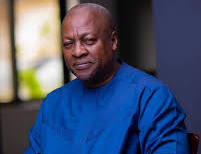
The Ghana National Association of Teachers (GNAT) has called on the John Mahama government to address the ongoing challenges in the education sector with the same urgency it is exhibiting in resolving the energy sector challenges.
This comes as food shortages in senior high schools and disruptions to the reopening of Colleges of Education raise concerns about the state of education in the country.
Speaking to JoyNews, General Secretary of GNAT, Thomas Musah, urged the government to act swiftly to prevent further issues. “The President now has the goodwill of the people, but goodwill is temporary. If the challenges are not addressed quickly, it will lead to anger, demonstrations, and an uncontrollable situation,” he warned.
He stressed the need for immediate action to resolve food shortages and other pressing issues in schools, adding, “The same speed that was applied to the energy sector should be applied here.”
The National Secretary of the Conference of Heads of Assisted Secondary Schools (CHASS), Primus Baro, described as worrying the situation in some schools. He revealed that while some schools had received limited food supplies, many, especially in the northern and middle belts, were still struggling.
“We are in a dire situation,” he said. “For instance, in the Upper West and Upper East regions, schools have nothing beyond rice, no maize, no millet. Some schools don’t even have cooking oil, forcing some matrons to rely on margarine, which has now run out.” Mr Baro noted that the situation was not uniform across the country, with some schools managing better than others, but many still faced critical shortages.
Meanwhile, a JoyNews WhatsApp poll has revealed overwhelming public support for a review of the Free Senior High School (Free SHS) policy. Out of 1,179 participants, 93% called for changes to the policy to address the ongoing challenges.
Some parents who contributed to discussions on Joy FM’s Super Morning Show advocated for a system where financially capable parents pay part of their wards’ fees, allowing schools to secure essential supplies more effectively.
One parent suggested decentralising the procurement process. “Schools should be allowed to purchase food items from their local markets instead of relying on Buffer Stock, which adds unnecessary costs and delays. This system has been problematic from the start.”
Another parent proposed converting most senior high schools into day schools to reduce the financial burden on the government. “Day schools will allow students to be fed from home, easing the burden on school resources,” they added.
Latest Stories
-
Prioritise cocoa sector with better prices, timely payments-Annoh-Dompreh urges NDC
27 minutes -
Lands and Mines Watch Ghana endorses Heath Goldfields’ mining capacity
42 minutes -
Gbintiri residents protest alleged diversion of 24-hour market project
1 hour -
Justin Bieber headlines Coachella with nostalgia-fuelled set
1 hour -
Ukraine and Russia accuse each other of hundreds of ceasefire violations
1 hour -
Asha Bhosle: The sound of Bollywood dies aged 92
2 hours -
Fire destroys section of 4-bedroom apartment at Tantra Hill
2 hours -
Safe city: Unnoticeable protection
2 hours -
North East Regional Police Commander raises alarm over burning of checkpoints
2 hours -
Free Primary Healthcare Programme set for take-off — Health Ministry confirms readiness
2 hours -
3 co-wives, 5 children perish in canoe disaster – Maritime Authority insists life jackets use mandatory for all water transport
3 hours -
Iran war lands ‘triple blow’ to flood-ravaged Sri Lankans
4 hours -
Gunmen kill at least 11 people at Afghanistan picnic spot
4 hours -
Woman, 25, in court for stealing baby at Bogoso
4 hours -
Trump unveils giant gold-accented victory arch design for US capital
4 hours