

Audio By Carbonatix
Ghana’s central bank will need to raise interest rates further this year unless a decline in the cedi is arrested, Goldman Sachs Group Inc. and Absa Group Ltd. said.
The West African nation increased borrowing costs by the biggest margin in two decades on Monday to arrest inflation that accelerated at the fastest pace in almost six years in February and stem a depreciation in the cedi. The currency has weakened more than 17% against the dollar this year, making it the worst performer on the continent.
Finance Minister Ken Ofori-Atta is preparing to unveil measures this week aimed at supporting the cedi, ensuring expenditure discipline and providing relief to the economy, the Information Ministry said. It didn’t provide further details.
“If these measures fail in turning the economy around or fall short of its ultimate objectives, including stabilizing the exchange rate or reversing the recent sharp depreciation, we believe a further policy rate hike” of 100 basis points is likely by the third quarter, Ridle Markus, a Johannesburg-based Africa strategist at Absa, said in a note to clients.
The cedi strengthened 0.1% to 7.36 per dollar by 10 a.m. in London.
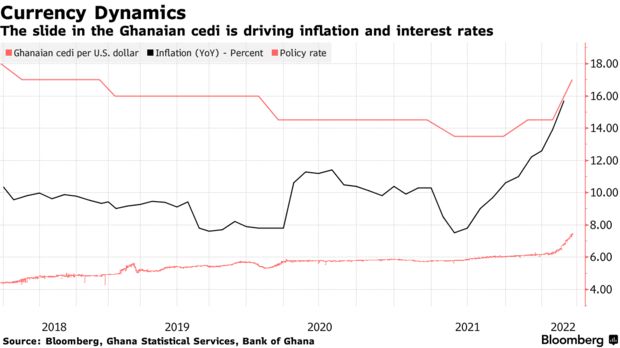
Ghana’s currency has slumped this year amid concern the nation won’t achieve its revenue and debt targets, which has sparked a selloff of its foreign-currency debt. Inflation is surging in part because of the impact of the war in Ukraine on global energy and food prices. Ghana imports about a third of its grain needs and almost 40% of its fertilizer requirements from Russia, according to the central bank.
The government in January moved to reassure investors that it’s committed to fiscal targets, including expenditure cuts if revenue falls short of expectations. Ofori-Atta has yet to get parliament’s approval to introduce a so-called e-levy on financial transactions that’s aimed at helping boost tax revenue to 15.4% of gross domestic product this year from an estimated 12% last year.
“The fact that the government has so far failed to pass the budget that it proposed in November, including new revenue measures -- implying likely fiscal slippage -- adds to Ghana’s rising risk premium,” Goldman economists Bojosi Morule and Andrew Matheny said in an emailed note.
That combined with tightening financial conditions for emerging-market countries due to the war in Ukraine “add to the already meaningful depreciation pressures” on the cedi and increase the risk of further hikes, they said.
Ghana’s monetary policy committee is scheduled to announce its next rate decision on May 23.
Latest Stories
-
Julius Debrah, ‘man to beat’ as NDC’s James Agbey dismisses Musah Dankwah’s polls
2 minutes -
GPRTU in Savannah Region to protest alleged eviction in Damongo
31 minutes -
Re: Reinsurance does not replace process — A response to the SIGA–SIC defence
45 minutes -
Gender Ministry supports Harriet Amuzu in ongoing abuse case
58 minutes -
AG joins plaintiff to scrap OSP ?: We should be mindful of the mischief in this – Bobby Banson
1 hour -
Samson Lardy Anyenini questions willingness of Attorneys-General to prosecute political colleagues
1 hour -
It is only fair the OSP is heard in Supreme Court case – Bobby Banson
1 hour -
Asiedu Nketia resumes Ashanti tour, second leg kicks off on Sunday
1 hour -
NLA denies salary cut claims, threatens legal action over reports
1 hour -
BoG Governor honoured for stabilising cedi, improve inflation
1 hour -
Kyebi Easter Homecoming 2026: A resounding success!
2 hours -
RNAQ divorce ruling: What the noise is hiding
2 hours -
Trade Minister applauds GUTA as a pillar of economic growth; Prez Mahama honoured
2 hours -
President’s brother’s takeover of Damang Mines is ‘untidy’ – Alhassan Tampuli
3 hours -
It’s not true that gov’t decided not to renew the lease for Gold Fields – Bobby Banson
3 hours