

Audio By Carbonatix
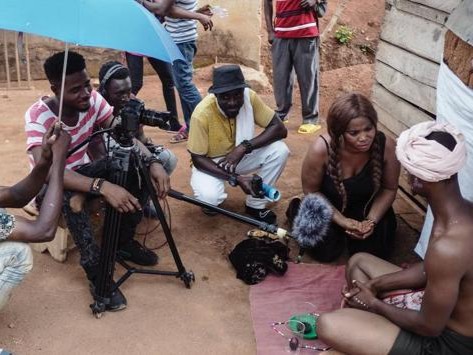
The government has moved to give the local film industry a concrete lifeline by creating a Film Fund in the 2026 budget.
The measure was announced in Parliament as part of a package of creative sector interventions and is aimed squarely at reviving domestic film clusters, including the Kumawood scene that has struggled in recent years.
The finance minister, Dr Cassiel Ato Forson, indicated the fund will receive seed capital to get it started, a visible sign that policymakers want public money to catalyse a turnaround in production, distribution and marketing for Ghanaian films.
Local film clusters like Kumawood remain culturally important but face gaps in finance, professional distribution and modern production capacity.
A dedicated pool of capital can be used in several practical ways. It can underwrite production grants so filmmakers can make higher-quality work.
Beyond direct funding, the new Film Fund is meant to signal a shift in how the state values film as an economic sector.
The budget frames film not only as entertainment but also as a creator of jobs, a draw for cultural tourism and a driver of export earnings when films travel to festivals and stream overseas.
If managed well, the fund could unlock private investment by reducing early-stage risk and by showing that the government will back industry development with predictable, strategic resources.
The plan is not without hurdles. Past interventions in creative industries have sometimes stumbled over weak governance, unclear procurement and short-lived programmes that run out of money.
For the Film Fund to work, it will need strong rules on transparency, clear criteria for who receives support and mechanisms to measure impact on jobs and revenues.
Stakeholders will also say that money alone is not enough. Investment in cinemas, improved copyright enforcement and platforms for marketing are part of the full solution. These complementary needs are already part of public conversations about rebuilding Kumawood and broader Ghanaian film capacity.
What to watch next are the fund rules, the timeline for disbursing the seed capital and the governance arrangements that will determine who sits on the fund board and how projects are chosen.
If those details are spelt out quickly and the seed allocation is released on schedule, the Film Fund could become a turning point for an industry that has long provided unique stories and steady livelihoods across the country.
For filmmakers, producers and audiences, the promise is now public. The test will be whether the promise turns into work, screens and pay for the people who bring Ghanaian cinema to life.
Latest Stories
-
I have supported highway authority financially to fix roads in my constituency – A Plus
10 minutes -
US, Iran fail to reach peace agreement after marathon talks in Pakistan
33 minutes -
ECG kicks off Phase Two of transformer upgrades at Lashibi; brief outages expected
1 hour -
Port crises loom as 11,000 drivers threaten four-day strike
2 hours -
A source of excellence across generations – Vice President Opoku-Agyemang lauds Mfantsipim
3 hours -
(Photos) Mfantsipim School launches historic 150th anniversary
3 hours -
Knights and Ladies of Marshall group backs Catholic Bishops’ stance on anti-LGBTQ+
4 hours -
Bright Simons writes: All the Filla in the Ibrahim Mahama/E&P – Gold Fields Saga
5 hours -
Monetise Idiocy In Ghana
5 hours -
The Ghanaian prophet and the mysterious death of his scottish wife Charmain Speirs
5 hours -
Nearly 400 sentenced in Nigeria for links to militant Islamists
6 hours -
Ghana’s recovery supported by gold strength despite global oil price pressures – Standard Bank Research
6 hours -
Methodist Church hails Mfantsipim@150; calls for “fresh consecration” to excellence
6 hours -
‘Excellence is our inheritance’ – Nana Sam Brew-Butler hails Mfantsipim’s 150-year reign in leadership
6 hours -
Kwaku Azar writes: A-G vs OSP
6 hours