

Audio By Carbonatix
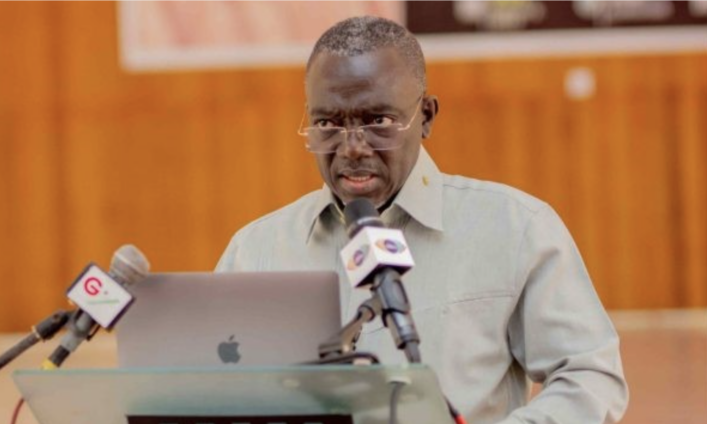
Professor Douglas Boateng, Board Chairman of the Minerals Income Investment Fund (MIIF), has underscored the potential of salt as a transformative commodity for Ghana’s economy.
He noted that if properly developed, the resource could drive industrialization, create sustainable jobs, empower communities, and foster high-value industries.
Speaking to the Ghana News Agency in an interview, Prof. Boateng urged the government to implement strategic policies and collaborate with the private sector to attract the necessary capital and expertise for the commodity’s development.
“Salt is not just a mineral. It is a foundation for transformation and an opportunity to industrialise our economy,” he said.
Prof. Boateng explained that salt was an essential raw material in producing essential chemicals such as chlorine, caustic soda, and soda ash, which are vital for industries like pharmaceuticals, plastics, detergents, and agriculture.
With Ghana’s abundant reserves of the commodity and its strategic location, he said salt offered the country a unique chance to diversify the economy.
Prof. Boateng said the resource would help reduce reliance on volatile commodities, and secure long-term growth.
He noted the government could drastically reduce unemployment through job creation and value addition.
“With strategic development, salt can create jobs for our youth, empower women, and position Ghana as a leader in the global chemical industry.
“Processing salt into high-value products can provide opportunities for skilled workers, unskilled laborers, and entire communities. From chemical engineers to local entrepreneurs, the ripple effects are immense,” he added.
MIIF is a minerals sovereign fund established pursuant by the MIIF Act 2018 (Act 978) to receive royalties’ payment from mineral production activities in Ghana and manage governments equity interest in mining companies.
MIIF derives royalties from five minerals, including, gold, quarries, limestone, salt, sand winners and Manganese.
As a preference shareholder to Electrochem Ghana Limited, an indigenous salt mining company, the fund has invested close to GH¢300 million into the restoration of the Ada Songhor Lagoon.
Prof. Boateng said the Fund was focusing on developing other salt production areas, including the Central Region, to expand Ghana’s capacity.
“With coordinated governance and investment, this industry could add tens of billions of dollars to the economy by 2040, while serving as a catalyst for industrialisation and value creation,” he observed.
Prof. Boateng said investments were needed in the building of processing plants, improving transportation networks, and creating storage facilities.
He also highlighted the need for capacity building programmes to equip Ghanaians with the skills to work in salt extraction and value-added industries.
Prof. Boateng mentioned that it would be unfortunate for the country to allow foreign interest to dominate in the sector that had the ability to transform the economy.
He added that, “to secure long-term dividends for future generations, we must act decisively.”
“Salt is more than a resource; it is a symbol of what Ghana can achieve when we think beyond the immediate. It is a seed. If we plant it wisely, nurture it with vision and unity, it will grow into a tree of prosperity. Its branches will offer shade to generations yet unborn.” he noted.
Drawing on global examples, Prof. Boateng pointed to India’s thriving chemical industry, built on the strategic use of its salt reserves.
“India transformed its salt into billions of dollars in export revenue while creating millions of jobs. Ghana has the potential to do even more by leveraging our natural advantages and investing in innovation and infrastructure,” he said.
Latest Stories
-
Monetary policy decisions will be driven by data despite current commodity price volatility – BOG Governor
8 minutes -
International Women’s Day: Prayers for Women to Find Themselves, Grow and Heal
11 minutes -
International Women’s Day Spotlight: Mary Lalako Agboli breaking barriers as an Airport coach driver
17 minutes -
Ghana Link rejects claims of ICUMS outage amid fuel supply complaints
18 minutes -
Hindsight: Why Björkegren’s Black Stars role should not cause problems
39 minutes -
‘Women in Mining Ghana’ inspires next generation at Harvest Christian Academy
41 minutes -
BDCs accused of creating artificial fuel shortage to cash in on March 16 price increases
43 minutes -
NPP Tarkwa–Nsuaem elders rebuke Mireku Duker over registration controversy, demand national intervention
50 minutes -
Gov’t disburses GH¢2.6bn to settle NHIS debts to health providers
54 minutes -
2026 World Cup: GHANSU launches #GhanaIsInTheHouse campaign, pledges 400 supporters for tournament
1 hour -
Rev Dr Grace Sintim Adasi: Championing women’s leadership in faith-based institutions
1 hour -
What is wrong with us? Why do we always wait? Social media, mental health, and Africa’s leadership gap
1 hour -
MoMo vendor and customer killed in bloody armed robbery attack
2 hours -
Millions of displaced women and girls still lack safe shelter, IOM warns on International Women’s Day
2 hours -
Deputy minister breaks ground for Bole SHS infrastructure boost
2 hours