

Audio By Carbonatix
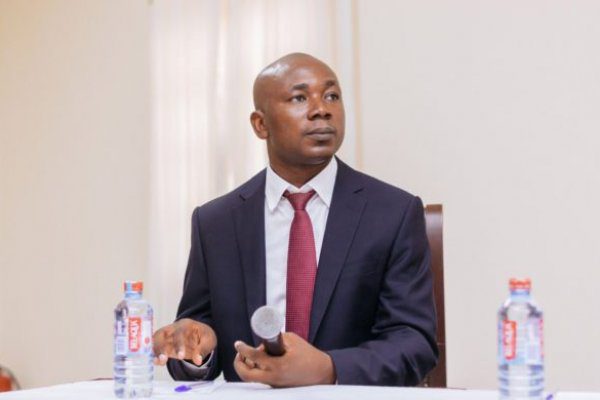
Economist, Prof. Godfred Bokpin has pointed out that the country may not be able to fund priority sectors of the economy when the country exits the International Monetary Fund (IMF) programme in 2026 due a debt obligations of over ₵130 billion that will be reactivated.
Forecasting how events may pan out in the next 3 years, Prof. Bokpin warned that the situation could lead to a sharp cut in investment to the Agriculture sector, while independent power producers are denied payment if government intends to honour it debt servicing.
Speaking on the Super Morning Show on July 31, 2024, he stated that the private sector will be the hardest hit as cost of borrowing will be astronomically high.
“The conclusion is that there is no way we will be able to meet these financial obligations without altering our fiscal policy and financing decisions. We will only do so at great cost by crowding out priority spending in the area of budgetary allocation to agriculture, health, education and social protection”, he said.
Citing a report done by the African Center for Energy Policy (ACEP) to buttress his point, the Finance Lecturer said a cursory analysis shows that budgetary allocation to the Energy Ministry in 2023 has overtaken other essential priority areas crucial for economic growth.
“If you look at the energy shortfall in 2023 alone, it is far more than the budgetary allocation to the Ministry Food and Agriculture, Ministry Health, Ministry of Education and many of them”, he told host of the show, Winston Amoah.
Prof. Bokpin said the situation looks challenging than has been painted by the government.
“This is what we call crowding out of priority spending. Debt servicing, and governance cost have been imposing greater fiscal constraints on our budget. We are not allocating sufficiently to other priority areas that can ease the burden on Ghanaians”.
He stressed that Ghana is currently allocating far less to agriculture compared to the benchmark set by ECOWAS and the African Union.
“We are doing far less to achieve the Sustainable Development Goals. This is because we don’t have the fiscal space. In fact our public institutions including the universities are not recruiting at the optimal level. This is Ghana”, he lamented.
Speaking on the same programme, an Associate Professor in Finance at the University of Ghana Business School, Elikplimi Komla Agbloyor cautioned that the country could be paying more to retire its external debt if government resumes the payment of loans after 2026 due to exchange rate volatilities.
He explained that more than half of Ghana’s debt was contracted in foreign currencies, particularly the U.S dollar, which will require that more cedis be needed to pay such debt if the exchange rate continues to deteriorate.
“There is a very high risk that in 2027, we will struggle to pay. We need to maintain exchange rate stability. Currently, about 61 percent of our borrowing is in foreign currency, only 39 percent is domestic currency. Consequently if the cedi keeps depreciating, we will struggle to pay the loans”, he cautioned.
He pointed out that even though the foreign debt level may come down due to bilateral and the commercial debt restructuring exercises, the effect could be largely negated if more cedis are needed to pay the same debt in 2027 as result of poor exchange rate management.
Latest Stories
-
President Mahama orders full probe into ‘Big Push’ procurement exposé
15 minutes -
Weija-Gbawe MP calls for commissioning of Weija paediatric hospital
33 minutes -
Ghanaians dying in Russia–Ukraine war: The danger is real
35 minutes -
Player ratings: Oppong earns high marks as Sibo and Adjetey draw low scores in Germany defeat
37 minutes -
Pres. Mahama pledges action on 1.2m out-of-school children after School for Life raises concern
44 minutes -
Suhum MP vows NPP will probe Gold-for-Reserves in 2029
1 hour -
Ghana to host Zimbabwe’s President Mnangagwa on three-day state visit
1 hour -
Ghana pushes for stronger West African blue economy partnership at Liberia fisheries investment conference
1 hour -
Ghana hosts high-level African climate strategy meeting ahead of COP31 and COP32
1 hour -
Today’s Front pages : Tuesday, March 31, 2026
2 hours -
President Mahama welcomes Zimbabwe’s Mnangagwa for three-day state visit
2 hours -
Dr Anthony Adjiepong’s Pharmatrust Pharmacy receives top recognition at UG’s White Coat ceremony
2 hours -
OMCs increase in fuel prices at pumps: GOIL sells petrol at GH¢13.30 and diesel GH¢17.10
2 hours -
Gender Ministry convenes Equity Committee meeting, commissions secretariat to strengthen coordination
3 hours -
Aggie Asiimwe Konde: Soil is Africa’s hidden growth asset
3 hours