

Audio By Carbonatix
The Ghana Revenue Authority (GRA) is targeting to rope in two million informal sector workers into the tax net through the implementation of a modified tax system.
The new tax regime, which is expected to be implemented by 2025, is aimed at widening the country’s tax base, to include the informal sector in tax compliance.
Kumasi Area Director of the GRA, Agnes Akosua Boateng, says the new system will simplify tax assessment and reduce compliance costs.

“We want to simplify our tax system so that everybody will be captured. We are expecting to bring on board 2 million people. We want to widen the tax net,” she said.
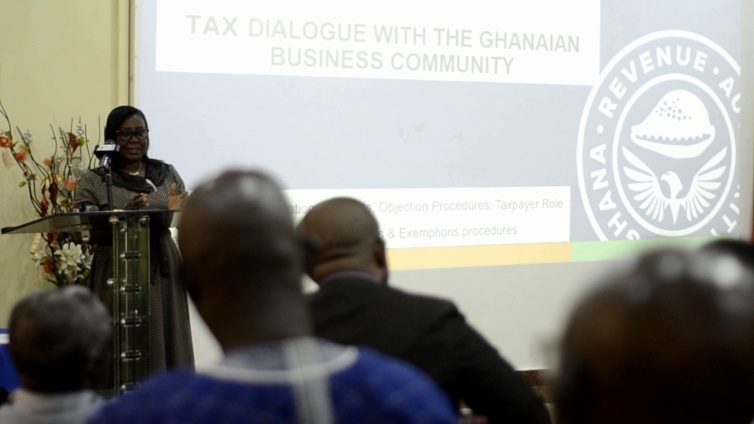
The GRA hosted a tax education seminar with faith-based organisations in the Ashanti region as part of activities geared towards mobilizing more revenue from the informal sector.
Many players in the informal sector are failing in their tax obligations, mainly due to the complexity of the tax system.
Ms. Boateng explains the categories expected to be captured under the new tax regime.
“For the first category, it is going to be paid in instalment. This is going for those selling on tables. With the second one, we look at the turnover for the year from 20,000 to 500,000 cedis then add 3% to it and spread it over the four quarters for payments,” she said.
Through its tax education program for the month of August, the GRA engaged traders, and other stakeholders in a series of dialogue to enhance voluntary tax compliance.
Ms. Boateng charged religious leaders to encourage members to honour their tax obligation for national development.
"If the church is operating businesses like printing press or book shop, they ought to pay taxes. We realise those who sell at the various market centres are the very ones that go to church and mosques. So, it is prudent we engage the religious leaders to encourage their members to honour their taxes," she added.
Chief Revenue Officer at the Kumasi Collection of the Customs Division, Evans Teye Agbozo assures of transitioning from robust to friendlier transactions.

“This year is our customer-based strategy where we are moving from that robust way of dealing with taxation to a more friendly approach in transacting,” he said.
While assuring to oblige the tax payments, participants at the program anticipate purposeful use of the collected revenues.
"It is expedient for us as clergy to educate our people to pay their taxes just as they do with their tithes. But if these mobilized revenues could be utilized effectively, I think paying wouldn’t be a problem," one of the participants said.
Latest Stories
-
Moody’s maintains Ghana’s rating at Caa1, revises outlook to positive
32 minutes -
Zambia elevates tourism education to national priority as President Hichilema backs continental summit
1 hour -
Activa promotes credit insurance to boost SME export growth
1 hour -
ILTM Africa 2026 opens doors to inbound and outbound luxury travel in Cape Town
1 hour -
“BP Soul Travel and Tours scored the highest marks” – Sports Minister Kofi Adams endorses agency for World Cup travel
2 hours -
‘At the age of 12, I was teaching people and collecting money from them’ – Forty Under 40 Awards
3 hours -
I broke my virginity at the age of 26 after university – Richard Abbey Jnr.
4 hours -
Sacked for fees, saved by faith: The untold story of Forty Under 40 Awards founder Richard Abbey Jnr
4 hours -
GCB Bank surges GH¢0.45, ETI gains GH¢0.06 as GSE ends week higher
5 hours -
Two teens jailed 55 years for robbery
5 hours -
UDS demands apology for MPhil student wrongly branded as Tamale robber
6 hours -
“We don’t sell fish!” – Tema Shipyard CEO hits back over dead fish discovery
7 hours -
Sam George defends anti-LGBTQ+ Bill as ‘national priority’ amid debate over gov’t focus
7 hours -
Artemis II astronauts safely back on Earth after trip around moon
7 hours -
Sam George unveils massive 1,150-cell site rollout to end network woes
8 hours