

Audio By Carbonatix
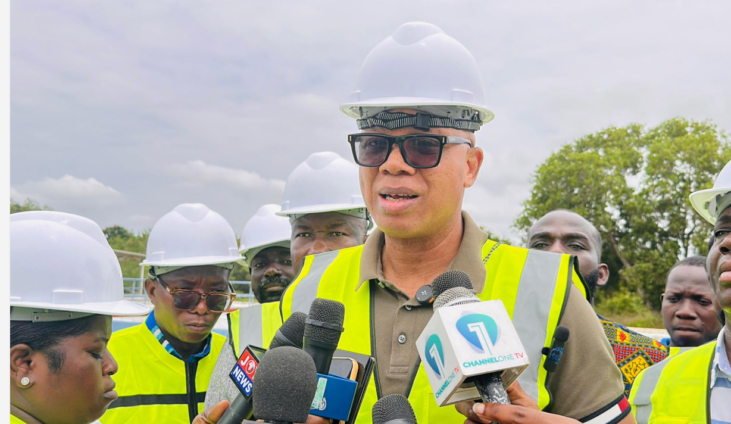
Adam Mutawakilu, the Managing Director of Ghana Water Ltd. (GWL), has expressed concern over the high turbidity levels of raw water at the Kwanyaku Headworks in the Central Region.
He warned that unless urgent measures were taken, the facility might be forced to shut down in the future.
The Kwanyaku Headworks, one of the key treatment plants in the region, supplies water to more than 30 districts, including Winneba, Swedru and Kasoa.
However, pollution in the Ayensu River, which serves as the plant’s main intake source, has pushed turbidity levels far beyond the plant’s design capacity.
Mr. Mutawakilu, speaking during a working visit to the facility, disclosed that turbidity levels had soared to 32,000 Nephelometric Turbidity Units (NTU) last week, and though the figures had dropped to about 11,000 NTU at the time of his visit, they remained high.
He explained that the treatment plant was designed to operate at a maximum of 2,500 NTU, meaning that the water quality being received was more than four times above capacity, placing enormous strain on the equipment and production process.
The Managing Director noted that turbidity levels were nearly five times higher than the plant’s designed capacity, stressing that while engineers and staff were working hard to keep water flowing, the situation could force a shutdown if it persisted, a development that would impose huge costs on Ghana Water Ltd. and severely affect consumers.
Mr. Mutawakilu said preliminary assessment pointed to upstream pollution, possibly linked to illegal mining and other environmentally harmful activities.
To verify this, he has directed the Central Regional Chief Manager and the Kwanyaku Headworks team to collaborate with the head office in Accra to deploy drones to trace the exact source of the contamination.
“We cannot just report that turbidity is high without clear evidence of where the pollution is coming from. With drone surveillance, we can identify whether illegal mining or other activities are to blame and then engage the appropriate authorities to take swift corrective action,” he stated.
The Managing Director stressed that shutting down the plant was the last resort, and assured residents that GWL would continue to produce and distribute water as much as possible, even if intermittently, to avoid damaging the equipment and ensure at least a minimal level of supply.
Mr. Mutawakilu also highlighted wider challenges facing the company, pointing to the state of infrastructure at the Weija and Kpong treatment plants, which serve Accra and its surrounding areas.
According to him, most of the equipment at the Weija plant were outdated, with some pumps dating back to 1965 and sections of the pipelines still made of asbestos.
“In this modern world, asbestos should not be used to transmit water to customers. Yet we still have them in our system, and this contributes to frequent leakages and breakdowns.
Recently, one of our major pipelines at Weija burst, and we had to mobilise resources quickly to fix it. At the same time, some cables at the Dodowa Booster Station also developed faults and had to be replaced,” he explained.
Despite these challenges, he assured customers that both Weija and Kpong plants were currently operational, and efforts were underway to ramp up production to meet growing demand.
He acknowledged that the supply gap was still considerable, explaining that while daily demand for water in Accra was around 220 million gallons, the company could produce only about 140 million gallons, leaving a shortfall of nearly 80 million gallons each day.
Since August, GWL has stopped the use of water tankers for commercial purposes as part of efforts to tackle the growing challenge of non-revenue water, which accounts for more than 50 per cent of the company’s supply.
Mr. Mutawakilu explained that customers who are directly connected to the company’s pipelines must remain the company’s top priority.
He said: “When we connect a customer to our pipeline, it is our responsibility to ensure that person receives water. That is our core mandate, even as we expand infrastructure to cover more households.”
He further indicated that the company was working closely with government to secure investment for new treatment plants and the replacement of ageing pipelines.
This, he said, would help reduce leakages, improve efficiency, and ultimately bridge the gap between supply and demand.
Latest Stories
-
Kwaku Azar writes: A-G vs OSP
26 minutes -
Mfantsipim–Adisadel rivalry built excellence, not division – Sam Jonah
51 minutes -
Vice President launches Mfantsipim’s 150 years of shaping Ghana’s greatest mind
1 hour -
I assure Otumfuo, Mahama will join him to commission KNUST Teaching Hospital by end of this year – Haruna Iddrisu
2 hours -
Barcelona dominate derby to extend La Liga lead
2 hours -
Gov’t to roll out free special education for persons with disabilities from July 1 – Education Minister
2 hours -
Importers and Exporters Association declares full support for Publican AI port system
2 hours -
“We used it to test our officiating officials’ readiness” – Bawah Fuseini after CAA Athletics event
3 hours -
Volleyball emerges as Ghana’s fastest rising sport
3 hours -
National Sports Fund needs strong leadership from the top – Administrator David Wuaku
3 hours -
JoySports Exclusive: Steve McLaren in talks with GFA after expressing interest in Black Stars job
3 hours -
Fire guts auto parts warehouse at Bubuashie, one fire officer injured
3 hours -
I owe my victory to coach Ofori Asare – Allotey after winning WBA Africa Gold Super Flyweight belt
3 hours -
Church of Pentecost supports over 2,000 BECE candidates in Obuasi with career guidance seminar
5 hours -
Brandon Asante and Coventry all but promoted to Premier League despite Sheffield Wednesday draw
5 hours