


Audio By Carbonatix
In 2015, during his national service in Kintampo in Ghana’s Bono East Region, 2025 National Best Youth Farmer Robben Asare found himself asking a thought-provoking question: how could young people build a future in a place where opportunities felt so limited?
Each day, he encountered youth struggling with unemployment; many were idle, uncertain, and disconnected from viable economic opportunities. Robben began gathering them informally, offering guidance and encouraging them to consider agriculture as a pathway to income and dignity.
But one day, the youth challenged him. “You tell us to go into agriculture… If farming is profitable, why aren’t you farming?”
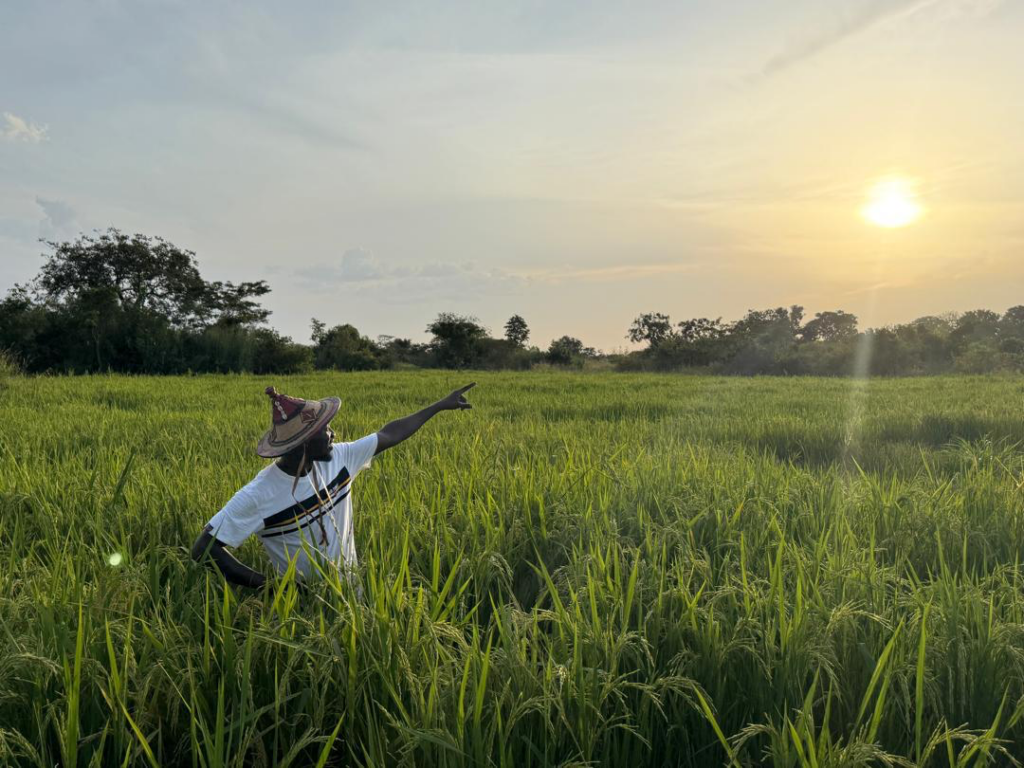
That moment marked a turning point. It forced Robben to confront a difficult truth: belief alone was not enough. If he wanted others to follow, he had to lead through action.
With no land of his own, he approached traditional leaders and negotiated access to two hectares. He mobilised young people to join him to work the land together. What started as a small, collective effort became the foundation of something much bigger.
The early days were difficult. There was limited access to inputs, machinery, and finance. Progress was slow, and the risks were high. At the same time, Robben faced pressure from his family. When an opportunity arose to leave Ghana and pursue a different path abroad, he chose to stay, a decision that was not immediately understood.
Robben’s journey into agriculture was deeply shaped by his background. Raised in a farming household, he understood the realities of rural life early on. By primary school, he was already supporting himself, and by the time he reached senior high school, he was largely self-reliant, determined to continue his education despite financial constraints. He went on to study accounting at the University for Development Studies (UDS), and that’s when he began to see agriculture as a business opportunity. This perspective became central to his approach. Farming had to be profitable, structured, and scalable.

Robben’s growth has been both entrepreneurial and community-driven. From an initial two hectares, he now manages over 500 hectares, including 300 hectares dedicated to maize and soybean production. His operations are supported by farm machinery, including tractors and combine harvesters, which also serve other farmers through service provision.
Helping lift others
Robben has continued his advocacy to get more young people excited about agriculture. He launched the “Back to Farm Youth Project,” an initiative designed to mobilise young people and connect them to practical opportunities in agriculture. He engaged youth through community meetings, introducing them to viable agribusiness models. One of the early entry points was mushroom farming, which allowed young people and schools to start small, generate income, and build confidence.
Access to land is often a major barrier for youth, and that has become one of his areas of leadership. Working closely with traditional authorities, Robben facilitates land acquisition for young farmers, building systems based on trust and shared value. He has also prioritised inclusion. In a notable effort, he allocated 100 hectares of land to women in his community, strengthening their role in local agricultural systems.
How previous awards inspired Robben to work harder
Before winning the national Best Youth Farmer in 2025, Robben had won previous awards, including the 2018 Best Youth Farmer in Kintampo North and the National Best Agroforestry Farmer in 2019, among others. But for him, these awards are not an endpoint; they are a responsibility. “The award comes with pressure,” he reflects. “People expect you to do more.”
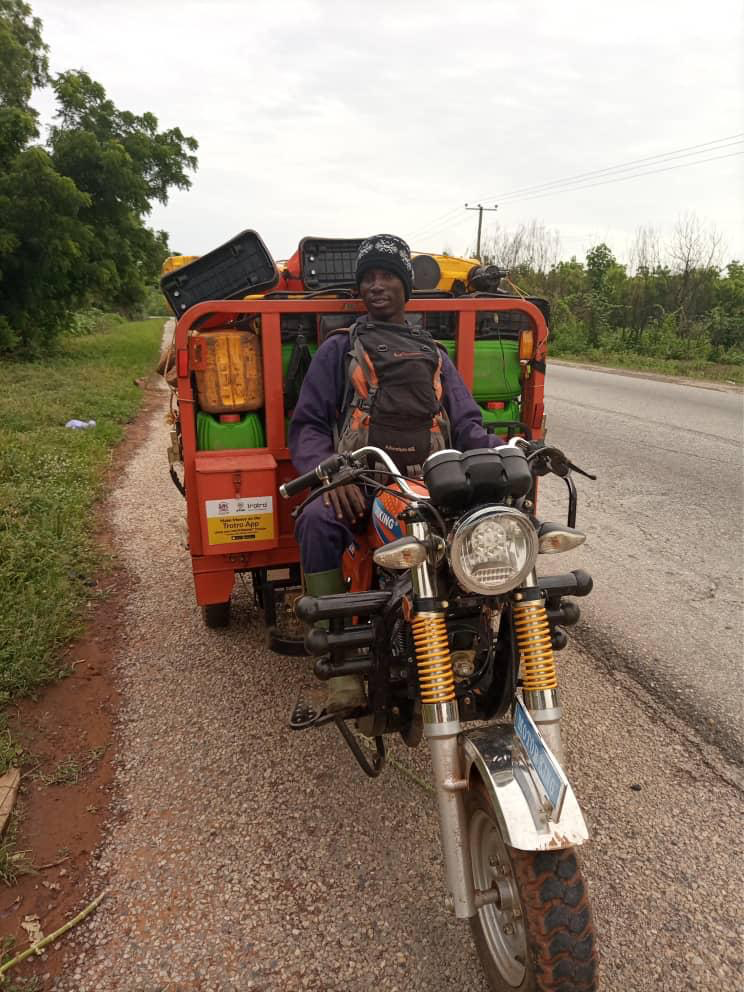
And he has responded by continuing to expand, innovate, and invest in others. The 2025 National Best Youth Farmer award came with a GH¢200,000 prize money from AGRA Ghana. He invested this amount directly in strengthening his post-harvest and value addition capacity by acquiring an eight-ton multipurpose grain dryer to support his processing line.
This strategic investment significantly reduces post-harvest losses, improves grain quality and market readiness, and enables him to handle larger volumes more efficiently. Beyond operational gains, the investment expanded his enterprise’s capacity to create more jobs, particularly for young people engaged in drying, handling, logistics, and processing activities. This reinforces his broader mission to make agriculture a scalable source of employment and income for youth in his community.
What began as a response to a difficult question to Robben has evolved into a sustainable long-term vision. Robben’s ambition is to move from growing operations to fully sustainable commercial farming systems, while continuing to open doors for young people and women. At its core, his journey reflects a simple but powerful idea: with commitment, consistency, and trust, agriculture can move from subsistence to opportunity, and from individual success to shared growth.
Robben Asare’s story is still unfolding, but it already offers a clear lesson. Transformation does not start with scale. It starts with a decision: to act, to stay, and to build.
Latest Stories
-
GACL to hold full-scale emergency simulation exercise on October 15
26 minutes -
327 entries submitted for 30th GJA Media Awards
40 minutes -
Mahama proposes rent-to-own scheme for unfinished houses
42 minutes -
Mahama wants banks to introduce affordable housing loans within six months
43 minutes -
Photos from National Conference on Housing Finance
47 minutes -
Italy, Ghana unite 40 artists for ‘Beyond Creation’ exhibition at Accra Art Centre
1 hour -
Premature to call for Sports Minister’s removal while CID probe is ongoing – Ernest Norgbey
1 hour -
NPP mourns Samuel Arthur Odoi-Sykes
2 hours -
Stay out of World Cup visa probe to avoid interfering with CID investigations – Ernest Norgbey to politicians
2 hours -
Bono East Minister inspects ‘Big Push’ roads; contractor on Tankor-Fiema-Busunya road ahead of schedule
2 hours -
Scrutiny is not disloyalty – Chief of Staff defends serious journalism at 30th GJA Awards launch
2 hours -
Abuse case: Nana Akua’s husband Harold unable to appear in court after hospital admission – Police
2 hours -
Mahmud Kabore picks NDC Ashanti Regional Communication Officer nomination forms
2 hours -
KNUST Career Services pioneer Selina Doe Angmor named among 2026 40 Under 40 honourees
2 hours -
Nana Akua domestic abuse case: Police to arraign husband after hospital discharge
2 hours