

Audio By Carbonatix
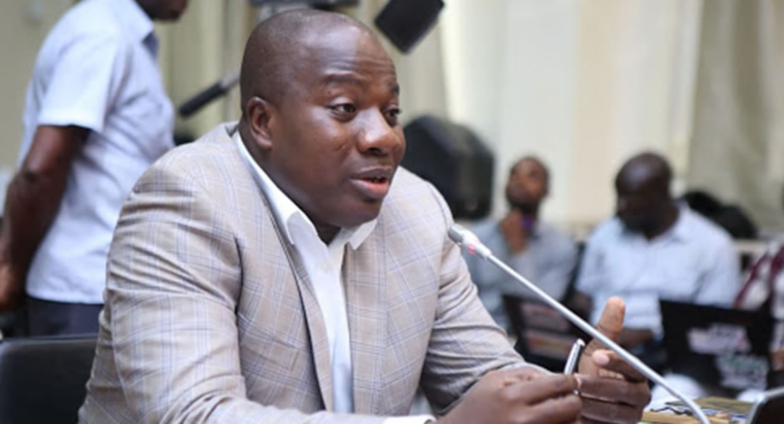
The Member of Parliament for Bawku Central, Mahama Ayariga, has expressed concerns over the Import Restrictions Bill proposed by the government through the Minister of Trade and Industry.
According to Mr Ayariga, the bill infringes upon certain provisions outlined in the government's agreement with the International Monetary Fund (IMF).
The legislator contends that if the bill is presented in Parliament, it could jeopardise the existing deal between the government and the IMF, a critical aspect of the country's financial commitments.
Mahama Ayariga, who once served as Minister of Information and Media Relations, questioned whether the Minister of Trade, K.T. Hammond, had consulted with his counterpart in the Finance Ministry before pursuing such a legislation.
He suggested that the lack of coordination within the government reflects a state of confusion, portraying the administration as being disorganised and lacking a cohesive approach.
“The proposed Export and Import (Restrictions on Importation of Selected Strategic Products) Regulations, 2023 offends clear provisions of the IMF Bailout Agreement.” he said in a press statement issued on Wednesday, November 29.
Already, six business associations have also submitted a petition to Parliament urging the house to reject the bill.
The Joint Business Consultative Forum, comprising the Ghana Union of Traders Associations (GUTA), Food and Beverages Association of Ghana (FABAG), Importers and Exporters Association of Ghana, Ghana Institute of Freight Forwarders (GIFF), Chamber of Automobile Dealership Ghana (CADEG), and Ghana National Chamber of Commerce and Industry (GNCCI), argue that the bill if enacted, would have detrimental effects on their businesses.
The petition, dated Sunday, November 26, outlined concerns that the legislation could negatively impact the prices of goods, disrupt the free flow of goods, and potentially harm businesses.
The Minister for Trade and Industry is seeking to pass an (L.I) to restrict the importation of some strategic products.
The 22 items considered for import restrictions are:
- Rice
- Guts, bladders and stomachs of animals (offal)
- Poultry
- Animal and vegetable oil
- Margarine
- Fruit juices
- Soft drink
- Mineral water
- Noodles and pasta
- Ceramic tiles
- Corrugated paper and paper board
- Mosquito coil and insecticides
- Soaps and detergents
- Motor cars
- Iron and steel
- Cement
- Polymers (Plastics and Plastic Products)
- Fish
- Sugar
- Clothing and apparel
- Biscuits
- Canned tomatoes
Latest Stories
-
I have supported highway authority financially to fix roads in my constituency – A Plus
54 minutes -
US, Iran fail to reach peace agreement after marathon talks in Pakistan
1 hour -
ECG kicks off Phase Two of transformer upgrades at Lashibi; brief outages expected
2 hours -
Port crises loom as 11,000 drivers threaten four-day strike
3 hours -
A source of excellence across generations – Vice President Opoku-Agyemang lauds Mfantsipim
4 hours -
(Photos) Mfantsipim School launches historic 150th anniversary
4 hours -
Knights and Ladies of Marshall group backs Catholic Bishops’ stance on anti-LGBTQ+
5 hours -
Bright Simons writes: All the Filla in the Ibrahim Mahama/E&P – Gold Fields Saga
5 hours -
Monetise Idiocy In Ghana
5 hours -
The Ghanaian prophet and the mysterious death of his scottish wife Charmain Speirs
6 hours -
Nearly 400 sentenced in Nigeria for links to militant Islamists
7 hours -
Ghana’s recovery supported by gold strength despite global oil price pressures – Standard Bank Research
7 hours -
Methodist Church hails Mfantsipim@150; calls for “fresh consecration” to excellence
7 hours -
‘Excellence is our inheritance’ – Nana Sam Brew-Butler hails Mfantsipim’s 150-year reign in leadership
7 hours -
Kwaku Azar writes: A-G vs OSP
7 hours