

Audio By Carbonatix
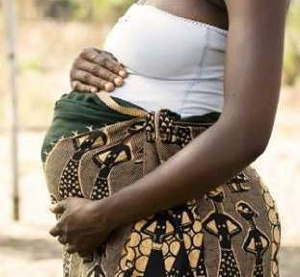
The Eastern Region recorded 8,174 teenage pregnancies as of September 2021, up from 7,976 recorded within the same period in 2020, the Ghana Health Service has said.
Of the cases, 12.6 percent represent girls aged 10 to 14 years, while 12.2 percent represent girls between the ages 15 to 19.
The records show an increment of 12.4 percent over the 2020 cases of teenage pregnancies, Dr Winfred Ofosu, the Eastern Regional Director of GHS, said in an interview with the Ghana News Agency.
He said the increment could be associated more with poverty and lack of parental control rather than the Covid-19 pandemic.
“A lot of parents from poor homes may not be able to control their girls very much because if the child needs something and you cannot provide, the child gets it elsewhere,” he said.
According to him, the inability of teenagers to negotiate their way out of sexual demands or advances from men or boys remain a grave challenge.
“If you are a girl and you are cornered, maybe a boy wants to have sex with you, you should be able to talk your way out,” Dr Ofosu said.
He said the increase in teenage pregnancy in 2021 was unexpected because activities were back to normal following the Covid-19 outbreak as schools had been opened, unlike in 2020 when everything was at a standstill.
Dr Ofosu called for a second look at the minimum age of the sexual consent law under the Criminal Offences Act, 1960 (Act 29), which allow teenagers at age 16 to consent to sex, adding; “the way the law is structured really cannot help.”
Research reveals that teenage pregnancies carry extra health risks to both mother and baby, such as the higher risk for pregnancy-related high blood pressure, anaemia, preteen labour, and urinary tract infections.
A GHS survey revealed that 555,575 teenagers, aged 10 to 19, got pregnant between 2016 and 2020, but there was a 1.2 per cent decrease in teenage pregnancy cases in Eastern Region from 2017 to 2021.
The cases as of January to September in 2017, 2018, 2019, 2020, and 2021 were 8,632 (13.4 percent), 8,012 (12.7 percent), 8,196 (13 percent), 7,976 (12.4 percent) and 8,174 (12.6 percent), respectively.
Dr Ofosu said efforts being made to reduce the problem included education, parental control and equipping girls with knowledge on negotiation skills.
“The greatest weapon to reduce teenage pregnancy is to keep girls in school and also increase parental control,” he stated.
Again, girls and boys must be educated extensively on sexuality, devoid of mythical beliefs, he said, adding: “They must be accurately informed about sexuality and not myths.”
Dr Ofosu advised parents to have a family plan and give birth according to their financial strength.
“Most girls who get pregnant come from poor homes, hence if the system is not checked the cycle of poverty will perpetuate.”
Health officials have been campaigning for the use of condoms to provide dual protection from unwanted pregnancy and Sexually Transmitted Infections.
However, Dr Ofosu said: “The good thing is to abstain but where that child is already sexually active and cannot abstain and is likely to get pregnant, and drop out of school, then we advise them to take the methods.”
Meanwhile, Mr Emmanuel Acheampong, the Eastern Regional Public Relations Officer of the Ghana Education Service (GES), said policies such as the “back to school campaign” were being implemented to keep students in school.
The campaign is a programme designed to bring back children of school-going age who, because of the Covid-19 pandemic, have stayed home for a long time and are unwilling to return to school.
He said it ensured that all barriers that prevented a child from returning to school were removed.
During the early stages of the Covid-19 pandemic, the GES implemented programmes such as electronic learning, radio and television programmes to engage students.
Ms Juliana Abbeyquaye, the Eastern Regional Acting Director, Department of Gender, Ministry of Gender, Children and Social Protection, said the Department organised sensitisation programmes on radio and in schools to help educate girls on sex and its consequences.
She associated some causes of teenage pregnancy with gender-based violence, peer pressure, illiteracy and the influx of “Okada” riders.
Latest Stories
-
‘Carlos Queiroz not the sort of coach Black Stars need’ – Nii Lante Vanderpuye
18 minutes -
AFCON 2027Q: ‘Our Black Stars team is gone’ – Former Sports Minister
38 minutes -
Prof. Prempeh calls for public review of draft constitutional reform bills
50 minutes -
AFCON 2027Q: ‘I have never seen a poor performance from Black Stars like against Gambia’ – Nii Lante Vanderpuye
55 minutes -
Nigeria set to launch National Digital Address System 9 years after Ghana showed the way
1 hour -
Policy rate decision takes time to reflect in lower lending rates – BoG
1 hour -
Western Regional Minister applauds Karpowership’s role in Ghana’s power sector
2 hours -
Livestream: Road safety crises: Where are we getting it wrong?
2 hours -
Enterprise Life celebrates 25 years of protecting families and building trust
2 hours -
ICC London rules in favor of Ghana against Tullow over $400m tax charge
2 hours -
We are disappointed in ICC’s ruling over our corporate income tax assessment in Ghana – Tullow Oil
2 hours -
Cost of building inflation for August 2026 increases to 4.6% – GSS
2 hours -
Today’s front pages: Wednesday, September 30, 2026
3 hours -
Bawumia highlights agricultural, compulsory insurance reforms in IBAG engagement
3 hours -
Ghana will secure Tullow tax revenues while protecting Jubilee, TEN investments – Ato Forson
3 hours