

Audio By Carbonatix
India and China will restart direct flights between the countries this month, India's foreign ministry has said, in another step towards ties being gradually normalised.
There have been no direct flights between the two countries since 2020, following deadly troop clashes on their shared Himalayan border.
But over the past year or so, Delhi and Beijing have been working towards rebuilding ties, including taking steps to de-escalate tensions at the border.
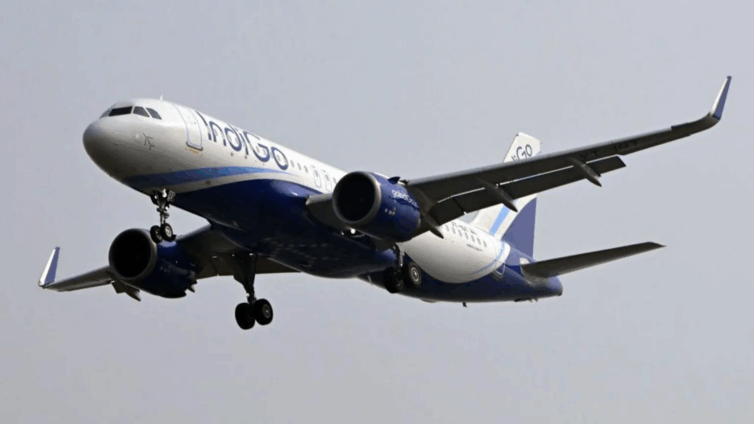
On Thursday, India's biggest budget airline IndiGo, said that it would restart direct flights between the cities of Kolkata and Guangzhou from 26 October.
In a statement released on Thursday, India's foreign ministry said that the resumption of flights would "further facilitate people-to-people contact" between the two countries and contribute towards "gradual normalisation of bilateral exchanges".
India and China share an ill-defined border that is more than 3,440km (2,100 miles) long and have overlapping territorial claims.
In 2020, troops of the two countries clashed at the Galwan river valley, leaving at least 20 Indian soldiers and four Chinese soldiers dead.
It was the first fatal confrontation between the two sides since 1975 and led to a freezing of ties.
But over the past year or so, Beijing and Delhi have been taking steps to gradually rebuild the frayed relationship.
High-ranking officials from the two sides have held several rounds of talks and meetings.
In October last year, India and China agreed on patrolling arrangements to de-escalate tensions along the disputed Himalayan border.
This year, China began allowing Indian pilgrims to visit some places of religious importance in what it calls the Tibet Autonomous Region, while India restarted visa services to Chinese tourists and agreed to resume talks to open border trade through designated passes.
India's souring relationship with the US over President Donald Trump's punishing tariffs has also provided an impetus to Delhi-Beijing ties.
In August, Chinese Foreign Minister Wang Yi visited Delhi, where he said that India and China should see each other as "partners" rather than "adversaries".
Later the same month, Chinese ambassador to India Xu Feihong called the US a "bully" for imposing steep tariffs on India and other countries.
In August, Prime Minister Narendra Modi visited China for the first time in seven years for the Shanghai Co-operation Organisation (SCO), a defence summit. He also met Chinese President Xi Jinping at the sidelines of the summit, and the two reiterated their commitment towards normalising India-China ties.
Latest Stories
-
Alisson injury not ‘a big thing’ despite missing Galatasaray
2 hours -
Scholes ‘did not intend to be offensive’ to Carrick
2 hours -
23 players sent off after mass brawl in Brazil
2 hours -
Court remands pastor over alleged child abuse images
2 hours -
Anthropic sues US government for calling it a risk
2 hours -
Live Nation reaches settlement in US monopoly case
3 hours -
G7 to take ‘necessary measures’ to support energy supplies
3 hours -
Star Assurance rewards 10 more customers in grand finale draw of “40 Reasons to Smile” promo
3 hours -
Guinea opposition leader urges ‘direct resistance’ after 40 parties dissolved
3 hours -
Suhum MP calls for sincere dialogue on labour issues, warns against politicisation
3 hours -
We have instituted measures to diversify our reserves – BoG Governor
3 hours -
Ban on pay-TV services at the Presidency in force; my office is the only place with DSTV – Kwakye Ofosu
4 hours -
Fuel prices could hit GH¢17 if the Middle East crisis persists – COMAC
4 hours -
Cedi records modest appreciation on improved liquidity, but external risks linger
4 hours -
Dr Agnes Naa Momo Lartey organises briefing meeting with Ghana’s delegation to CSW70
4 hours