

Audio By Carbonatix
Indigenous carbon-rich dark soils are under siege from heavy excavation, encroachment, and poor farming practices in Ghana.
These soils which sequester and interlock high pyrogenic carbons, are gradually losing their carbon sink, ecological and environmental functionality, prompting urgent action against their degradation.
In many parts of Ghana, farmers continue to reel under the impacts of climate change. The shifting weather patterns are adversely impacting farm produce as reduced rains and the sweltering climate destroy harvests on large tracts of farmland.
Yields for staple crops such as maize, rice, millet, soybean, and sorghum have drastically reduced in recent years. The decline is not only affecting food availability but also driving up costs, making healthy foods increasingly inaccessible to many households.
During the most recent farming season, Ghana endured an unusually prolonged dry spell that scorched nearly a million acres of farmland. Across eight regions, thousands of farmers saw their hopes wither as months of toil yielded nothing, stripping them of their primary source of livelihood.
Alhassan Bukari’s 10-acre maize farm at Kintampo in the Bono East Region had a total crop failure due to this extreme weather event.
This extreme crop failure left him devastated, just like many other farmers, as he had hoped to utilize proceeds from it to furnish his children’s school fees and take care of the home.
"We cultivated maize. We were hoping for a bumper harvest, but the rains failed us,” he worriedly said.
He reckoned the changing weather pattern could be an attributable cause of his loss. Later, he would know, some farming practices he has adopted, coupled with the changing climate, are contributing to the poor yield.
Just like many farmers in his community and across Ghana, Mr. Bukari usually prepares his land by burning the organic matter on it and regularly tilling the topsoil.
The soil Alhassan grows on was found to be one of the very few types in the country which was once rich in carbon.
African Dark Earth (AfDE) Soil: A Hidden Agricultural Treasure for food security and climate mitigation
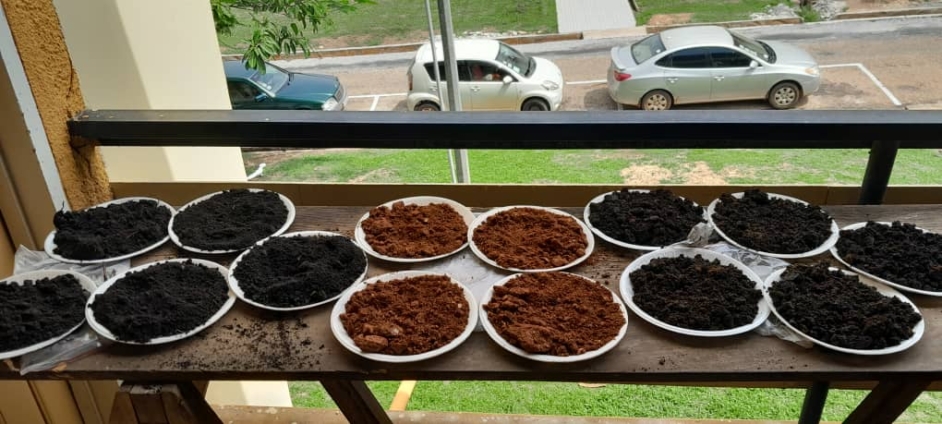
African Dark Earths (AfDE) are highly fertile, dark-colored, carbon-rich soils found in parts of tropical Africa with extensive research in Ghana and Liberia since the 90’s.
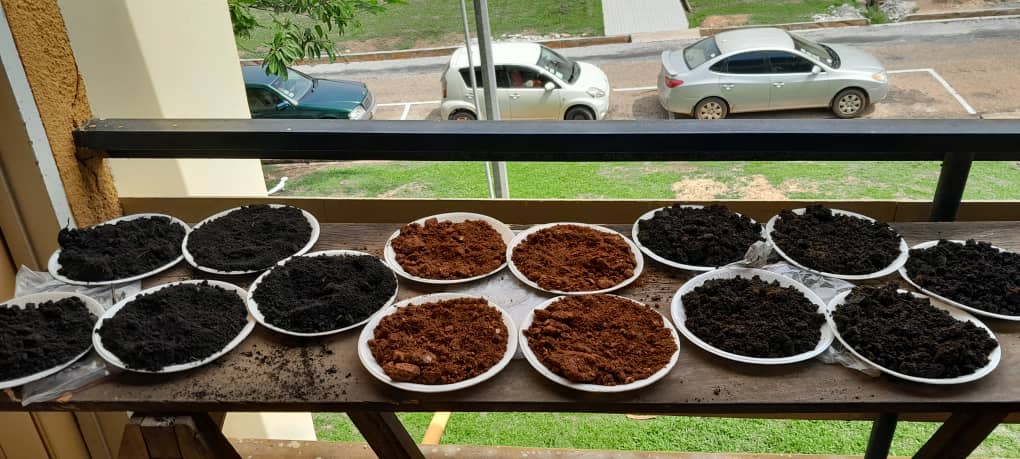
These soils are anthropogenic – meaning they were created through long-term human activity - much like the famous Terra Preta of the Amazon.
They are created through centuries of human settlement and agricultural practices where inputs like charcoal, manure, food waste, and organic residues enrich the soil and promote microbial activity, leading to long-term fertility and carbon storage.
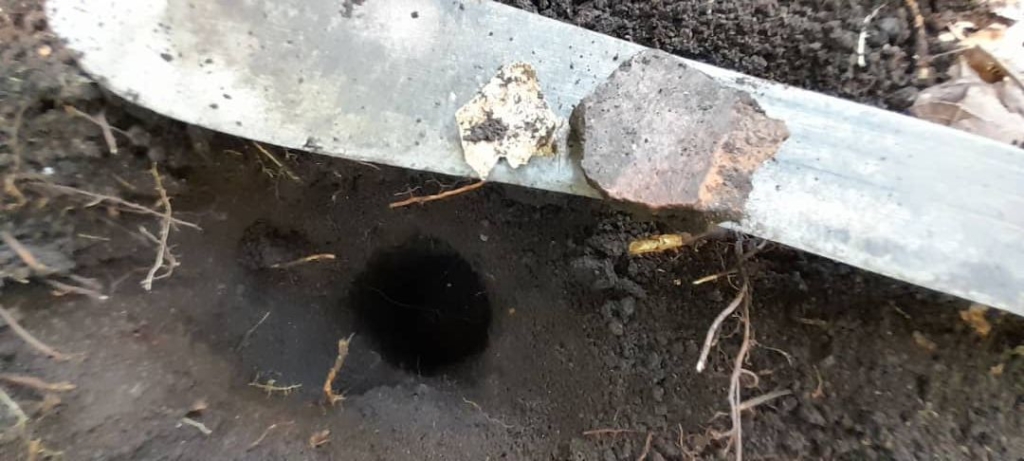
A soil scientist and researcher at the Soil Research Institute of the Council for Scientific and Industrial Research (CSIR-SRI), Emmanuel Baidoo is conducting extensive research on soil carbon dynamics, nutrient characteristics and yield potentials of the African Dark Earth.
His study areas spanned from the southern to northern belts of the country where these African Dark Earths were discovered since the 90’s by Western Anthropologists.
While the AfDE soils were found to still have high carbon content, they are faced with severe degradation through encroachment, nutrient mining and bad farming practices.
Encroachment
As farmers down South battled illegal miners for their land, study areas located in the northern part of the country experienced fast encroachment, where trees on these lands were being cut for fuel.
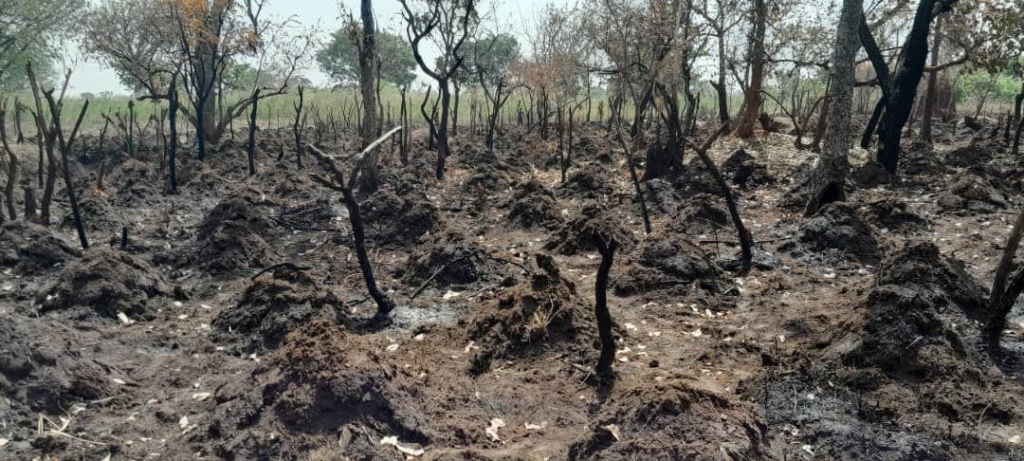
At the community forest African dark earth grove reserve in Chagnaayili in the Savannah region, private developers were threatening to convert the reserve into a recreational/resource park.
“The encroachment is very alarming. A typical example is the AfDE site at Ekyeneso being converted into building structures. The indigenes themselves tell us these soils are very rich. They are highly fertile and give more yields and my grandfather advised me not to apply fertilizer since it will destroy the soil,” Mr. Dankwa, a farmer of the AfDE site, revealed.
Bad farming practices destroy AfDE
The regular slash and burn identified as a common practice on the AfDE, though enhances pyrogenic carbon, there is a negative depletion of soil carbon stock by releasing carbon dioxide from biomass into the atmosphere, increasing the atmospheric carbon footprints and greenhouse gas emissions - which bring about climate change and global warming.
They tend to destroy organic matter and microbial life essential for AfDE formation, leading to soil erosion, nutrient loss, and reduced fertility.
“We are losing our indigenous soils. We realized cocoa plantations grown on these soils weren’t growing much due to bad management practices,” Mr. Baidoo highlighted.
He wants farmers to adopt best management practices to help maintain the mineral pool revealed through his fractionation work to be one of the major drivers influencing the emission of greenhouse gas in cultivated and natural fallow lands.
These could be achieved through balancing fertilizer application with soil testing, compost initiation, crop rotation, and crop diversification, liming of our acidic soils and biochar applications.
“If Ghana needs to be food secure, then we need to take soil fertility and building soil organic matter seriously,” Mr. Baidoo noted.
Nutrient mining
Nutrient mining is another major factor affecting these soils and reducing their yield potential and carbon sink. This has been attributed to misconceptions and farmers inability to afford fertilizers.
Mr. Baidoo wants the government to review and enhance its fertilizer subsidy programs while providing timely weather updates.
“Dissemination of accurate weather forecasting updates from GMet to farmers through MOFA extension agents since Ghana’s agriculture is rainfed,” he said.
Growing on AfDE
As part of the research work, Mr. Baidoo investigated maize grain yields of the AfDEs and other agricultural land uses that are non-dark earths.
Grown on a parcel of land at Sogliboi in the Kintampo North district, the grain yield of the AfDE without fertilizer application yielded 5 tons per hectare which was 2-fold higher than the non-dark earths and average grain yield reported for sub-Saharan Africa.
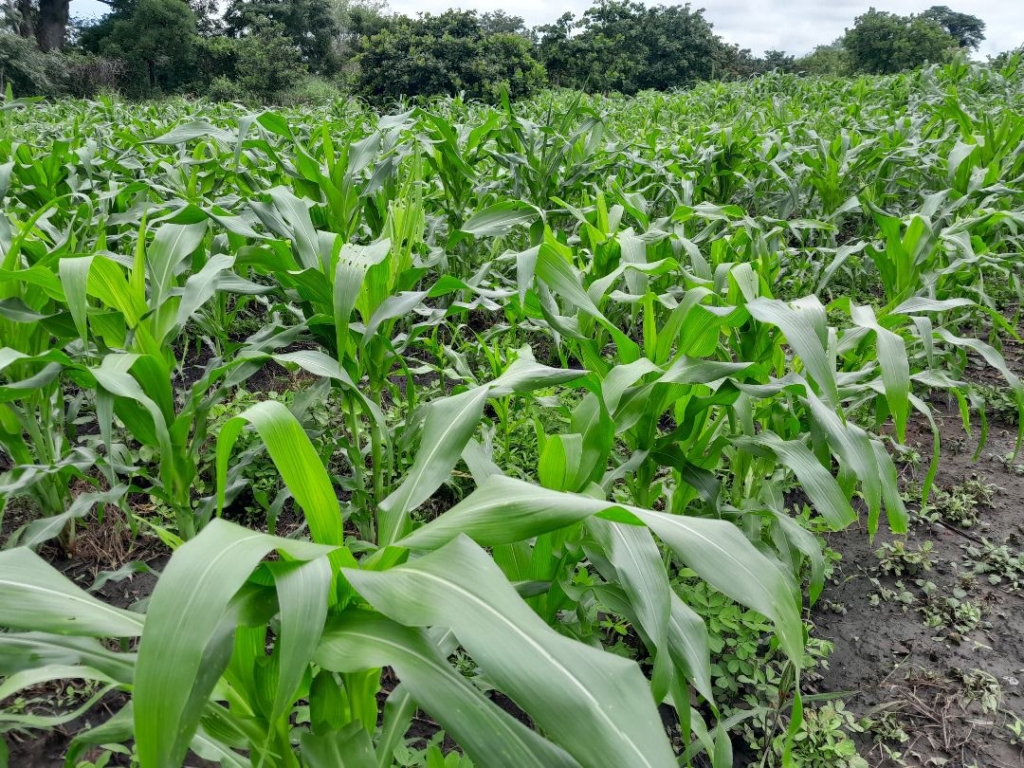
Mr. Baidoo has stressed that “it was a great opportunity to improve the livelihood of smallholder farmers and a nature-based solution in tackling issues of food security and climate change threats in Africa”.
The research is under the C-AROUND project of the European Union on building global carbon data, emphasizing the importance of these soils to the global carbon budget.
Conclusion
As Ghana faces challenges such as soil degradation, food insecurity, and climate vulnerability, African Dark Earth soils offer nature-based solutions for mitigating climate change and food security due to their low carbon footprint and high nutrient status.
Supporting these indigenous practices in agricultural lands could empower smallholder farmers in Ghana to contribute to the global carbon budget.
Latest Stories
-
GAEC must retain nuclear scientists for Ghana’s nuclear ambitions – Minister
10 minutes -
Man reportedly mistaken for game and shot by hunter dead in forest
12 minutes -
19-year-old mason jailed 15 years for defiling seven-year-old pupil
17 minutes -
Ghana’s banking sector assets rise 20.47% to GH¢500.2bn – BoG Governor
21 minutes -
22 injured as Sprinter bus overturns at Sege after tyre burst
22 minutes -
UN housing expert urges Ghana to strengthen Rent Control Department amid housing affordability concerns
31 minutes -
Delta-BCI partnership reaches 166,000 people with breast cancer education
40 minutes -
Power restoration fault suspected in Kumasi Central Market fire
6 hours -
The 7-foot giant of Ngleshie Amanfro: Seven-foot Ghanaian Ephraim Saawa dreams of joining the national basketball team
6 hours -
Government promises support for Kumasi Central Market fire victims
7 hours -
Vibes The Movie: Big Ghun’s Ghanaian film earns five nominations at 2026 REFFA
7 hours -
‘I’m a fulfilled man’—Justice Korbieh on missing out on Supreme Court despite two nominations
7 hours -
MamaCare CEO warns unresolved conflicts among health workers could undermine maternal and neonatal care
8 hours -
Health professionals urged to translate medical knowledge into practice to save mothers
8 hours -
Retired judge Justice Francis Korbieh charges 1,568 new lawyers to uphold integrity
9 hours