

Audio By Carbonatix
Deputy Attorney-General and Minister for Justice, Dr Justice Srem-Sai, has expressed concern about accused persons whose lawyers have chosen to stay away from court during Ghana’s ongoing legal vacation.
He said lawyers who boycott proceedings for reasons related to the dispute over vacation sittings could leave their clients vulnerable, particularly in criminal cases where accused persons have a constitutional right to legal representation.
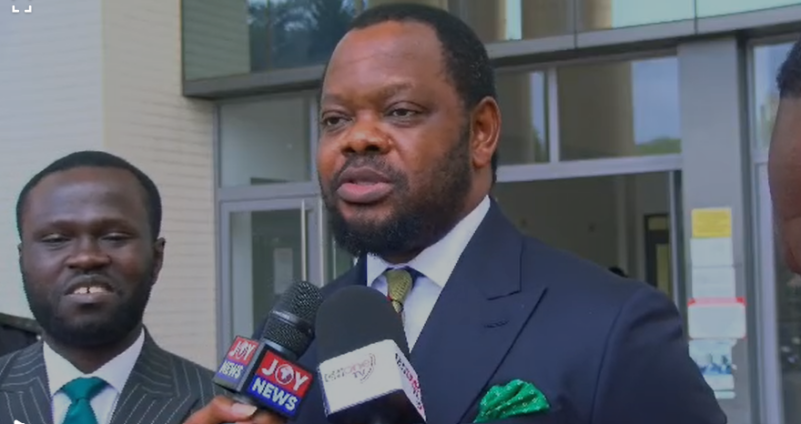
Speaking on JoyNews’ Top Story, Dr Srem-Sai responded to comments by lead counsel Samuel Atta Akyea, who has defended his decision not to appear in court during the vacation.
Atta Akyea had described the continued conduct of substantive trials during the legal vacation as an “aberration” and “selective justice”.
Dr Srem-Sai said the position worried him from the perspective of an accused person who depends on counsel to protect their rights.
“It worries me, but from the perspective of someone who believes in the right of an accused person to counsel of his thoughts, I would be worried if I have a lawyer who, for his own purposes, has decided to avoid court and to use extrajudicial means to try to defend my rights in a criminal trial. So I am actually worried,” he said.
The Deputy Attorney-General suggested that lawyers who refuse to participate in proceedings could potentially be failing their clients.
He stressed that the dispute over legal vacation practice should not result in accused persons being deprived of effective legal representation.
His comments come amid an escalating disagreement between the Ghana Bar Association (GBA) and the judiciary over the Chief Justice’s directive for selected courts to sit during the legal vacation.
The GBA has questioned the practice of conducting substantive trials during the vacation, arguing that the period has traditionally been reserved mainly for urgent applications, motions and interlocutory matters.
However, the judiciary and government maintain that designated Vacation Courts have the authority to hear cases during the period.
The dispute has already affected proceedings in some high-profile criminal cases, with several lawyers refusing to appear before courts sitting during the vacation.
Trial judges in some of the affected cases have warned that where accused persons appear without counsel, they may be required to personally conduct the cross-examination of prosecution witnesses.
Dr Srem-Sai said the consequences of the dispute should be considered from the perspective of the accused persons whose cases are continuing.
He maintained that lawyers with genuine difficulties attending a particular sitting could approach the court and seek an adjournment rather than unilaterally refusing to participate in proceedings.
Latest Stories
-
Power restoration fault suspected in Kumasi Central Market fire
2 hours -
The 7-foot giant of Ngleshie Amanfro: Seven-foot Ghanaian Ephraim Saawa dreams of joining the national basketball team
3 hours -
Government promises support for Kumasi Central Market fire victims
3 hours -
Vibes The Movie: Big Ghun’s Ghanaian film earns five nominations at 2026 REFFA
4 hours -
MamaCare CEO warns unresolved conflicts among health workers could undermine maternal and neonatal care
4 hours -
Health professionals urged to translate medical knowledge into practice to save mothers
4 hours -
Conflicts among care providers linked to maternal, neonatal deaths – Expert
6 hours -
GIS marks 10th TIME conference, champions improved teaching practices
6 hours -
BRICS Or Balance? What Ghana’s bid really means
6 hours -
GPRTU wants full TRAFFITECH-GH implementation to start in 2027
7 hours -
Mahama announces plans to import electric wheelchairs for PWDs
7 hours -
KGL U17 Colts 2026: Western beat Prempeh Elite Academy to set up final final with Greater Accra Region
7 hours -
Late Solanke strike salvages 10-man Spurs draw at Man United
7 hours -
Gender Ministry to monitor welfare of Nana Akua Addo’s children amid domestic violence case
7 hours -
Benedict Okyere Yeboah: Ghana’s football problem goes beyond sacking a coach
7 hours