

Audio By Carbonatix
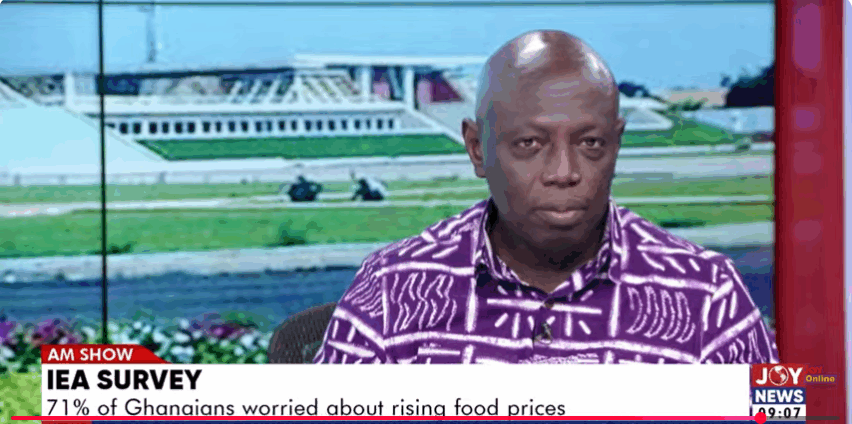
The Dean of the Faculty of Accounting and Finance at the University of Professional Studies, Accra (UPSA), Isaac Boadi, says many Ghanaians continue to face economic hardship because the prices of goods and services remained unchanged despite a sharp decline in inflation.
Speaking on the JoyNews AM Show on Friday, February 13, Prof Boadi explained that the recent drop in headline inflation to 3.8% does not mean the cost of living has reduced, stressing that inflation measures the rate of price increases rather than an actual fall in prices.
“People are going through hardship,” he said, insisting that the decline in inflation has not translated into relief for consumers at the market.
According to him, many people wrongly assume that a fall in inflation automatically leads to cheaper goods and services. However, he explained that inflation only reflects how fast prices are rising.
“When you record a reduction in inflation, it does not mean prices of goods and services have gone down. It only means the pace of increase has reduced,” he stated.
Prof Boadi noted that the cost of living remains a major concern for most households, estimating that nearly nine out of every 10 Ghanaians are struggling with the rising prices of goods and services. He added that both food and non-food items continue to put pressure on consumers.
He also expressed concern about rising unemployment, which he believes is worsening the economic situation and contributing to the hardship experienced by citizens.
The economist further questioned reports suggesting price declines in some parts of the country. He cited data indicating negative inflation or deflation in the Oti Region, Savannah Region and Upper North
Region, which typically suggests falling prices. However, he said the general market conditions do not reflect significant reductions in the cost of commodities.
He cautioned against celebrating the inflation figures without considering the lived experiences of citizens.
“So we should not be celebrating the headline inflation figure of 3.8%. When you go to the market, prices are still high,” he stressed.
His comments come amid ongoing national discussions about Ghana’s economic recovery, cost of living pressures, and the impact of inflation trends on households and businesses.
Prof Boadi emphasised that while official data may show improvements in key economic indicators, the persistent rise in the prices of goods and services means many Ghanaians continue to struggle to meet their daily needs.
Latest Stories
-
Ghana@69: Ghana mature enough for self-sufficiency — Kwadaso MCE
14 minutes -
Opoku Mensah pushes back at Haruna Iddrisu, praises Akufo-Addo’s free SHS infrastructure expansion
14 minutes -
Women of Valour: Women voices powerful enough to create meaningful impact – Kate Henshaw
17 minutes -
Rotary Club of Accra refurbishes library for Kweiman Presbyterian Basic School
19 minutes -
Kwakye Ofosu defends MPs’ use of 4x4s, citing constituency demands, personal sacrifices
52 minutes -
Gov’t decision to terminate 541 contract has caused the nation losses – Walewale MP
1 hour -
Police arrest suspected land guard in Abokobi with cache of firearms
1 hour -
Keta Port After the State of the Nation Address: President John Mahama Sets the Path to Redefine Ghana’s Blue Economy and Maritime Future
2 hours -
Barker-Vormawor urges clearer rules and predictable framework for public-sector appointments
3 hours -
US-Israel-Iran war could affect Ghana’s gold and oil exports – Barker-Wormawor
3 hours -
Gov’t open to reviewing dismissals if affected workers were employed before December 7 – Kwakye Ofosu
3 hours -
NDC has spent more than any other gov’t in this fiscal year – Dr. Kabiru Mahama
3 hours -
US-Israel-Iran war: Walewale MP critiques Trump’s approach to foreign policy, calls for diplomacy
3 hours -
Gov’t rushing back to bond market despite spending concerns – Walewale MP
4 hours -
Domestic borrowing resumption will not lead to reckless spending – Kwakye Ofosu
4 hours