

Audio By Carbonatix
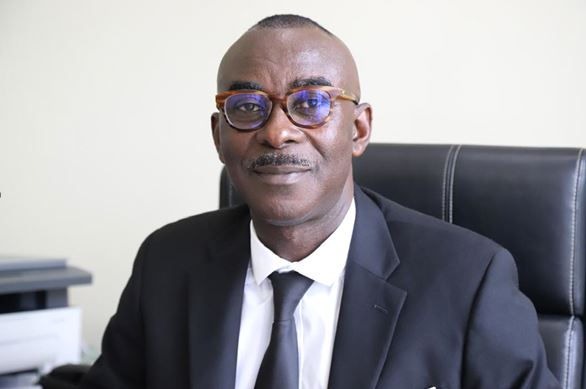
The Acting Chief Executive of the Ghana Chamber of Mines, Ahmed Nantogmah, has commented on growing criticism that mining companies are neglecting the development of their host communities.
Speaking on JoyNews’ PM Express Business Edition on Thursday, May 22, he stated that, “It’s not the mining company’s job to build skyscrapers.”
His comments come amid increasing scrutiny over the impact of mining activities on surrounding communities, particularly regarding infrastructure, education, and health.
But according to the Chamber boss, the real issue is not what mining companies are failing to do, it’s how mineral royalties are being misused by state institutions and local authorities.
“There’s a broad argument that development is in the hands of the state. That’s true. But mining companies do a lot in their communities,” he said.
“You go to some communities, and the schools there, the hospitals there, are run by mining companies. The mining company cannot do everything.”
Mr Nantogmah argued that once royalties are paid by the companies, it is the responsibility of the assemblies and traditional authorities to ensure those funds are used effectively.
“When the royalties are paid, they are supposed to return some to their host communities and the district assemblies, and the palace to be used for development. The question we ask is, are they being used for that development?” he said.
He cited a striking example to illustrate the disconnect.
“If there’s a one-kilometre road in town and there’s an assembly that gets mineral royalties, why would the assembly go back to a company like Gold Fields and say, ‘Come and develop the road for me?’” he asked.
“Gold Fields constructed over 33 kilometres of road, and they did it for the community. Everybody is using it.”
Mr Nantogmah said the problem is systemic and called for structural reform.
“That’s why we are asking for a law that will regulate the utilisation of mineral royalties,” he said.
“We know there’s one in petroleum revenue management. Why can’t we do something for mining?”
He proposed legislation that would clearly define what royalties can be spent on.
“If the law stipulates that mineral royalties can be used only for health, education and sanitation, then when it comes back to the community or the host assembly, they don’t use it to pay salaries or recurrent expenditure,” he explained.
“Otherwise, it goes to the community, and nobody knows where it enters.”
He raised concerns about the opaque use of royalties in places like Obuasi, a major mining town.
“If you look at Obuasi, with the mining company there, a lot of royalties are supposed to come back. The question is, do they? And if they do, what are they being used for?”
Mr Nantogmah stressed that the responsibility must be shared.
“We ask questions of the mining companies, but we should also be asking questions about the development authorities. Let’s work together and make sure mineral royalties are targeted.”
He took a swipe at poor urban planning in mining areas and the tendency to expect companies to fix everything.
“If the town is not properly planned, it’s not the job of the mining company to make the streets straight or to build skyscrapers,” he said. “No mineral revenue stays in those towns. It stays in Accra.”
He cited a recent study showing that 80% of mineral benefits are spent in Accra.
“That’s where they use it to develop the whole of Ghana,” he noted.
“So Ghana is developing on the back of mining. But for mining, Ghana would not be where we are.”
But he warned against placing the blame solely on mining companies for the underdevelopment of host towns.
“If you single out a local community and bring the mining company into that community, you might have a coin.
"But we also have to blame the people responsible for development, whether it’s the mineral royalties that come back, whether at the state level or the local level. What are they being used for?”
He said once those questions are answered, a better policy conversation can begin.
“Then we can say, ‘Okay, maybe the revenue going back is small. Should we increase it? Should we tie it to specific projects?’ That’s what we think should be done.”
Latest Stories
-
Ghana’s BRICS move requires clear strategy to manage risks – Godfred Bokpin
1 hour -
Pay teachers realistic income – Duncan Amoah to gov’t
2 hours -
Bechem to become chicken capital of Ghana – Mahama projects
2 hours -
Gov’t targets recruitment of 16,500 health professionals in 2026
2 hours -
Two-week strike will not derail academic calendar – GNAT President
2 hours -
Headmaster detained after BBC investigation into alleged sexual abuse of students
2 hours -
GNAT pushes for clear implementation procedures of teachers’ conditions of service
3 hours -
Recurrent strikes threaten quality of education and academic calendars – Prof Bokpin
3 hours -
‘Cockroach’ group leaders among hundreds detained in Delhi protest
3 hours -
Don’t let speed of information become your judgement – CJ tells new lawyers
3 hours -
World Cup visa scandal: People have leveraged public office to facilitate fraud – Senyo Hosi
3 hours -
Glut! Farmers count losses as prices crash, customers happy
4 hours -
GSA postpones auction of unserviceable vehicles
4 hours -
Man charged with attempted murder after stabbing
4 hours -
World Cup visa scandal: Senyo Hosi says issue goes beyond calls for Sports Minister’s resignation
4 hours