

Audio By Carbonatix
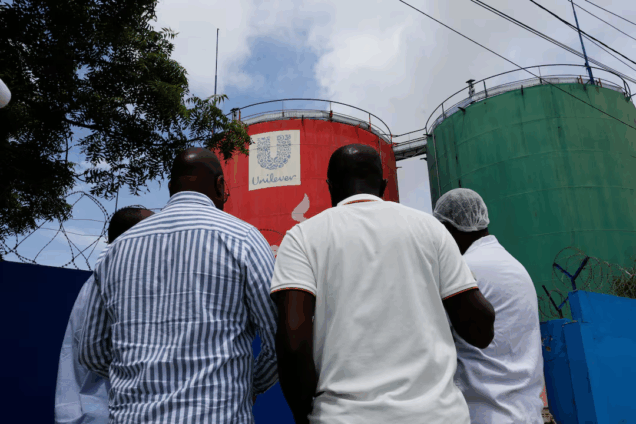
Unilever workers in Ivory Coast say the global consumer goods giant is violating their collective bargaining agreement in refusing to ensure severance pay if layoffs take place after the company sells its business there, documents show.
British-based Unilever is selling all of its shares in its struggling Ivory Coast unit, which employs some 160 people, to a local consortium of investors led by wholesale distributor Société de Distribution de Toutes Marchandises Côte d’Ivoire (SDTM).
Unilever Côte d'Ivoire manages the consumer giant's domestic and international brands in Ivory Coast, but SDTM will only take over Unilever's domestic brand business, according to an internal memo dated April 8.
Unilever has not said how its international brands will be sold in the Ivory Coast in future.
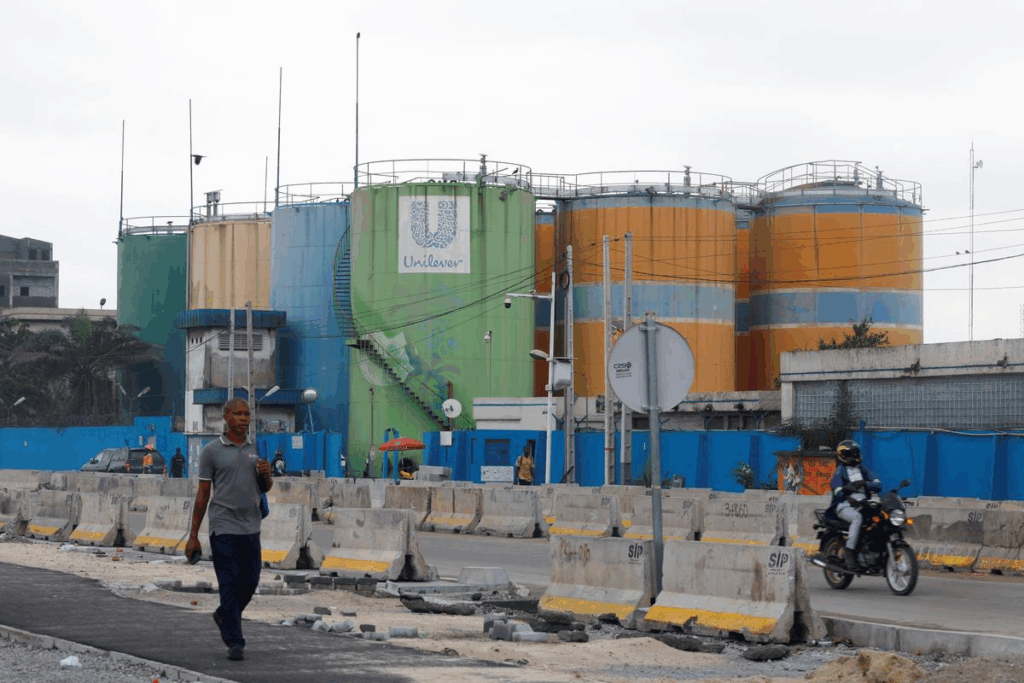
Workers began staging protests at Unilever offices in Abidjan on April 25, fearing that the unit's falling turnover in recent years and the loss of the international brand business will trigger layoffs after the sale, which is expected to close by June 20.
Their collective bargaining agreement with Unilever, seen by Reuters, states that in the event of layoffs associated with disposing of its Ivory Coast business, Unilever will give employees severance pay equal to "one month of average gross salary per year of seniority, with a maximum of 18 months."
The bargaining agreement, dated from 2004, was confirmed by management in 2007 and remains valid, according to Lex Ways lawyer Soualiho Lassomann Diomande, who represents local staff.
The agreement also pledges "medical coverage for a maximum period of six months."
A Unilever spokesperson did not comment on the agreement.
However, in a meeting at the Labour Inspectorate in Abidjan on April 25, the head of Unilever Cote d'Ivoire, Arona Diop, stated that workers' rights and salaries would be decided by SDTM, and not regulated by the collective bargaining agreement, according to minutes of the meeting reviewed by Reuters.
Unilever confirmed it was selling the Ivory Coast unit but said in a statement to Reuters: "The proposed transaction is by way of a sale of shares, which does not result in the termination of employees' contracts."
"Severance pay is not, therefore, relevant, as employment continues," it added.
Unilever's international brand portfolio has accounted for more than 60% of Unilever Côte d'Ivoire's turnover, according to three Ivory Coast employees, which totalled 34.6 billion CFA Francs in 2023.
Since the share sale excludes the most important brands, job security is at risk, said Diomande.
Moreover, under article 16.6 of the Ivorian Labour Code, any substantial modification of an employment contract requires the prior agreement of the employee, Diomande added.
"No assurances have been given regarding job security," said a Unilever Ivory Coast employee, who did not wish to be named.
CONTRAST WITH EUROPE
The severance rights Unilever guaranteed under the collective bargaining agreement are a lot more generous than required under Ivory Coast labour law, according to Diomande as well as two workers interviewed by Reuters.
According to the International Labour Organisation's EPLex database website, workers in Ivory Coast are entitled to severance pay equal to 30% of their gross monthly wage per year for those who have worked up to five years.
The percentage rises to 35% from the sixth to the 10th year and 40% for above 10 years of service.
Unilever said early last year it would axe 7,500 jobs globally as part of a turnaround to save about 800 million euros ($913.12 million).
Diomande said Unilever's treatment of its Ivory Coast staff contrasted sharply with how it treated staff in Europe.
Last month, Unilever agreed to guarantee its ice cream workers' employment terms in Europe and Britain for at least three years after the business' spin-off, Reuters reported, tripling the usual period in such deals despite no legal requirement to do so.
The generous terms agreed in Europe reflect the power of local unions and strict labour laws on the continent.
Workers in the Ivory Coast told Reuters they had asked Unilever to guarantee the same conditions, including severance pay, for two years, one less than what was granted to roughly 6,000 Unilever workers affected by the ice cream spin-off in Europe and Britain.
"Not applying the same conditions in Ivory Coast is unequal treatment and negative discrimination," Diomande said.
"This is a serious injustice."
Latest Stories
-
Epstein survivors’ calls to meet King Charles and Queen harder to ignore as US visit approaches
2 minutes -
UN Secretary-General names Ghana’s Anita Kiki Gbeho as South Sudan envoy
4 minutes -
Mali withdraws recognition of Sahrawi Republic, backs Morocco’s autonomy plan
8 minutes -
Gov’t distributes over 8,500 laptops to One Million Coders project
9 minutes -
Julius Debrah, ‘man to beat’ as NDC’s James Agbey dismisses Musah Dankwah’s polls
15 minutes -
GPRTU in Savannah Region to protest alleged eviction in Damongo
44 minutes -
Re: Reinsurance does not replace process — A response to the SIGA–SIC defence
59 minutes -
Gender Ministry supports Harriet Amuzu in ongoing abuse case
1 hour -
AG joins plaintiff to scrap OSP ?: We should be mindful of the mischief in this – Bobby Banson
1 hour -
Samson Lardy Anyenini questions willingness of Attorneys-General to prosecute political colleagues
1 hour -
It is only fair the OSP is heard in Supreme Court case – Bobby Banson
1 hour -
Asiedu Nketia resumes Ashanti tour, second leg kicks off on Sunday
2 hours -
NLA denies salary cut claims, threatens legal action over reports
2 hours -
BoG Governor honoured for stabilising cedi, improve inflation
2 hours -
Kyebi Easter Homecoming 2026: A resounding success!
2 hours