

Audio By Carbonatix
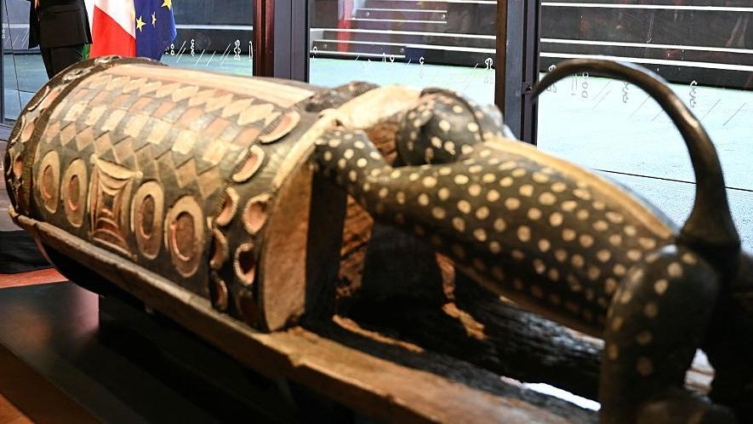
A sacred drum looted by French forces during its colonial rule in Ivory Coast has been returned to the country, more than a century after it was taken.
It was seized by colonial authorities in 1916 before being taken to France in 1929, where it was put on display at the Trocadéro Museum and later at the Quai Branly Museum in Paris
The Djidji Ayôkwé, as the talking drum is called, was welcomed home by members of the Ebrié community, its original owners. It is more than three metres (10 ft) long, weighs about 430kg (68 stone), and is carved from iroko wood.
The return is part of a wider French effort to repatriate African cultural artefacts, a process that began in 2017.
It arrived aboard a specially chartered plane but was not removed from its large wooden crate marked "fragile".
A traditional group of dancers and several local chiefs were at Abidjan International Airport to receive it.
"This is a historic day with lot of emotions," Ivory Coast's Culture Minister Françoise Remarck told the BBC.
"We are living through a moment of justice and remembrance that finally marks the return of the Djidji Ayôkwé to its land of origin."
Francis Tagro, director of the Museum of Civilisations in Abidjan, said the drum would be exhibited "in a place of honour in the heart of the national museum".
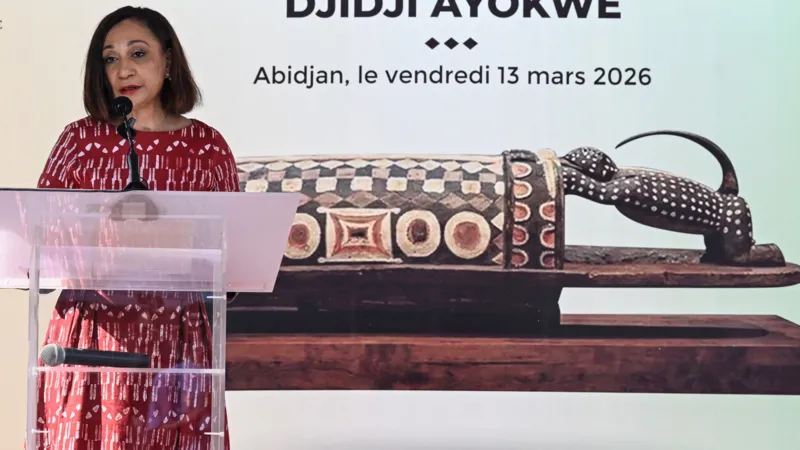
"We are deeply happy and proud to receive this sacred drum. It means so much to us, it will elevate the sense of culture of the young generation," he told the BBC.
A central piece of Ebrié heritage, the talking drum was traditionally used to warn of danger, mobilise people for war, and summon villages to ceremonies. The ethnic group are based in Abidjan, Ivory Coast's largest city.
The drum was officially handed back by Paris on 20 February after the French parliament passed a special law authorising its restitution.
The talking drum is the first object on a list of 148 works that Ivory Coast is seeking to have returned from France and other countries.
France has already returned some of the Abomey royal treasures to Benin and a historic sabre to Senegal.
As restitution requests from former colonies increase, France's Senate adopted a framework law on 29 January aimed at making it easier to remove colonial-era artefacts from French national collections.
The bill is expected to be discussed shortly by the National Assembly.
Latest Stories
-
National Peace Council urges investment in youth to sustain Ghana’s peace
3 minutes -
Afenyo-Markin urges youth to speak up against injustice
13 minutes -
CAF annuls Edo Queens victory, orders WAFU B final to resume from extra time
36 minutes -
Interior Minister urges traditional authorities to enforce anti-bushfire bye-laws
37 minutes -
3rd Republic Bank-JoyNews Habitat Fair Clinic ends on a high note after three days of strong patronage
39 minutes -
Ten climbers missing after avalanche hits Himalayan base camp
1 hour -
NPP had more permanent fuel relief measures than current GH¢2 diesel cut – Amin Adam
2 hours -
Photos from the 3rd Republic Bank-JoyNews Habitat Fair Clinic
2 hours -
Ethiopia’s army promises restraint amid fears of new civil war
2 hours -
Amin Adam calls for review of fuel taxes as diesel prices remain above GH¢18
2 hours -
World Vision Ghana, Ahafo districts sign MoU for universal WASH coverage
3 hours -
When the gold engine stutters: What Ghana’s Cedi and reserves are telling us about the new economic architecture
3 hours -
Two reportedly die after being trapped in mining pit at Juaboso
3 hours -
Petrosol cleans up Wa Municipal Hospital, to donate medical equipment
3 hours -
‘If NPP was ‘insensitive’ over fuel prices, NDC must accept same description now’ — Amin Adam
4 hours