

Audio By Carbonatix
A representative of the World Health Organisation (WHO), Matthew Taylor, has urged journalists to avoid victim-blaming narratives in their reporting on road crashes.
He emphasised that such narratives downplayed the seriousness of road traffic issues, which result in fatalities and injuries, particularly among people in their productive years.
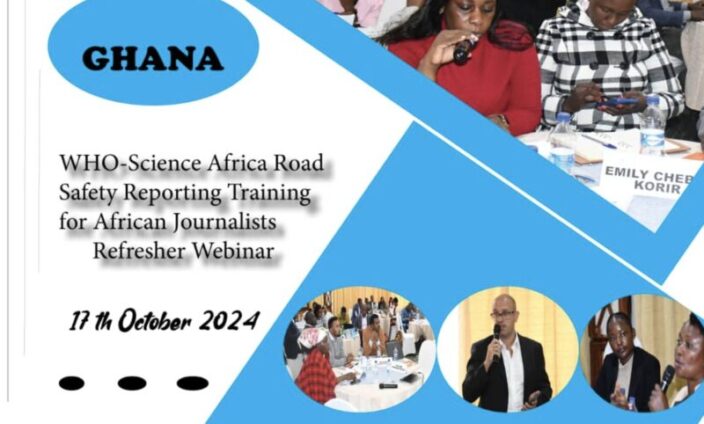
Mr. Taylor made these remarks while addressing Ghanaian journalists during the WHO-Science Africa Road Safety Reporting Training Refresher Webinar on Thursday, October 17, 2024.
He acknowledged that road crashes and collisions were inevitable, noting that fatalities were often seen as a byproduct of development.
However, he cautioned that that mindset led to unwarranted blame placed on individual drivers or pedestrians.
“Do we need to blame victims for crossing a busy road?” Mr Taylor asked, noting that referencing other crashes and making counterfactual statements could contribute to victim-blaming.
He cited instances where victims had been criticised for wearing dark clothing at night, emphasising that specific sentence structures could reinforce the perception of victim-blaming, urging journalists to be mindful of such practices.
To make a significant impact, Mr. Taylor encouraged journalists to include human elements in their stories by interviewing community members, family, friends, and experts.
He said that approach could help educate the audience, raise awareness, and influence decision-making.
Mr. Taylor acknowledged that while road crashes are inevitable, they are also preventable.
He emphasised the importance of framing stories to highlight the causes and effects of crashes, which could help draw policymakers’ attention to the necessity for improved road designs and safer transport systems.
He argued that prioritising that focus would save more lives than simply placing blame on victims.
Mr. Daniel Otunge, Science Africa Project Lead, underscored the need for solution journalism, noting that news reports should focus on addressing the identified problems associated with road crashes.
Latest Stories
-
Former President Akufo-Addo takes on new role in Anglican Church
9 minutes -
MTN Ghana steps up sensitization on efficient and safe data usage
10 minutes -
Mfantsipim celebrates 150 Years with historic launch of anniversary songs and commemorative cloth
13 minutes -
Korle-Bu doctors accuse management of staging ‘perfect’ emergency ward for Health Minister’s visit
45 minutes -
Ghana’s historic proposal for a UN Resolution on Transatlantic Slave Trade as the gravest crime against humanity. Revisiting the depth beneath our silence
46 minutes -
Korle-Bu accident and emergency centre under strain as doctors warn of legal and safety risks
59 minutes -
Ghana pushes landmark UN Resolution on Reparations for slave trade
1 hour -
NPP’s poll decline ‘startling’ – Prof Nortey calls for introspection
1 hour -
Consumers to feel impact of Burkina Faso tomato ban – Peasant Farmers Association
1 hour -
ICGC hosts DOULOS Conference 2026 to raise enduring church leaders
1 hour -
NPP support declining, NDC gaining ground – Global Info Analytics poll
1 hour -
LCF leads successful prison outreach at Nsawam, extends hope to inmates
2 hours -
Ibrahim Mahama announces legal action against Black Maria special operations team over alleged assault in Tamale
2 hours -
2026 World Cup: US Embassy reduces Visa waiting time, warns against wrong applications
2 hours -
E&P to invest $1.2bn in Tarkwa and Damang mines, sends 30 heavy-duty trucks to site
3 hours