

Audio By Carbonatix
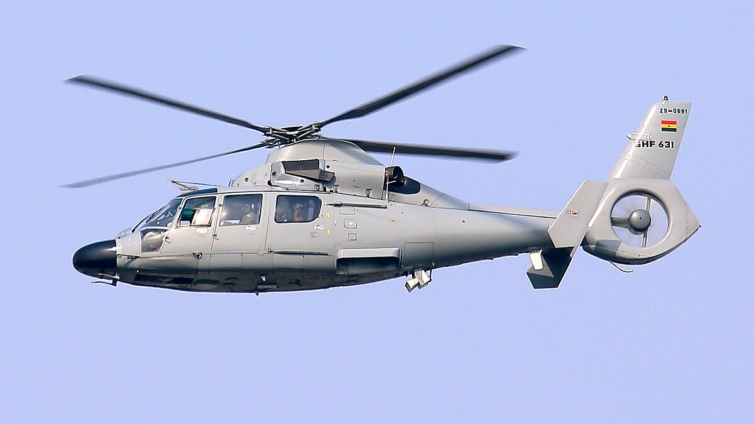
The long-awaited official investigation report into the tragic August 6, 2025, crash of a Ghana Air Force Harbin Z-9 helicopter has been released to the public, shedding light on the devastating accident that claimed the lives of eight high-ranking officials and crew members.
The Ministry of Defence (MOD) Accident Report, compiled by a joint board from National Security, the Ghana Armed Forces, the Aircraft Accident & Incident Investigation and Prevention Bureau (AIB Ghana) and assisted by some US officials, highlighted key findings unravelling the cause of the crash.
The team analysed flight data recorders (FDR), cockpit voice recorders (CVR), wreckage debris, meteorological data, and witness statements to draw a comprehensive conclusion that brings closure to the crash.
Presented by Captain Paul Forjoe, an Investigator and Retired Pilot at the AIB Ghana and member of the board of inquiry, at the Jubilee House today (November 11), the findings showed a critical mix of adverse environmental conditions and key systemic safety deficiencies.
The investigation concluded that while the immediate cause was a sudden weather phenomenon, the helicopter lacked crucial modern safety tools that could have aided the crew.
Here are 10 key findings from the probe:
- Sudden Loss of Lift Due to Downdraft (Cause of Accident): The investigation determined that the immediate cause of the accident was the sudden loss of altitude and lift due to downdraft. This loss of height occurred without any change in power or pitch attitude from the crew.
- Adverse Environmental Conditions and High Terrain: The loss of altitude was consistent with downdraft associated with changing environmental conditions over high terrain. The flight path involved rising terrain, adverse weather, and limited visibility, all conducive to creating sudden and powerful turbulent wind currents.
- Lack of En Route Weather Information: A major environmental constraint was the lack of weather information available to the pilot along the flight route. The crew relied only on aerodrome weather reports for Accra and Kumasi, which showed poor conditions (e.g., low clouds at 600–900 feet in Kumasi).
- Transition to Instrument Flight Near Impact: The crew initiated the flight under Visual Flight Rules (VFR) in marginal weather. The helicopter subsequently entered Instrument Meteorological Conditions (IMC/clouds) at 09:56 and transitioned to IFR, but lost control and impacted a ridgeline just two minutes later at 09:58.
- Impact Point on Ridgeline: The final point of impact was a ridgeline at 1,370 feet above sea level, approximately 6.5 miles from the destination of Obuasi.
- Aircraft Lacked Critical Safety Enhancements: Although the helicopter was deemed airworthy and serviceable, it lacked crucial modern safety enhancements needed for flying safer in adverse weather over high terrain. Key missing equipment included:
o Terrain Awareness and Warning System (HTAWS/EGPWS).
o Advanced navigation with terrain mapping.
o Automatic Flight Control System (AFCS). - Limited National Navigational Capability: A systemic factor was the limited national navigational capability available for providing both en route and remote areas weather services to aircraft. The environment also lacked ground-based navigational aids en route.
- Absence of Modern Flight Monitoring and Tracking: The Air Force operations lacked modern real-time oversight systems, specifically: No Flight Data Monitoring (FDM) and No real-time tracking systems (such as Secondary Surveillance Radar or ADS–B).
- No Simulator Training for Crews: A deficit in enhanced training was noted, with the investigation finding that the crew had no access to simulator training for recurrent practice and preparedness.
- Crew Competence and Health Ruled Out: The investigation ruled out human factors related to crew competence or health. Both the Captain and Copilot were qualified FAA commercial and instrument-rated pilots, and a review of medical and psychological records showed no known conditions that would have materially affected their performance.
Latest Stories
-
Schizophrenia-related disorders lead mental health cases recorded in Ghana
15 minutes -
Dutch authorities enlist Ghana in hunt for fugitive drug lord Bolle Jos
38 minutes -
Ghana housing finance conference adopts communiqué to improve affordable housing access
5 hours -
Special Initiatives Minister urges Wa Technical Institute to enrol more girls as EU-backed solar training lab opens
5 hours -
In the matter of my first year at the Bar
6 hours -
ActionAid Ghana calls for an end to child marriage, greater investment in girls’ rights
6 hours -
Newsfile to tackle World Cup visa scandal, beach demolitions, education strikes, BRICS bid
6 hours -
UK-Ghana Trade & Investment Summit: Trade Resource Centre to help businesses maximise UK-Ghana trade opportunities
6 hours -
Embassy of Denmark celebrates World Maritime Day
7 hours -
Linking LEAP to productive inclusion could cut extreme poverty by 2030 – UNICEF
8 hours -
Trade Ministry backs use of creative arts to rehabilitate prison inmates
8 hours -
Negotiations with government to continue despite strike suspension – GNAT
8 hours -
‘Ghana cannot afford to waste public resources; every cedi has a job’ – Ato Forson
8 hours -
Ghana expects economic boost as World Assemblies of God Congress brings 10,000 delegates to Accra
8 hours -
Joy in Nayilifong as Farouk Aliu Mahama donates 100kVA transformer to improve power supply
8 hours