

Audio By Carbonatix
An awardee of the JoyNews Impact Makers, Dr Kwame Sarkwah Aidoo makes strides as he transports the first-ever honey bees from Donkorkrom in the Eastern Region to major cities across the country.
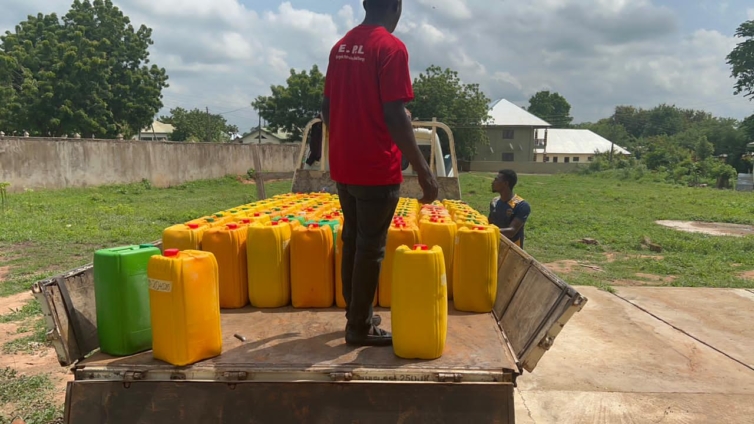
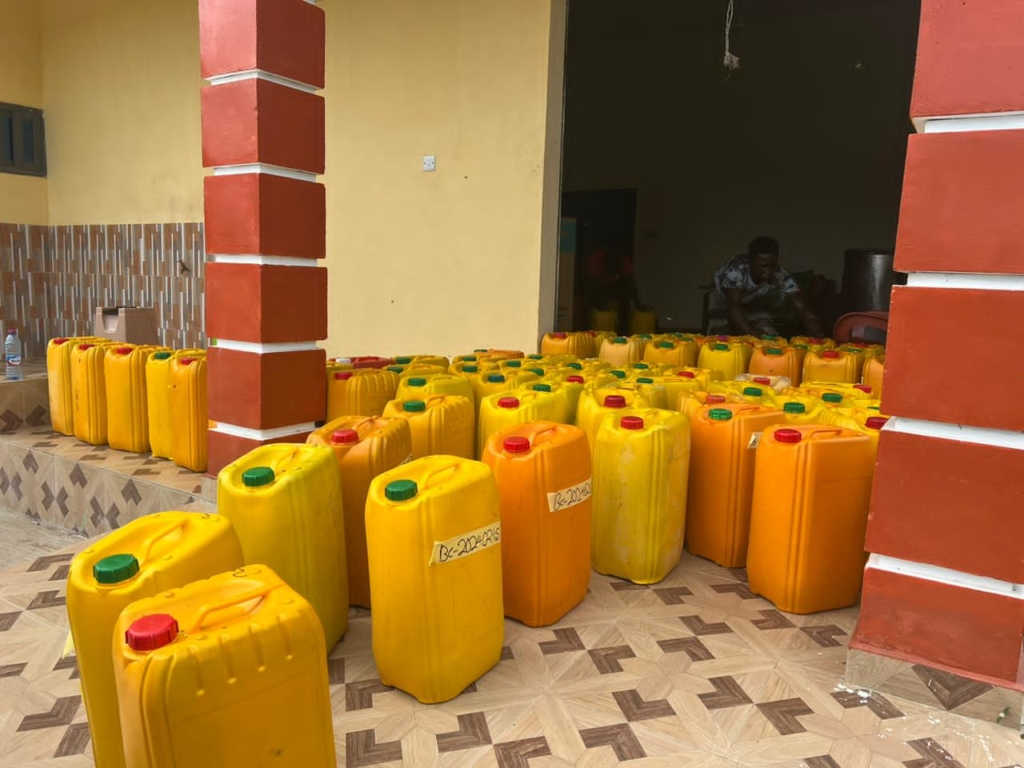
About 3.6 kilograms of honey were ferried with assistance from his foundation, Bees for Development Ghana (BfDG) and will be distributed to cities including Accra, Cape Coast, Kumasi, and Takoradi.
This export marks a departure from the community’s usual trade of timber and charcoal. For many residents, this change brings not only environmental relief in the face of climate change but also economic benefits.

The residents explained that now more young people would venture into beekeeping rather than charcoal preparation, which would help reduce pollution in the community.
According to the manager of BfDG, Gideon Zege, the honey is free from pesticides and contaminants because the bees lived in forest.
He described the journey from forest to dining table as a wholly natural process.
“We are proud of our Nature-based Beekeepers – they are determined to make their lives better with bees and now we have the chance to bring this honey out of Donkorkrom and make it available to customers in other parts of Ghana. Who knows? In the long term, we might even achieve export!
- Read also: JoyNews Impact Makers awardee uses cash prize to buy bicycles for 10 school children at Donkorkrom
Also, a beekeeper Shafik Asminu said he was particularly excited about the news.
For many years, they have watched the forest disappear due to the rampant cutting of the forest reserves but now, the forest will be preserved.
“For too long, we have watched our forests disappearing and our environment suffer. Now, we’re not only protecting our natural forest resources but also creating a new source of income for our communities through nature-based beekeeping,” Shafik added.
Additionally, a truck driver said that he had been in the profession for many years, and although he did not like the fact that the forest was constantly degraded for timber, he had no other option.
However, now that forest reserves are being used for bee farming, he is excited because it is a healthier choice and a means to conserve the environment.
“I must say loading charcoal onto the truck is not pleasant at all as we get very dirty mixed with sweat in the process. I know people cut trees to make charcoal, reducing the forest cover – not a good practice at all. But I’m happy now. We have people who have the knowledge and skills to produce honey from the trees here,” he said.
Latest Stories
-
Gov’t distributes over 8,500 laptops to One Million Coders project
50 seconds -
Julius Debrah, ‘man to beat’ as NDC’s James Agbey dismisses Musah Dankwah’s polls
7 minutes -
GPRTU in Savannah Region to protest alleged eviction in Damongo
36 minutes -
Re: Reinsurance does not replace process — A response to the SIGA–SIC defence
51 minutes -
Gender Ministry supports Harriet Amuzu in ongoing abuse case
1 hour -
AG joins plaintiff to scrap OSP ?: We should be mindful of the mischief in this – Bobby Banson
1 hour -
Samson Lardy Anyenini questions willingness of Attorneys-General to prosecute political colleagues
1 hour -
It is only fair the OSP is heard in Supreme Court case – Bobby Banson
1 hour -
Asiedu Nketia resumes Ashanti tour, second leg kicks off on Sunday
1 hour -
NLA denies salary cut claims, threatens legal action over reports
2 hours -
BoG Governor honoured for stabilising cedi, improve inflation
2 hours -
Kyebi Easter Homecoming 2026: A resounding success!
2 hours -
RNAQ divorce ruling: What the noise is hiding
2 hours -
Trade Minister applauds GUTA as a pillar of economic growth; Prez Mahama honoured
3 hours -
President’s brother’s takeover of Damang Mines is ‘untidy’ – Alhassan Tampuli
3 hours