

Audio By Carbonatix
A lecturer at the KNUST School of Public Health says government should introduce serological testing to quickly determine the exposure level of coronavirus in the country.
Dr John Amoasi indicated that relying solely on the Polymerase chain reaction (PCR) testing is woefully inadequate to determine when the country will reach its peak and how to effectively contain the situation in the coming days.
The Senior Lecturer at Kumasi Center for Collaborative Researcher in Tropical Medicine also noted that due to lack of resources for effective contact tracing, the country’s graph on the spread of Covid-19 is inconsistent and makes it difficult to project and analyse the situation for the future.
Speaking on Joy FM’s News File Saturday, he said, “Including serological testing, will help us measure the levels of exposure and give us a fair idea of the reality may be based on your limited ability to test.
“And with that, we can make certain projection about the level of exposure, the actual numbers infected and when we might hit the peak and that will inform when we could review the lockdown if we think it is being effective or not.”
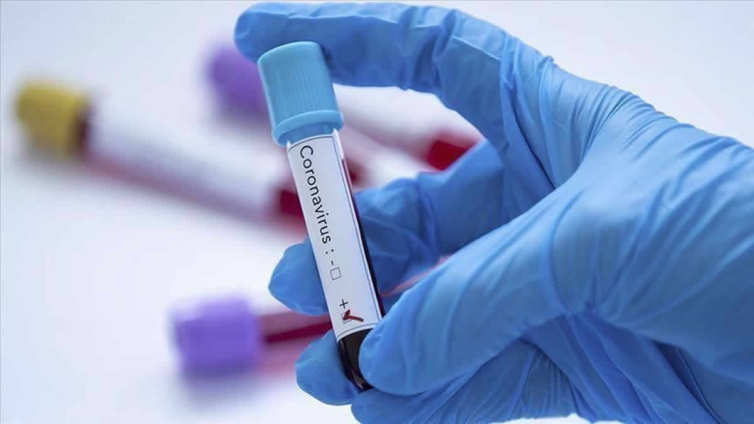
Dr Amoasi further added that the nasal swap testing sometimes gives a false negative, however, with the serological testing which involves blood samples, it is easier to identify both infected and people exposed to the virus.
“It will involve taking blood samples to see if someone has developed anti bodies against the virus, if there is presence of this anti bodies then it means the person has been exposed to the coronavirus.
“And because our testing capacity by way of taking the nasal swap is limited, looking at the anti-bodies levels and balancing it with the PCR testing we are doing right now will help us appreciate it [Covid-19 better in the country],” he stated.
Stressing on the importance of the serological testing, Dr Amoasi cautioned that projection is made there will be no way for the country to determine if it is successfully dealing with the pandemic or otherwise.
“We are not doing badly as compared to other countries globally, but at this moment we do not have the information to know as to whether we are flattening the curve or not, and the little we have does not suggest that we have arrived at our peak let alone flattening the curve.”
However, the Presidential Health Adviser, Dr Essiah Asare, on his part said, everything has got to do with science, therefore, when the time comes, the country will know whether the situation is getting better or worse.
“We are doing geographical mapping, to identify the epicenters in the country, after that rapid test kits will be introduced to test as many people as possible in those areas. PCR will then be used to confirm those positive cases, for isolation and management."
“This is when we can tell that Ghana has reached the peak and once we are isolating and managing then we are gradually bending the curve because we are not taking so many people to the hospital to overwhelm our system,” he explained.
Latest Stories
-
GAF sets Sept. 28–30 for Documentation, Body Selection Exercise
25 minutes -
I resigned five months ago – BoG Governor Asiama explains GoldBod Board exit
41 minutes -
Trump says men arrested at UK air base used by US were looking to do ‘big damage’
57 minutes -
Trump confirms meeting with Anthropic’s Amodei, repeats dismissal of AI fears
1 hour -
China pushes back against US on Iran and Cuba in UN speech
1 hour -
OpenAI, Anthropic CEOs called to appear at Australian AI probe
2 hours -
WHO says Congo Ebola outbreak spreads to two new health zones
4 hours -
Nigeria come from benhind to win in AFCON 2027 qualifier
4 hours -
South African white genocide does not exist, new ambassador to US tells BBC
4 hours -
T-bills auction: Government exceeds target marginally; yield on 91-day bill remains unchanged
5 hours -
Pope says ‘scourge’ of abuse must be rooted out as he visits Lourdes
5 hours -
GPL 2026/27: 10-man Aduana hand Kotoko defeat in Kumasi
5 hours -
News media must stay relevant or ‘society will struggle’, says World News Day boss
5 hours -
Kenyan High Commissioner hosts Heads of Mission from 25 countries
5 hours -
Embattled Serbian president resigns, paving way for early elections
5 hours