

Audio By Carbonatix
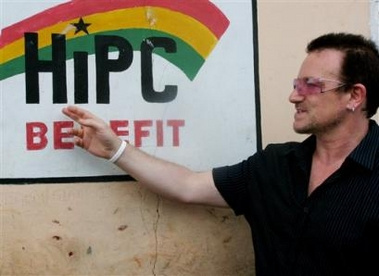
It is interesting to find some Ghanaians shocked at the swift defense of the International Monetary Fund (IMF), strongly denying that Ghana has not been classified as a Heavily Indebted Poor Country (HIPC) based on information found on its website.
Our elders say, you don’t ask for a chair when you visit a place where the chief himself sits on the floor. I would have been extremely disappointed in the IMF, if they had not mounted such a defense for government, as they have always done.
The IMF is reported to state that, the HIPC initiative is essentially closed for countries that have already reached the completion point. It also added that Ghana successfully reached the completion point in July 2004.
The IMF was insistent that the list of countries that have qualified for the HIPC Initiative since its inception in 1996 is regularly updated on their website and must not be interpreted as a new HIPC list, it added that any such interpretation is flawed and may be deceptive.
But for the millions of unemployed young Ghanaian generations, our biggest concern is not to know the graduation point of our nation regarding the HIPC initiative rather many Ghanaians are deeply interested in knowing, if our nation deserves forgiveness of debts as a result of our accumulated sins in skillful excessive borrowing, bad leadership and corruption.
The HIPC Initiative focused on ensuring that no poor country face a debt burden it could not manage.
The initiative which was launched in 1996 by the IMF and the World Bank Group had Ghana joining in July 2001 and after three years of working with the Bretton Woods institutions and the African Development Bank to implement the HIPC initiative, eventually, about $3.7 billion of the country’s debt were forgiven under the momentous program.
The country also benefitted from other debt relief and economic opportunities from some of its creditors as a result of opting to be declined HIPC.
A letter from the heart can easily be read with on the face, if government radically continues our national sins of excessive borrowing and spend at the current rate, the post-2020 general election economy will not be able to hide the negative impact of these actions.
As the electoral competition becomes more intense, political parties have also intensified their promises to Ghanaians of all walks of life.
Will our future government be in a position to fulfill its promises, if our creditor decides not to forgive our burden of debt?
Latest Stories
-
A source of excellence across generations – Vice President Opoku-Agyemang lauds Mfantsipim
17 minutes -
(Photos) Mfantsipim School launches historic 150th anniversary
41 minutes -
Knights and Ladies of Marshall group backs Catholic Bishops’ stance on anti-LGBTQ+
2 hours -
Bright Simons writes: All the Filla in the Ibrahim Mahama/E&P – Gold Fields Saga
2 hours -
Monetise Idiocy In Ghana
2 hours -
The Ghanaian prophet and the mysterious death of his scottish wife Charmain Speirs
3 hours -
Nearly 400 sentenced in Nigeria for links to militant Islamists
3 hours -
Ghana’s recovery supported by gold strength despite global oil price pressures – Standard Bank Research
3 hours -
Methodist Church hails Mfantsipim@150; calls for “fresh consecration” to excellence
4 hours -
‘Excellence is our inheritance’ – Nana Sam Brew-Butler hails Mfantsipim’s 150-year reign in leadership
4 hours -
Kwaku Azar writes: A-G vs OSP
4 hours -
Mfantsipim–Adisadel rivalry built excellence, not division – Sam Jonah
4 hours -
Vice President launches Mfantsipim’s 150 years of shaping Ghana’s greatest mind
5 hours -
I assure Otumfuo, Mahama will join him to commission KNUST Teaching Hospital by end of this year – Haruna Iddrisu
5 hours -
Barcelona dominate derby to extend La Liga lead
5 hours