

Audio By Carbonatix
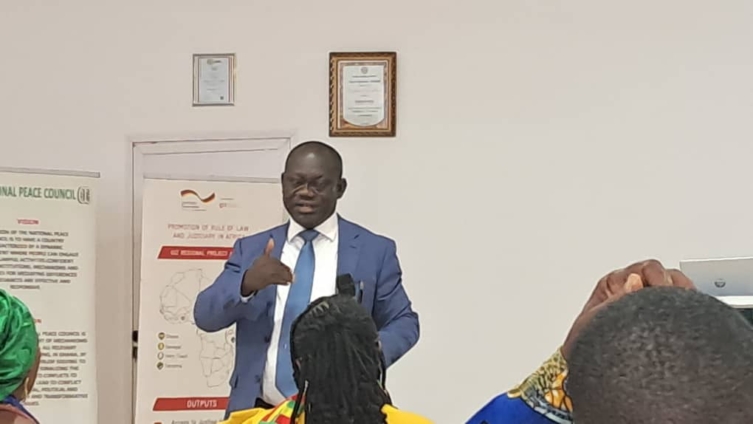
Private legal practitioner and lead facilitator for an Alternative Dispute Resolution (ADR) training for members of the Volta and Oti Regional Peace Councils, Esq. Alex Nartey, has emphasised that the Council’s strength lies in discreet engagement rather than issuing public condemnations when addressing sensitive conduct.
Speaking at the three-day workshop, organised by the Volta Regional Peace Council with support from GIZ, Esq. Nartey explained that measured and diplomatic approaches in political discourse are essential to safeguarding Ghana’s democracy.
“The Peace Council’s role is not to shame people publicly but to engage them privately, reason with them, and help them see the impact of their words or actions,” he said. “When individuals are approached in this manner, many reflect, acknowledge their excesses, and make positive changes.”
He further noted that partisan politics does not harm democracy unless it suppresses the rights of other political parties to operate freely. According to him, a vibrant democracy is one where multiple parties — beyond the NDC and NPP — contribute to the exchange of ideas for the benefit of all Ghanaians.
Esq. Nartey also highlighted the Peace Council’s most pressing needs: logistics and skilled human resources capable of applying interest-based approaches to manage crises. He stressed that much of the Council’s effectiveness is achieved behind the scenes, where dialogue and mediation yield more lasting results than public statements.
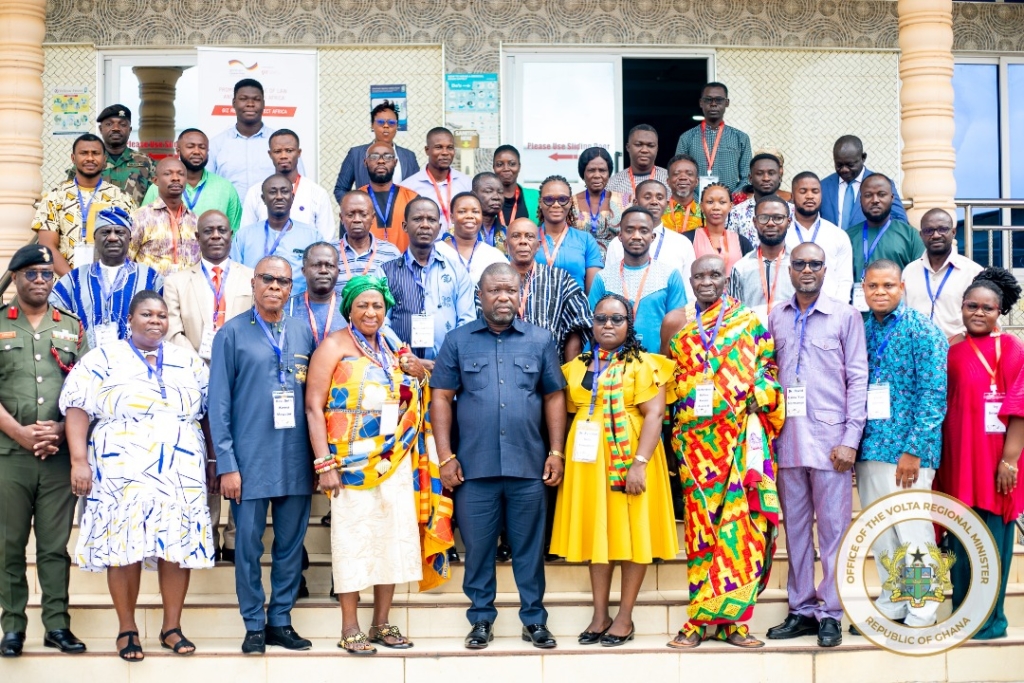
On the opening day of the training, participants were introduced to the legislative framework governing the Peace Council, its role as a neutral third party in conflict resolution, guidelines on hate speech and indecent expressions, as well as theories and principles of conflict.
Participants expressed enthusiasm about the training, pledging to use the knowledge acquired to promote peace, foster understanding, and make a meaningful difference in their communities.
The training also included practical ADR simulations and advanced conflict management techniques aimed at strengthening the Councils’ capacity to resolve disputes effectively.
Latest Stories
-
A source of excellence across generations – Vice President Opoku-Agyemang lauds Mfantsipim
27 minutes -
(Photos) Mfantsipim School launches historic 150th anniversary
50 minutes -
Knights and Ladies of Marshall group backs Catholic Bishops’ stance on anti-LGBTQ+
2 hours -
Bright Simons writes: All the Filla in the Ibrahim Mahama/E&P – Gold Fields Saga
2 hours -
Monetise Idiocy In Ghana
2 hours -
The Ghanaian prophet and the mysterious death of his scottish wife Charmain Speirs
3 hours -
Nearly 400 sentenced in Nigeria for links to militant Islamists
3 hours -
Ghana’s recovery supported by gold strength despite global oil price pressures – Standard Bank Research
4 hours -
Methodist Church hails Mfantsipim@150; calls for “fresh consecration” to excellence
4 hours -
‘Excellence is our inheritance’ – Nana Sam Brew-Butler hails Mfantsipim’s 150-year reign in leadership
4 hours -
Kwaku Azar writes: A-G vs OSP
4 hours -
Mfantsipim–Adisadel rivalry built excellence, not division – Sam Jonah
4 hours -
Vice President launches Mfantsipim’s 150 years of shaping Ghana’s greatest mind
5 hours -
I assure Otumfuo, Mahama will join him to commission KNUST Teaching Hospital by end of this year – Haruna Iddrisu
5 hours -
Barcelona dominate derby to extend La Liga lead
6 hours