

Audio By Carbonatix
LG said on Monday it will close its loss-making mobile phone business worldwide as the once pioneer brand looks to focus its resources in “growth areas” such as electric vehicle components, connected devices, smart homes, robotics, AI and B2B solutions, and platforms and services.
The South Korean firm said in a statement that its board of directors approved the decision today. The unsurprising move follows the company’s statement from January when it said it was reviewing the direction of its smartphone business.
LG, which maintained No. 3 spot in the smartphone market in the U.S. for a long time, said it will continue to sell handsets until the inventory lasts, and will provide software support for existing lineup of smartphones for a certain period of time that would vary by region.
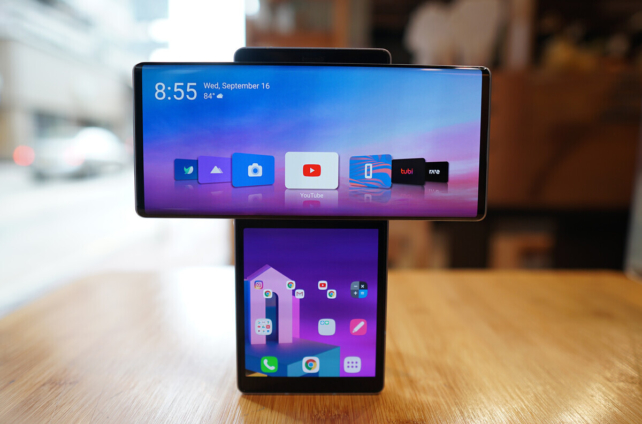
The company said the status of its employees of phone business will be determined at the local level. In January, reports emerged that said LG was looking to sell its smartphone business. In the same month, the company said it would launch a rollable phone this year. But it appears all the efforts to keep the business stay afloat failed.
“Moving forward, LG will continue to leverage its mobile expertise and develop mobility-related technologies such as 6G to help further strengthen competitiveness in other business areas. Core technologies developed during the two decades of LG’s mobile business operations will also be retained and applied to existing and future products,” it said in a statement.
The poor financial performance of LG’s smartphone business has been public information for several years. Like countless other Android smartphone vendors, LG has struggled to turn things around.
LG focused on mid-range and high-end smartphones, two segments of the market that have become increasingly competitive in the past decade thanks to the rise of Chinese phone makers such as Huawei, Xiaomi, OnePlus, Oppo, and Vivo that are launching better value-for-money models every few months. (Once a rival, HTC has been struggling, too.)
Several phonemakers today rely heavily on software services such as mobile payments to make money. While LG launched a mobile payments service in 2017, two years after Samsung launched Samsung Pay, LG’s portfolio of services remained thin throughout the years.
“LG was too much dependent on two markets: Korea (KR) & North America (NA),” said Neil Shah, Partner at research firm Counterpoint. “One thing which has helped LG stay afloat for so many years is their vertical integration. They are a ‘mini Samsung,'” he said, pointing to LG Display (displays), LG Chem (batteries), LG Innotek (camera, IoT/auto modules), Silicon Works (semi), and LG Electronics (consumer goods).
Latest Stories
-
Fires in Ghana: We know the next one is coming
24 minutes -
Kasoa Old Market demolition displaces hundreds as Assembly defends action
26 minutes -
Manhyia South MP demands PPA board minutes on ‘Big Push’ sole-sourcing approvals
37 minutes -
Today’s Front pages: Tuesday, April 7, 2026
40 minutes -
President Mahama praises GWL MD Adam Mutawakilu over Damongo Water Project progress
42 minutes -
Ghana–China Forum explores zero-tariff trade opportunities
1 hour -
What is wrong with us?: A quiet truth we can no longer ignore
1 hour -
What is wrong with us?: When sirens become symbols of power rather than protection and emergencies
2 hours -
Businesses scramble to get noticed by AI search
2 hours -
From perk to performance: Why employee wellness must be a core business strategy
2 hours -
Bank of Ghana’s $1.3bn profit from gold sale could help narrow 2025 losses
2 hours -
Odau Twafohene Baffour Osei Afrifa appointed Regent of Akyem Chia
2 hours -
We are focused on engineering low interest rate regime – BoG Governor assures
2 hours -
How Sporting hero Gyokeres could end European run
2 hours -
The attack on Ghanaian traders in Burkina Faso and the blame game: Why Hybrid Security Governance Holds the Key (II)
2 hours