

Audio By Carbonatix
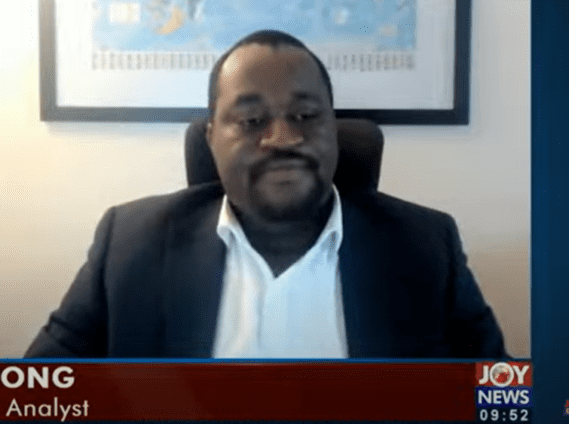
Political risk analyst and economist, Dr. Theo Acheampong, has commended President John Dramani Mahama's recent nominations to the Supreme Court, describing them as experienced legal minds whose elevation will significantly enhance the quality of the nation’s jurisprudence.
Speaking in an interview on JoyNews' Newsfie on Saturday, May 3, Dr. Acheampong noted that the nominees bring with them a wealth of experience, having risen through the ranks of the judiciary, including the Court of Appeal.
“If you look at the people that have been appointed to the Supreme Court, clearly they are experienced hands. They have worked through the process all the way to the Court of Appeal, and I think their appointment will enrich the quality of jurisprudence in the country,” he said.
This follows President John Mahama's nomination of seven Justices of the Court of Appeal for elevation to the Supreme Court. Their appointments are subject to review by the Judicial Council and parliamentary approval.
The nominees include: Justice Sir Dennis Dominic Adjei, Justice Gbiel Simon Suurbaareh, Justice Senyo Dzamefe, Justice Kweku Tawiah Ackaah-Boafo, Justice Philip Bright Mensah, Justice Janapare Bartels-Kodwo and Justice Hafisata Amaleboba.
Meanwhile, the Minority Leader, Alexander Afenyo-Markin has criticised President Mahama’s nomination, describing it as a veiled attempt to implement a third-term agenda.
Speaking at a press conference organised by the New Patriotic Party (NPP) on Thursday, May 1, Mr Afenyo-Markin warned that the move poses a serious threat to the balance of power and the independence of the judiciary.
“This is not a routine judicial appointment. What we are witnessing is a strategic and deliberate effort to pack the Supreme Court with loyalists,” he stated.
“The nomination of seven Appeals Court judges immediately after suspending the Chief Justice reveals a deeper, more dangerous political ambition—a third-term agenda in disguise.”
The minority leader further accused the president of undermining democratic governance and constitutional principles.
He argued that such actions could erode public trust in the judiciary and destabilise Ghana’s democratic institutions.
Latest Stories
-
Trade Minister applauds GUTA as a pillar of economic growth; Prez Mahama honoured
50 minutes -
President’s brother’s takeover of Damang Mines is ‘untidy’ – Alhassan Tampuli
56 minutes -
It’s not true that gov’t decided not to renew the lease for Gold Fields – Bobby Banson
60 minutes -
Ghana to boost tomato production with 60-hectare irrigated farms and processing initiatives
1 hour -
E&P’s takeover process of Damang Mines was very clean – Inusah Fuseini
1 hour -
Damang takeover: There is not going to be any job loss; it is a lease change – Bobby Banson
2 hours -
Gold Fields didn’t stop mining at Damang mines; such claims are untrue – Bobby Banson
2 hours -
Engineers and Planners currently operate only in Ghana – Bright Simons
2 hours -
Lands Minister has no legal basis to restrict lease to Ghanaian firms – Bright Simons
2 hours -
Gov’t’s refusal to renew Gold Fields’ lease was simply untenable – Bright Simons
2 hours -
SOS Children’s Villages Ghana deepens partnership with Gender Ministry
3 hours -
Gender Ministry celebrates Christina Koch, reaffirms commitment to empowering girls
3 hours -
Live stream: Newsfile digs into E&P’s takeover of Damang Mines, OSP powers and Anti-LGBTQ Bill
3 hours -
Moody’s maintains Ghana’s rating at Caa1, revises outlook to positive
4 hours -
Zambia elevates tourism education to national priority as President Hichilema backs continental summit
4 hours