

Audio By Carbonatix
McDan Aviation Handling Services Limited has taken legal action against Ghana Airports Company Limited (GACL), challenging the termination of its Fixed Base Operations (FBO) licence at Terminal 1 of Accra International Airport.
The lawsuit, filed at the Commercial Division of the High Court in Accra, marks the latest escalation in a dispute between the aviation services firm and the state-owned airport operator over financial obligations, contractual compliance and operational rights at the airport.
At the centre of the dispute is a 10-year licence agreement signed on August 1, 2022, granting McDan Aviation the right to operate Fixed Base Operations at Terminal 1 - services typically provided to private and charter aircraft, including ground handling, passenger services and aircraft support.
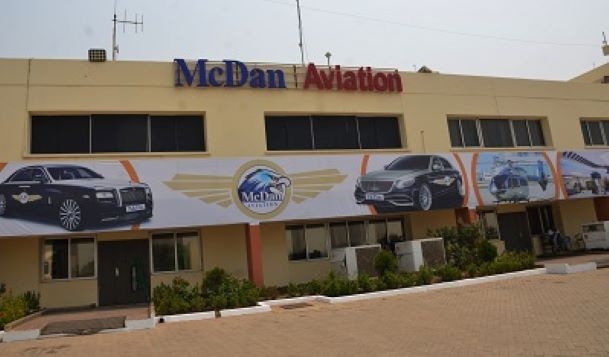
According to the statement of claim, McDan Aviation Handling Services Limited invested heavily to establish the facility. The company argues that the investment was made with the expectation that the concession would run its full contractual term.
“The Plaintiff [McDan Aviation Handling Services Limited], after the execution of the Licence Agreement, spent over Three Million United States Dollars ($3,000,000.00) to set up the Terminal to provide aviation services under the Licence Agreement.”
The central argument in McDan Aviation’s lawsuit focuses on the process used by GACL to terminate the agreement, which the company claims did not comply with the contractual provisions governing default and termination.
Under the terms of the licence agreement, the company argues that any breach must be followed by a formal notice period allowing time to remedy the default.
“The Licence Agreement provided that the Agreement may be terminated… upon the occurrence of an event of default… which is not remedied within 3 (three) months of notice given in writing.”
However, McDan Aviation contends that the notices it received from GACL did not meet this threshold.

“The first demand notice… gave the Plaintiff three (3) days’ notice… the second… five (5) days… [and] the third… fifteen (15) days.”
The company argues that such timelines fell short of the contractual requirement and therefore cannot justify termination of the licence.
McDan Aviation further maintains that the financial dispute cited by GACL has already been resolved.
“The Plaintiff states that as of now it has paid in full all sums due and owing to the Defendant and is in no way indebted to the Defendant.”
This claim contrasts with GACL’s earlier position that the company had repeatedly defaulted on licence fees, rent and royalties tied to its operations at Terminal 1.
Beyond contesting the termination itself, McDan Aviation is also challenging the airport operator’s decision to shut down its facility.
The company is asking the court to declare that the closure of its operations was unlawful and is seeking damages.
“A declaration that the forcible closure of the Plaintiff’s operations at Terminal 1… is unlawful,” the suit states.
The case raises broader questions about concession management, contractual enforcement and private investment protection within Ghana’s aviation infrastructure.
Fixed Base Operations are a critical component of the business aviation ecosystem, serving private jet operators, charter services and corporate aviation clients.
The dispute therefore carries implications not only for the two parties involved but also for the structure and regulation of private aviation services at Ghana’s main international gateway.
With both sides presenting sharply different accounts of the financial and contractual obligations under the agreement, the outcome of the case could set an important precedent for public–private partnerships and concession agreements in Ghana’s transport sector.
The High Court is expected to determine whether GACL’s termination of the licence complied with the contractual framework governing the agreement - and whether the closure of the facility was legally justified.
Latest Stories
-
Kidney health in the spotlight: SHEILD Ghana issues urgent call for national action on World Kidney Day
1 minute -
Ernesto Yeboah writes: For over 20 years, I have fought a silent battle
2 hours -
‘Heart cleanser’ or toxic cocktail? FDA sounds alarm over ‘Sukudai’
2 hours -
Ghana’s ‘Tier 2’ status under fire: NGOs demand radical action against GH¢7m modern slavery crisis
2 hours -
NPP launches digital membership drive; bans manual dues collection by executives
2 hours -
Learn to win with others – Richard Nii Armah Quaye advises young entrepreneurs
2 hours -
Build yourself first, success requires discipline and time – Richard Nii Armah Quaye tells youth
2 hours -
Upper West Regional Minister denies diverting education infrastructure projects from Issa to Daffiama
3 hours -
When success becomes a target: Ghana’s music industry habit of tearing down its own
3 hours -
Savannah Region inaugurates 10-member health committee to reset sector
3 hours -
Let’s demonstrate Mahama’s peace advocacy in his home region – Fulbe to chiefs and people
4 hours -
Bright Ofori: Commending judicial reforms while advancing conversation on timely justice
4 hours -
Newsfile to tackle security recruitment cuts, GH¢21bn audit exposé, Mahama jet controversy
4 hours -
Vice President receives UCC’s Distinguished Fellow Award, calls for education to deliver dev’t
5 hours -
Tension in DBI District as Issa chiefs demand reversal of relocated GES office
5 hours