

Audio By Carbonatix
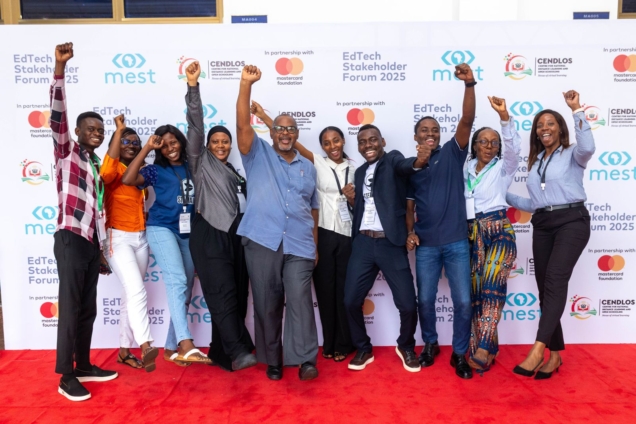
Ghana’s education stakeholders convened at the University of Professional Studies, Accra (UPSA) for the 3rd National EdTech Stakeholder Forum, hosted by the Meltwater Entrepreneurial School of Technology (MEST Africa) and the Centre for National Distance Learning and Open Schooling (CENDLOS), in partnership with the Mastercard Foundation Centre for Innovative Teaching and Learning (CITL).
Building on the achievements of the last two forums organised by MEST Africa and the Mastercard Foundation as part of the EdTech Monday’s platform dialogues, the 2025 edition aligned discussions with Ghana's National EdTech Strategy.
CENDLOS, as the key government body overseeing EdTech coordination and ICT integration in education, is leading initiatives to enhance teaching, learning, and workforce preparedness through innovative technology-led solutions. The forum addressed ongoing barriers to quality education access, especially in underserved areas, by promoting student-centred approaches, teacher empowerment, and the transition of Ghana from Artificial Intelligence (AI) consumers to creators.
In his keynote address, Hon. Dr. Clement Apaak, Deputy Minister for Education, emphasised that educational technology is no longer an option but a necessity. He stated, "It is central to how we prepare our young people not just to survive, but to thrive, in a fast-changing world."
This event is a key part of the EdTech Monday’s platform, which raises awareness and facilitates discussions on harnessing the power of technology in teaching and learning to improve the relevance and quality of education across Africa.
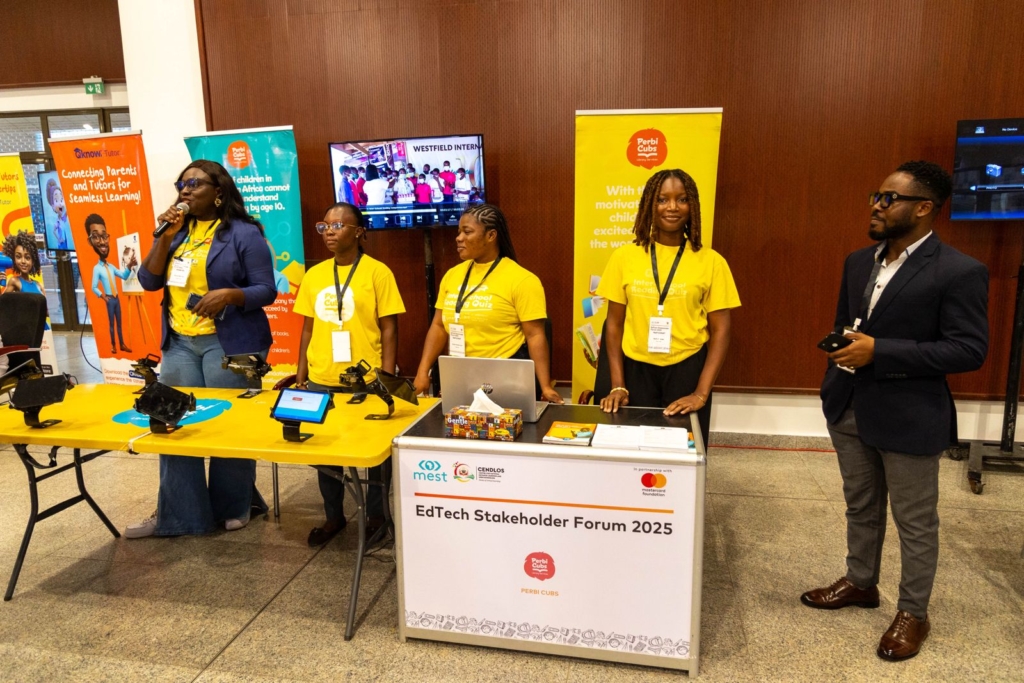
“This platform offers another opportunity to strengthen our collective readiness for the future of work. Together with Mastercard Foundation and CENDLOS, we are ensuring EdTech becomes central to national development,” said Femi Adewumi, Programs Director, MEST Africa
EdTech stakeholders, including policymakers, entrepreneurs, educators, and development partners, proposed several key action points to strengthen Ghana’s digital education ecosystem. They emphasized the need for strategic alignment and collaboration across all sectors to unify and harmonize existing EdTech policies. Participants also called for the creation of a single, comprehensive framework that is validated by all key stakeholders to guide implementation. In addition, they stressed the importance of expanding nationwide access through an inclusive strategy that addresses barriers related to disability, gender, and geography, while prioritizing and promoting homegrown EdTech solutions.
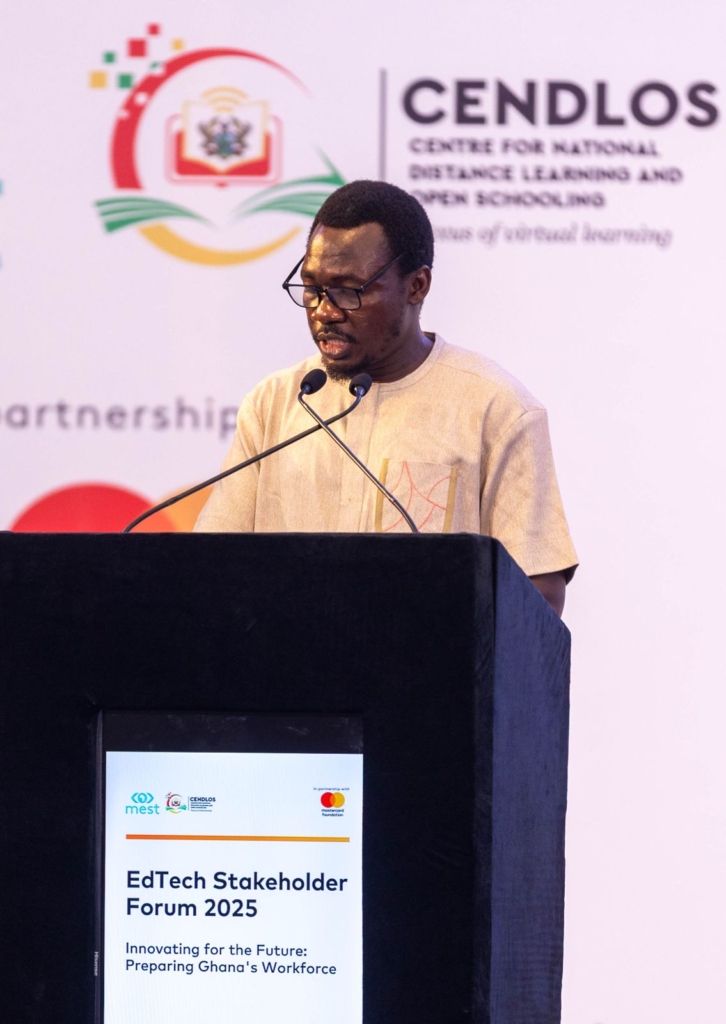
“The EdTech Stakeholder Forum demonstrates the power of collective action in shaping the future of education in Ghana. By bringing together government, innovators, educators, and partners, we are building a strong foundation for the National EdTech Strategy. This platform is not just about dialogue – it is about driving real solutions that leverage technology, digital learning, and artificial intelligence to expand access, empower teachers, and equip our young people with the skills to thrive in the future world of work,” said Dr. Diyawu Mumin, Executive Director of Centre for National Distance Learning and Open Schooling (CENDLOS).
The forum featured roundtable discussions and partner addresses, providing a platform for stakeholders to share their experiences and contribute ideas for the future of EdTech in Ghana.
The Mastercard Foundation reaffirmed its commitment to working with Ghanaian stakeholders to ensure that technology enhances learning outcomes for all. The forum concluded with networking and collaboration sessions to sustain momentum for the National EdTech Strategy.
“Over the last five years, we have supported and continue to support the strengthening of an African EdTech ecosystem to enable young people across the continent to gain the right skills through education to set them on a path to dignified and fulfilling work. The Mastercard Foundation Young Africa Works strategy in Ghana seeks to enable three million young Ghanaians (70 percent women) to access work they see as dignified and fulfilling by 2030. For this to happen, there is a need to lay a firm educational foundation. This explains why our EdTech Mondays platform serves as a convener of these dialogues that have birthed forums like the EdTech Stakeholders Forum in Ghana”, said Rica Rwigamba, Ghana’s Country Director at the Mastercard Foundation.
The forum concluded with networking and collaboration sessions to sustain momentum for the National EdTech Strategy.
Latest Stories
-
Prudential Life settles GH¢100,000 medical bills under its PRUCares Valentine Experience Initiative
6 hours -
Wa West Picnic: Peter Lanchene Toobu champions peace, health and unity in landmark celebration
6 hours -
Dr Mensah Market flooded after downpour in Kumasi
6 hours -
Armed men reportedly storm Adjen Kotoku Onion Market amid tensions
7 hours -
Tecco Mensah writes: Why football fans must look beyond statistics
8 hours -
Police recover stolen Honda CR-V in Kumasi within 48 hours
9 hours -
Apetorku Gbodzi 2026 Festival opens in Dagbamete with development focus
9 hours -
President Mahama arrives in Lyon to co-chair One Health Summit
9 hours -
Beverly View Plus Hotel draws crowds amid coastal Easter rush in Volta
9 hours -
Maiden Zongo Festival held in Wa amid calls to tackle drug abuse among the youth
9 hours -
FDA warns of fake HIV test kits on Ghanaian market
10 hours -
Africa urged to build resilient health systems as donor support tightens
10 hours -
Easter gesture: Ablakwa settles medical bills for 85 North Tongu constituents
12 hours -
Africa must harness its population strength—Titus-Glover
12 hours -
Visa-free access doesn’t mean unlimited stay – Lom Ahlijah
12 hours