

Audio By Carbonatix
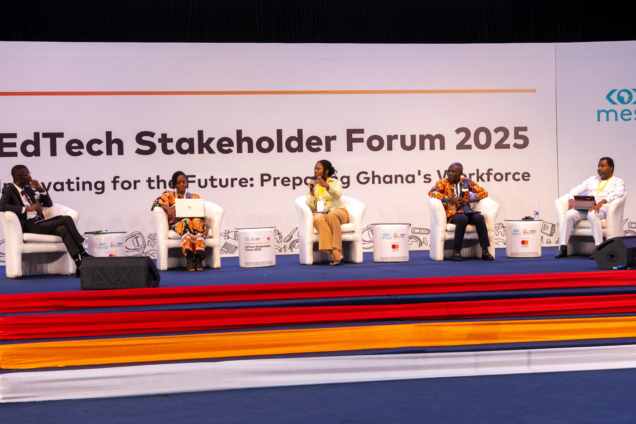
The September edition of EdTech Mondays, held on September 29, 2025 at the UPSA Auditorium, turned the spotlight on one of the most complex but critical issues shaping the future of education technology in Ghana: how to build policy coherence and cross-sector collaboration that truly enables EdTech to thrive.
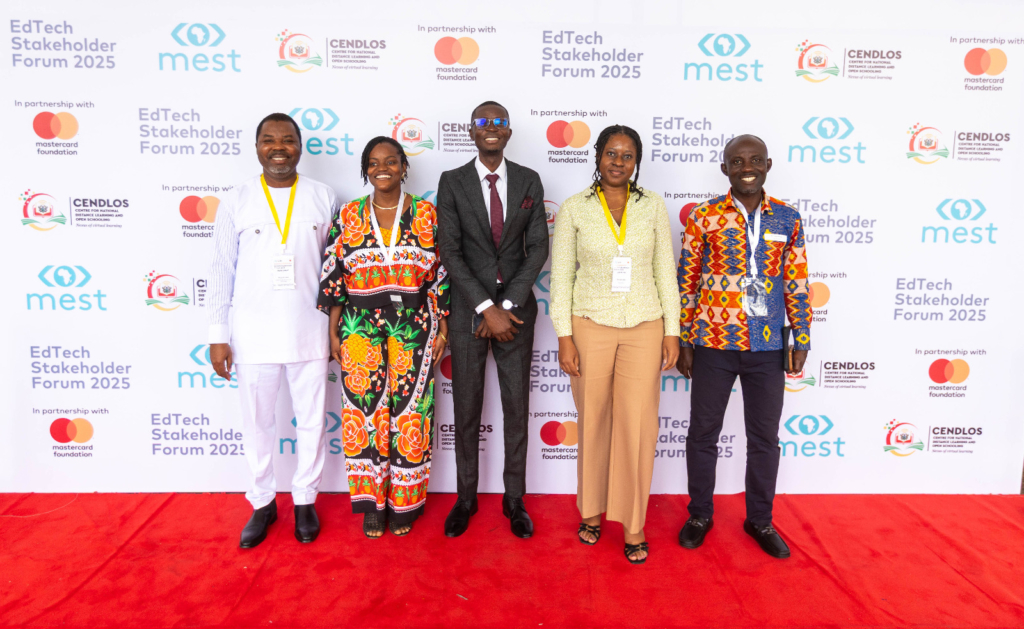
Moderated by Bernard Avle and broadcast live on Citi 97.3FM and MEST Africa’s digital platforms, the discussion brought together a dynamic panel: Nina Efedi Okoroafor, Manuella Sekyi, Eric Asomani Asante, and Miracule Gavor, who unpacked what it will take for technology to move beyond pilot projects and become a permanent part of Ghana’s education system.
At the core of the conversation was a shared reality: while EdTech solutions are emerging rapidly across the country, progress is often slowed by fragmented policies, limited coordination, and siloed decision-making. As Nina Efedi Okoroafor pointed out, when policies on inclusion, digital innovation, and education operate in isolation, vulnerable learners are left behind. “We cannot talk about technology in education if disability, accessibility, and inclusion are treated as separate issues,” she said. “Policies must speak to each other if we want to build solutions that work for all learners.”
From the classroom perspective, Eric Asomani Asante, one of Ghana’s most celebrated teachers, stressed that successful adoption depends on empowering educators, not just deploying tools. He noted that many digital initiatives fail to scale because teachers lack the training, infrastructure, and policy backing to integrate them effectively. “Teachers are at the heart of this transformation,” he said. “We need policies that support their capacity, reward innovation, and make technology part of everyday teaching.”
For innovators like Manuella Sekyi, whose company MooslaTrain builds practical learning tools, the challenge lies in bridging the gap between policymakers and solution builders. Too often, she explained, promising technologies struggle to reach classrooms because they are not aligned with national frameworks or procurement systems. “We must bring innovators into the conversation early,” she argued. “That’s how we build solutions that are not only exciting but scalable and sustainable.”
Miracule Gavor expanded the conversation beyond government, highlighting the need for a shared roadmap that includes the private sector, civil society, and development partners. “Harmonizing policy is not just about ministries working together,” he said. “It’s about every stakeholder ; from investors to teacher training colleges, pulling in the same direction.”
Together, the panel painted a picture of both the obstacles and the opportunities ahead. On one hand, fragmented policy continues to hold back many impactful EdTech initiatives. On the other hand, a coordinated and inclusive policy environment could unlock enormous potential from accessible learning tools for students with disabilities to innovative teaching methods in public schools.
One of the strongest takeaways from the September edition was that technology alone will not transform education. It will take deliberate collaboration, shared vision, and harmonized policy frameworks to build an ecosystem where innovation can truly enhance teaching and learning outcomes across Ghana.
As always, EdTech Mondays was powered by MEST Africa and the Mastercard Foundation, as part of their mission to foster inclusive, quality education and innovation across Africa.
If you missed the live broadcast, you can watch the replay on MEST Africa’s YouTube or Facebook page. Stay tuned for the next edition of EdTech Mondays on the last Monday of October, where we continue to explore the evolving future of education technology in Ghana and beyond.pment
Latest Stories
-
Bono East Minister directs MCE to stop hotel project near Konkrompe SHS
16 minutes -
AGN Chair urges action-driven tracking and reporting on inclusive climate adaptation in Ghana’s agriculture
18 minutes -
Man City rule breaches not my concern – Mancini
19 minutes -
NSA releases PIN Codes for 2026/2027 national service private candidates and foreign-trained graduates
22 minutes -
GMet forecasts thunderstorms, rain across parts of Ghana this evening
23 minutes -
APRA wins Africa PR Legacy Award
26 minutes -
UN Special Rapporteur on adequate housing to visit Ghana
29 minutes -
Telecel Ghana concludes SME Month 2026 with Business Runway in Takoradi
36 minutes -
Ghana must embrace AI to transform tourism — GHATOF
37 minutes -
National Investment Quiz: Corpus Christi, Wesley Girls, advance to semi-finals
1 hour -
Is Ghana losing the fight to protect children online?
1 hour -
Ghana Institution of Surveyors pushes for Governing Council Bill, conference reforms
1 hour -
Professional collaboration key to Ghana’s land, property development – Western Regional Minister
1 hour -
UPSA holds first session of 18th Congregation.
2 hours -
Why demand another country’s medical records? – Mahama on Ghana’s rejection of ‘humiliating’ US health compact
2 hours