

Audio By Carbonatix
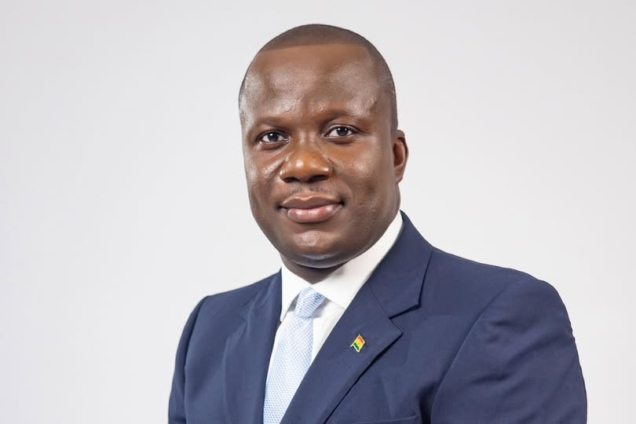
Member of Parliament for the Damongo Constituency, Samuel Abu Jinapor, has spoken out at the government over what he describes as misplaced priorities, questioning why the administration is allocating GH₵13.1 billion for four helicopters and two presidential jets when many public sector workers are allegedly unpaid.
Speaking during the debate on the 2026 Budget Statement and Economic Policy, Mr Jinapor accused the government of abandoning its core campaign promises of reducing the cost of living and creating mass employment while shifting resources toward high-cost acquisitions that, in his view, do not reflect the urgent needs of ordinary citizens.
The MP said it was unacceptable for the government to move ahead with plans to procure four helicopters and two presidential jets at a time when “nurses, teachers and other public workers are struggling to receive their salaries.”
“Is this the priority of the government when traders are suffering, farmers are suffering, nurses are suffering, teachers are suffering?” he questioned.
Mr Jinapor argued that the expenditure sends the wrong signal at a time when many Ghanaians are battling economic hardship and essential sectors are starved of resources.
He reiterated his criticism of the government’s flagship 24-hour economy policy, saying there is no visible evidence of its implementation despite claims in the budget that it has “entered full implementation.”
Pointing to the NDC’s own manifesto promise of a three-shift, 24-hour system known as the “1:3:3” model, he noted that even basic public services were failing to operate efficiently.
He added that instead of recruiting more workers to support the promised shift system, the government was struggling to pay those already employed.
“Mr Speaker, nurses are working without being paid. Teachers are working without being paid. So, when are they going to employ the two additional people to do the work that one person is doing without being paid?” he quizzed.
While the budget cited improvements in macroeconomic indicators, including reduced inflation and expenditure, Mr Jinapor said these gains had not trickled down to the real economy.
Government spending in the first three quarters of the year was 15 per cent below target, he said — a level of under-spending he believes is choking business growth, limiting credit access, and contributing to delayed payments across key sectors.
“What the Budget labels as discipline is, in fact, squeezing the real economy. There is no trickle-down effect. Businesses are struggling to survive, consumers have cut back on spending, and the youth are desperate for jobs,” he affirmed.
He referenced reports of over one million metric tons of paddy rice rotting in storage due to a lack of buyers, describing it as a warning sign of weakening domestic demand and growing distress in the productive sector.
Mr Jinapor also criticised the expansion of government appointments, pointing to the creation of new envoy roles and the appointment of 18 deputy heads of mission — more than any previous administration.
With the Bank of Ghana warning of rising compensation costs as a major fiscal risk, he questioned why the government was increasing its wage bill while struggling to meet existing obligations.
“Mr Speaker, the Bank of Ghana has already warned that the biggest fiscal risks facing us in 2025 are weak revenue performance, rising compensation costs and increasing energy sector payments.”
He noted that compensation for the Office of the President had surged from GH¢326 million in 2024 to GH¢540 million in 2025.
Mr Jinapor argued that the budget fails to address the immediate economic challenges facing citizens, saying it offers “good numbers on paper” but little relief for traders, farmers, businesses and unemployed youth.
He insisted that releasing funds into the economy, supporting productive sectors, and prioritising job creation should be at the centre of government spending, not expensive military procurements.
Concluding his remarks, he said the economy shows “clear signs of stress” and urged the Finance Minister and the Bank of Ghana to act decisively to inject liquidity and restore confidence in the system.
Latest Stories
-
Ghana risks EU gas market access over methane emissions – Expert warns
18 minutes -
Salt Pond’s $200m warning: Why Ghana cannot afford to exclude Fisheries Commission from future decommissioning
20 minutes -
Venezuela frees 39 political prisoners after post-Maduro talks
57 minutes -
EU unlocks humanitarian aid for crises worldwide
60 minutes -
Tenth woman’s body found as South Africa police probe killings
1 hour -
Black woman found hanging from tree was dead before body was ‘staged’, police say
1 hour -
Final day: 3rd Republic Bank-JoyNews Habitat Fair clinic underway at Junction Mall, Nungua
1 hour -
Nor’easter brings flooding as New York and New Jersey declare emergency
1 hour -
Africa’s richest man helps fund $660m fuel pipeline between Ethiopia and Djibouti
2 hours -
Security lapses at Utah campus where Charlie Kirk was killed, review says
2 hours -
White House bars CNN from travelling with Trump on Air Force One
2 hours -
Pope praises young people’s ‘energy and commitment’ at huge open-air Mass in Paris
2 hours -
Nyankamam residents benefit from free medical screening, healthcare outreach
2 hours -
Ghana, Boeing explore setting up regional aircraft maintenance hub
2 hours -
Bangkok roads submerged as flood disaster declared
2 hours