

Audio By Carbonatix
The Dean of the University of Cape Coast (UCC) Business School, says, Dr Mohammed Amin Adam, the newly nominated Finance Minister can only continue with existing economic programmes.
Professor John Gatsi stated that with the time left for the current government to leave office, and the 2024 budget already approved, the new Minister-nominee could do little to transform the Ghanaian economy, which was faced with challenges.
Ghana is currently implementing a US$3 billion loan programme with the International Monetary Fund (IMF) to restore macroeconomic stability and debt sustainability and lay the foundation for a stronger and more inclusive growth.
“What you cannot do in seven years, you cannot do in 10 months, and even in the 10 months, we’re only going to see governance from now to June. From there, everyone will be actively involved in political campaigns,” Prof Gatsi said.
“He [Dr Amin Adam] has been involved in the preparation of the budget, and IMF discussions, so he’s not new to the Fund. The replacement is just a continuation, nothing will change,” the Economist said.
He explained that though the 2024 budget review presented an opportunity for some economic decisions to be made, “that will not bring any change – he [the new Minister] will only continue to drive the vehicle.”
“The reshuffle has come late; it’s not in response to the calls by Ghanaians nor the 98 Parliamentarians, but in response to the Party, therefore, meant for political gains,” he stated.
Prof Gatsi noted that such political decision had been made because some people “are tired and would not commit themselves to vigorous campaigning and resource mobilisation [in the 2024 elections].”
Therefore, the reshuffling, including that of the Ministry of Finance, was to pave way for new people, most of whom would be working hard and push financial resources in the campaigns to gain some favours later, he said.
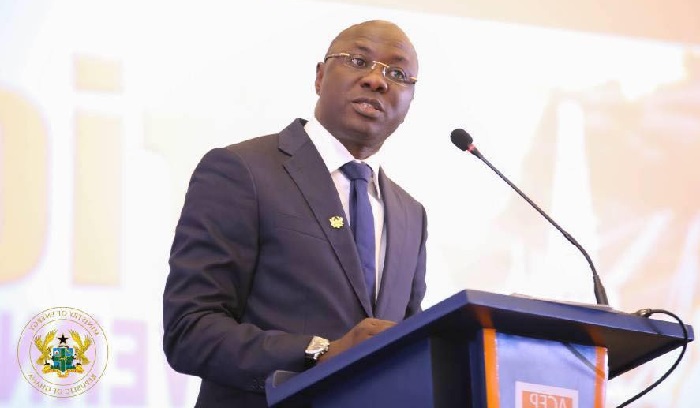
Dr Mohammed Amin Adam, Minister of State at the Finance Ministry, has been nominated as the Finance Minister designate, replacing Mr Ken Ofori-Atta, who has served in that capacity since 2017.
His appointment comes at a time that Ghana is implementing a US$3 billion loan programme with the International Monetary Fund (IMF) to revive the country’s challenging economy.
Post COVID-19 pandemic pushed Ghana’s economy into difficulties, with some people going to the extent of trekking long-distances to work, as inflationary pressures hit hard.
Recent figures from the Ghana Statistical Service and the first review of the IMF programme have shown some signs of recovery, nonetheless, it has been noted that the country ought to do more.
Latest Stories
-
LA 2028: Black Queens pumped up for second leg of Mauritius tie
12 seconds -
LA 2028: Black Queens hold final training session ahead of second leg against Mauritius
34 minutes -
Standards are not Seasonal: What the EC appointments teach both sides
48 minutes -
King Mohammed VI urges private sector to create youth jobs and spread benefits of growth
49 minutes -
KGL U17 Colts 2026: Greater Accra win title after penalties win over Western Region
49 minutes -
UK Investment Roadshow opens in London to advance UK-Ghana growth partnership
1 hour -
Assemblies of God requires pastors to resign before entering partisan politics – Rev. Wengam
1 hour -
Ghana targets 20% annual reduction in maternal deaths – Health Minister
1 hour -
Cyber attacks in Africa grow faster than global rate, report finds
1 hour -
Ghana signs UAE deal to create 5,000 overseas jobs
1 hour -
One Million Coders Programme targets 100,000 digital jobs in two years – Sam George
1 hour -
John Jinapor, Italian Ambassador explore opportunities for energy sector investment
1 hour -
NHIA seeks legal reforms to support Free Primary Healthcare
2 hours -
Beatrice Annan defends Afi Agbenyo’s EC appointment, cites record of gender advocacy
2 hours -
Ghana seeks investment deals in Bangkok amid global economic crises
2 hours