

Audio By Carbonatix
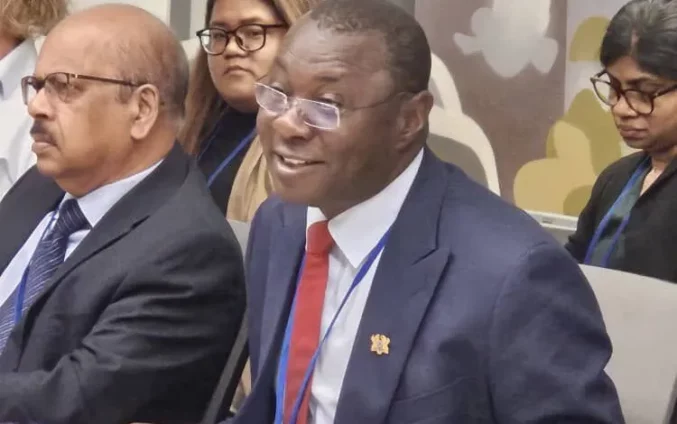
The Finance Minister, Dr. Mohammed Amin Adam, says government is determined to achieve universal access to electricity by the year's end, employing mini-grids and smaller power-generating systems to reach off-grid communities.
Currently, the country has achieved 88.85% electrification.
Addressing a question as a panellist on strategies for achieving rapid energy access, Dr. Amin emphasised the necessity of intentional policies and programs to swiftly expand energy access.
He highlighted this as a crucial goal for the government, asserting that adequate measures have been implemented to ensure its realisation.
“Right from the 1990s, we were very intentional. The government decided that Ghana must achieve universal access to electricity and so we put in relevant policies and a national electrification scheme. We put in rural electrification programme and we also put in a self-help electrification programme in which communities and the government shared the cost of electricity access.”
In response to another question regarding what actions to avoid, the minister stressed the importance of procuring electricity generation through competitive bidding.
He stressed the necessity to steer clear of procuring energy through unsolicited projects, which often proved to be excessively costly.
“It is important that when you are in crises, you do not acquire as many generating capacity as you would not need, because the tendency for investors to come knocking on your door and justify why you should acquire more is very high and you acquire it at a very high cost," he added.
The panel discussion, a cornerstone event at the ongoing IMF/World Bank Spring Meetings, centered around the theme, "Energising Africa: What will it take to achieve universal energy access?".
With a focus on scaling up solutions and investments to connect millions more Africans to electricity, the discussion aimed to drive the transformation of African economies.
Joining the panel were esteemed figures such as Asay Banga, President of the World Bank, Dr. Akinwunmi Adesina, President of the African Development Bank, as well as Ministers of State, energy investors, and stakeholders from both government and private sectors.
The three-section dialogue tackled critical issues surrounding energy access in Africa, exploring strategies to overcome challenges and accelerate progress towards universal electrification.
Latest Stories
-
LA 2028: Black Queens pumped up for second leg of Mauritius tie
19 seconds -
LA 2028: Black Queens hold final training session ahead of second leg against Mauritius
34 minutes -
Standards are not Seasonal: What the EC appointments teach both sides
48 minutes -
King Mohammed VI urges private sector to create youth jobs and spread benefits of growth
49 minutes -
KGL U17 Colts 2026: Greater Accra win title after penalties win over Western Region
49 minutes -
UK Investment Roadshow opens in London to advance UK-Ghana growth partnership
1 hour -
Assemblies of God requires pastors to resign before entering partisan politics – Rev. Wengam
1 hour -
Ghana targets 20% annual reduction in maternal deaths – Health Minister
1 hour -
Cyber attacks in Africa grow faster than global rate, report finds
1 hour -
Ghana signs UAE deal to create 5,000 overseas jobs
1 hour -
One Million Coders Programme targets 100,000 digital jobs in two years – Sam George
1 hour -
John Jinapor, Italian Ambassador explore opportunities for energy sector investment
1 hour -
NHIA seeks legal reforms to support Free Primary Healthcare
2 hours -
Beatrice Annan defends Afi Agbenyo’s EC appointment, cites record of gender advocacy
2 hours -
Ghana seeks investment deals in Bangkok amid global economic crises
2 hours