

Audio By Carbonatix
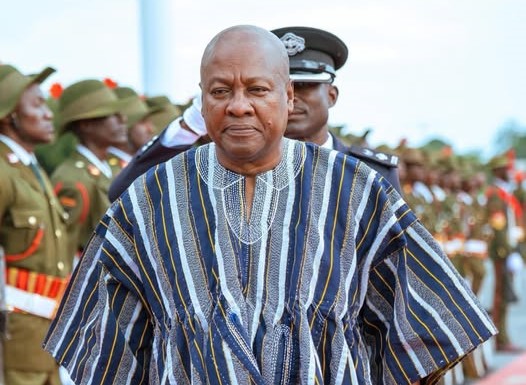
The buzz, anger, and friendly debate over President Mahama’s official visit to Zambia this week has opened the door for something far more important than travel diplomacy. It has allowed us to begin a serious national and continental conversation about Africa’s future, its sustainability, and, more importantly, its identity.
President Mahama’s rectilinear path to Zambia fits neatly into the Nkrumahist agenda. That agenda envisioned an integrated African society that co-exists as a union, speaks with one voice, removes the artificial barriers imposed by colonialism, trades among itself, and presents a strong bargaining position on the global stage over its own resources, culture, and people. That vision was not romantic idealism. It was a strategic necessity.
Yet, even before these aspirations could begin to gather momentum, the reaction from parts of Zambian society mocked the very idea. That response, unfortunate as it was, stands as a living testament to the prolonged and corrosive effects of slavery, colonialism, and neo-colonialism, what Nkrumah correctly described as the last stage of imperialism.
Today, we gloat in colonial attire. Our politicians revere taking pictures in European suits and proudly post them on social media, celebrating their great looks in a white man’s costume. At the same time, we look at our own local fabrics and traditional costumes with suspicion and derision. Once someone controls your mind and your narrative, your body becomes nothing more than an appendage. We name our children after Greco-Roman gods and celebrate Jewish names as divine, yet dismiss our own African names as fetish. This is the tragedy of mental colonization. Wodemaya, I am glad, has stated this clearly in his ecclesiastical response to the Zambians.
Africa is not alone in this experience. Long before America’s cultural maturity from Great Britain, America was trapped in the same shadows. In his seminal essay “The American Scholar,” Ralph Waldo Emerson asked a piercing question that awakened the American consciousness: “For how long shall we feed on the remains of foreign harvests?” That single line forced a new nation to plant itself on its own instincts. In another essay, “Self-Reliance,” Emerson went further, calling for nothing short of a cultural revolution.
Emerson was not merely delivering a speech. He was issuing a declaration of cultural independence. Politically, America had broken from Britain in 1776.
Culturally and intellectually, it had not. Before Emerson, American thinkers quoted British philosophers as final authorities, imitated British literary styles, and treated Europe as the intellectual center of the world. Emerson rejected this outright. He urged Americans to trust their own minds, think from lived experience, and stop being parrots of other men’s thinking. That moment marked a decisive break from British epistemic hierarchy.
America went further. It dropped British Victorian architecture and invented the American house. Frank Lloyd Wright built on the prairies, designing architecture informed by landscape and geography rather than European imitation. The new nation abandoned the fear of being unfinished Europeans. It dropped British costumes and rigid social organization. This cultural liberation produced free thinkers like Daniel Webster and others who helped shape American English and American political thought.
Africa must learn from this history. African ideas and thoughts cannot continue to exist as footnotes to Eurocentric worldviews. We cannot sit idly while Europeans tell us they discovered the Volta or the Zambezi. We cannot continue naming our waterfalls after Livingstone, our cities, and institutions after the Queen of England. Africa has its own history, its own memory, and its own way of life. This was part of the reason Nkrumah brought in W.E.B Du Bois to collect and put together the Encyclopedia Africana.
In this light, our courts cannot continue quoting Lord Mansfield and William Blackstone as if legal intelligence depends on British approval. That does not make one intelligent. It makes one a puppet of Eurocentric thought. The same applies to how we see ourselves as Africans.
After living in America for sixteen years, I dropped my English name and maintained my Africanness. I did this as a reverence to my ancestry and as a deliberate act of distinction. I am not a Jewish man, nor am I European. While European history traces its origins to Greece and Rome, African thought and civilization began in Egypt and Ethiopia. That distinction matters. I stopped wearing suits long ago. I do not gloat in European costumes, nor do I parade the English language as the sole language of civilization. This is the point President Mahama understands, and which many of our so-called educated elite and even some clergy fail to grasp.
Recently, I heard Pastor Otabil argue for the continued dominance of English as the language of instruction in our classrooms, suggesting that English has traveled far and is necessary for validation. I strongly disagreed. People without identity are lost forever in the quicksand of history, and that is why I applaud President Mahama for his policy to use local languages as languages of teaching and instruction in the classroom.
This moment must go far beyond Zambia. It must translate into a national awakening and a conscious process of decolonization. Our scholars, many of whom have an unhealthy penchant for everything European, must be re-schooled. Our parliamentarians must abandon foreign attire. Our lawyers and judges must drop colonial wigs. Our institutions must be renamed after local histories. Our streets, rivers, and iconic landmarks must reflect African culture and identity. There are no other roads.
*********
The writer, Dr. Manaseh Mawufemor Mintah, is an Afrocentric environmental and legal scholar based in Boston, Massachusetts. He can be reached at mmintah@antioch.edu.
Latest Stories
-
Let’s give OSP time to mature, not to scrap it – Hassan Tampuli
3 minutes -
Nigeria convicts 386 Islamist militants in mass trials
8 minutes -
Djibouti president wins election with 97.8% of vote, state media says
12 minutes -
We don’t have mandate to deduct tax from rent allowance of security services personnel – Interior Ministry clarifies
27 minutes -
Ablakwa receives Presidential Special Envoy on Reparations to advance global agenda
44 minutes -
Christina Koch becomes first woman to travel around the moon on Artemis II
55 minutes -
Epstein survivors’ calls to meet King Charles and Queen harder to ignore as US visit approaches
1 hour -
UN Secretary-General names Ghana’s Anita Kiki Gbeho as South Sudan envoy
1 hour -
Mali withdraws recognition of Sahrawi Republic, backs Morocco’s autonomy plan
1 hour -
Gov’t distributes over 8,500 laptops to One Million Coders project
1 hour -
Julius Debrah, ‘man to beat’ as NDC’s James Agbey dismisses Musah Dankwah’s polls
1 hour -
GPRTU in Savannah Region to protest alleged eviction in Damongo
2 hours -
Re: Reinsurance does not replace process — A response to the SIGA–SIC defence
2 hours -
Gender Ministry supports Harriet Amuzu in ongoing abuse case
2 hours -
AG joins plaintiff to scrap OSP ?: We should be mindful of the mischief in this – Bobby Banson
2 hours