

Audio By Carbonatix
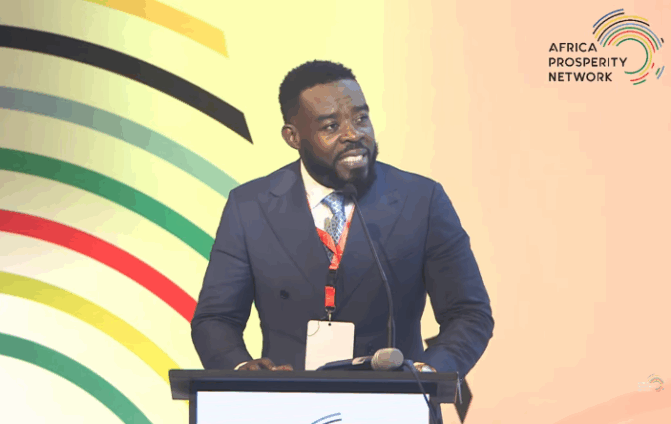
The Founding President of the RNAQ Foundation, Richard Nii Armah Quaye, has called on African businesses to treat youth investment as a core economic strategy rather than an act of corporate social responsibility.
Speaking at the Africa Prosperity Dialogue on Thursday, February 5, Mr Quaye argued that Africa’s long-term growth and business sustainability depend on deliberately integrating young people into productive economic systems.
“Investing in youth is not a social responsibility. It is the most strategic investment a business can make for long-term survival and growth,” he said.
He rejected the notion that Africa lacks talent, insisting the real challenge lies in the disconnect between education and employment.
According to him, the current system does not adequately prepare young people for the demands of modern economies.
“Africa does not have a talent shortage. Africa has a talent pipeline problem. The education-to-employment system, as it currently stands, is broken,” Mr Quaye stated.
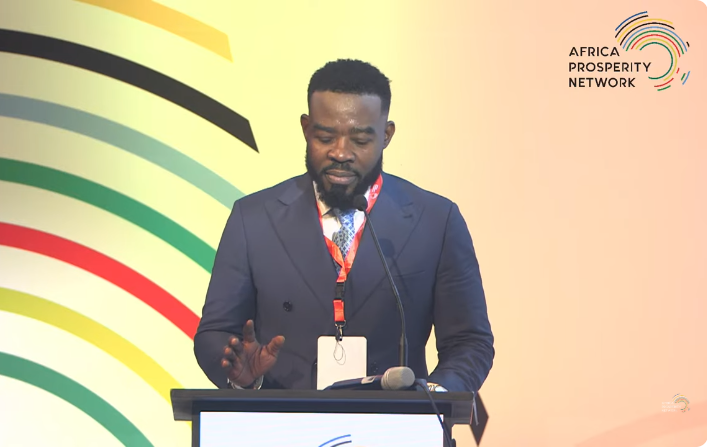
He noted that the operationalisation of the African Continental Free Trade Area (AfCFTA) has shifted the skills required across the continent, with economies now demanding practical competencies beyond academic certificates.
“Our economies now demand skills beyond certificates. We need digital literacy, cross-cultural competence, logistics and supply chain expertise, and export compliance skills,” he said, stressing that businesses can no longer remain passive observers in education reform.
Mr Quaye proposed what he described as a “new covenant” between industry and Africa’s youth, centred on structured pathways that link learning directly to employment opportunities.
He also called for closer collaboration between industry and educational institutions, urging businesses to co-design curricula with universities and training centres to ensure learning outcomes align with commercial and industrial needs.
According to him, aligning education with real economic outcomes is essential if Africa is to fully harness its youthful population and translate demographic potential into sustained prosperity.
Latest Stories
-
Power restoration fault suspected in Kumasi Central Market fire
5 hours -
The 7-foot giant of Ngleshie Amanfro: Seven-foot Ghanaian Ephraim Saawa dreams of joining the national basketball team
6 hours -
Government promises support for Kumasi Central Market fire victims
6 hours -
Vibes The Movie: Big Ghun’s Ghanaian film earns five nominations at 2026 REFFA
6 hours -
‘I’m a fulfilled man’—Justice Korbieh on missing out on Supreme Court despite two nominations
7 hours -
MamaCare CEO warns unresolved conflicts among health workers could undermine maternal and neonatal care
7 hours -
Health professionals urged to translate medical knowledge into practice to save mothers
7 hours -
Retired judge Justice Francis Korbieh charges 1,568 new lawyers to uphold integrity
8 hours -
Conflicts among care providers linked to maternal, neonatal deaths – Expert
8 hours -
GIS marks 10th TIME conference, champions improved teaching practices
9 hours -
BRICS Or Balance? What Ghana’s bid really means
9 hours -
GPRTU wants full TRAFFITECH-GH implementation to start in 2027
9 hours -
How 10-mile walks for basic education birthed a 50-year legal career for Justice Korbieh
9 hours -
Mahama announces plans to import electric wheelchairs for PWDs
9 hours -
KGL U17 Colts 2026: Western beat Prempeh Elite Academy to set up final final with Greater Accra Region
10 hours