

Audio By Carbonatix
The nerve agent used to poison Russian opposition leader Alexey Navalny was detected on an empty water bottle from his hotel room in the Siberian city of Tomsk, suggesting he was poisoned there and not at the airport as first thought, his team said on Thursday.
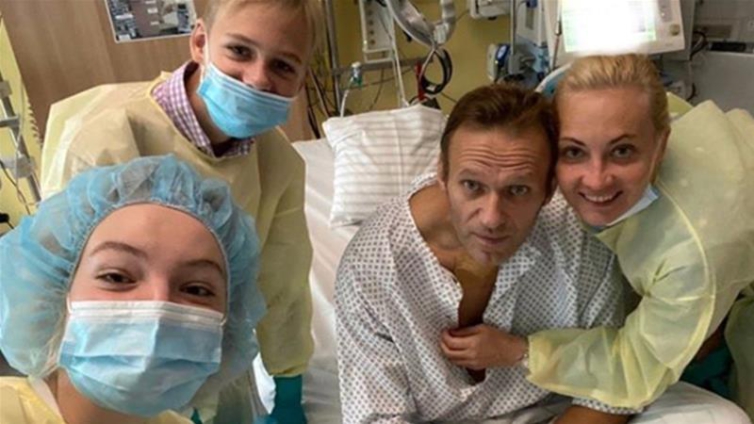
Navalny fell violently ill on a domestic flight in Russia last month and was subsequently airlifted to Berlin for treatment.
Laboratories in Germany, France and Sweden have established he was poisoned by a Novichok nerve agent, though Russia denies this and says it has seen no evidence.
A video posted on Navalny's Instagram account showed members of his team searching the room he had just left in the Xander Hotel in Tomsk on August 20, an hour after they learned he had fallen sick in suspicious circumstances.
"It was decided to gather up everything that could even hypothetically be useful and hand it to the doctors in Germany.
The fact that the case would not be investigated in Russia was quite obvious," the post said.
It showed his team bagging several empty bottles of "Holy Spring" mineral water, among other items, while wearing protective gloves.
"Two weeks later, a German laboratory found traces of Novichok precisely on the bottle of water from the Tomsk hotel room," the post said.
"And then more laboratories that took analyses from Alexei confirmed that that was what poisoned Navalny. Now we understand: it was done before he left his hotel room to go to the airport."
Vladimir Milov, a former deputy energy minister and an ally of Navalny, said his team had outplayed the FSB security police with their quick thinking: "They took the evidence from under their noses and shipped it out of the country."
Navalny is the most prominent political opponent of President Vladimir Putin, even though he has not been allowed to form his own party.
His investigations of official corruption, published on YouTube and Instagram, have reached audiences of many millions across Russia.
Germany, France, the United Kingdom and other nations have demanded explanations from Russia over the case, which has prompted calls for new sanctions against Moscow.
The global chemical weapons agency, the OPCW, said on Thursday that Germany had asked for its assistance in investigating.
Russia has carried out pre-investigation checks, but said it needs to see more medical analysis before it can open a formal criminal investigation.
Latest Stories
-
GPL 2025/26: Late Kwartemaa strike downs Hearts in Tema
5 minutes -
Ghana Faces Sierra Leone Moment as Prosecutorial Powers come under strain
15 minutes -
Don’t consume fish or seafood from Tema Shipyard until further notice – FDA warns
19 minutes -
Why volunteering might be Africa’s most underrated career accelerator
26 minutes -
ActionAid Ghana raises concern over gender gaps in Feed Ghana Programme
28 minutes -
Windstorm wreaks havoc in Gushegu, displacing nearly 2,000 residents and damaging schools
30 minutes -
Friends of Bridget Bonnie Marks her 35th birthday with donation to Kasseh Model Health Centre
1 hour -
From Ekumfi Kokodo to the Pulpit Stage: Essi Donkor’s gospel journey takes shape
2 hours -
Landfilling waste management creates no value, it’s an economic waste
2 hours -
Photos: Speaker Bagbin Commissions MPs constituency office under parliamentary decentralisation programme
2 hours -
Black Stars technical advisor Winfried Schäfer sacked as GFA shakes up backroom staff
2 hours -
Wenchi water project almost complete, critical to gov’t agenda – GWL MD
2 hours -
Anti-LGBTQ+ bill not part of government’s legislative agenda – Inusah Fuseini
2 hours -
Anti-LGBTQ Bill: Forget the rumour mongers, I’m a man of action, and will pass the bill – Speaker
3 hours -
Women and children among those killed in Sudanese army shelling of wedding celebration
3 hours