

Audio By Carbonatix
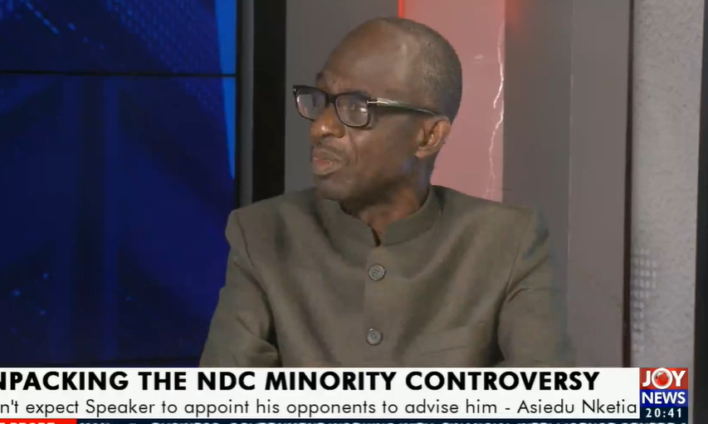
General Secretary for the National Democratic Congress (NDC) has taken on the government for its rationale behind the ongoing power outages in part of the country popularly known as ‘dumsor.’
Johnson Asiedu Nketia the justification provided by the New Patriotic Party (NPP) is untenable and flies in the face of logic.
“Dumsor has come and this one is because of the negligence of this government,” he said on Sunday.
Energy Minister, Dr Matthew Opoku Prempeh says that most of the transmission lines currently transporting electricity to the various substations were old and works are underway to improve them leading to the outages.
The Ghana Grid Company Limited (GRIDCo) also disclosed that construction works on the Pokuase and Kasoa substations among other infrastructure upgrades are expected to rectify the intermittent power outages.
However, the NDC Chief Scribe wants Ghanaians to take these justifications with a pinch of salt adding that the “NPP is lying to Ghanaians.”
“If they are building new transmission lines, it has nothing to do with the existing transmission lines... so how does your building of a substations somewhere contribute to dumsor? It is after you have finished the new line or substation and you want to change over. And that will take you more than a week to do.
“So what is happening now is the breakdown of the existing systems when the new ones haven’t happened yet."
Speaking on The Probe, he opined that the erstwhile NDC government, as far back as 2014, foresaw this canker and instituted frameworks to ameliorate the crisis.
As part of its measures some tariffs were adjusted upwards as part of the Millennium Development Compact to offset the cost incurred while on a path to improved access to power supply, he told JoyNews.
Mr Nketia said the NPP rode in the back of this tariff increment to tag the NDC as insensitive to the plight of the citizenry for taking that route.
In April 2018, the Public Utilities Regulatory (PURC) reduced electricity tariffs for residential, non-residential, mines and special load tariff customers.
This followed President Akufo-Addo’s proposed review of the tariff setting methodology and cost structure of the country’s energy production.
Mr Asiedu Nketia believes that move was the beginning of the woes currently being suffered under the current dispensation which he says led to a loss of several critical facilities at the time due to inadequate financial muscle.
“Because they were taking the monies from the strength of the balance sheet but their incomes were reduced on the back of the tariff reductions. And so nobody will give you the money so it didn’t come. The management came to declare that they have to stop all the capital projects.”
He fears the situation will get worse.
Latest Stories
-
AU’s 10-year reparations agenda is essential to address historic injustices – Spio-Garbrah
3 minutes -
Ghana can’t remain vulnerable to global economic disruptions— Dr Tutu-Boahene
17 minutes -
‘No nepotism’ – Former NSA Board Chairman demands world-class coach after Otto Addo exit
21 minutes -
Volta Region seen as top choice for luxury weekend breaks — V. L. K. Djokoto
30 minutes -
Halt small-scale mining for one year to fight galamsey – Hopeson Adorye
34 minutes -
President Mahama orders full probe into ‘Big Push’ procurement exposé
52 minutes -
Weija-Gbawe MP calls for commissioning of Weija paediatric hospital
1 hour -
Ghanaians dying in Russia–Ukraine war: The danger is real
1 hour -
Player ratings: Oppong earns high marks as Sibo and Adjetey draw low scores in Germany defeat
1 hour -
Pres. Mahama pledges action on 1.2m out-of-school children after School for Life raises concern
1 hour -
Suhum MP vows NPP will probe Gold-for-Reserves in 2029
2 hours -
Ghana to host Zimbabwe’s President Mnangagwa on three-day state visit
2 hours -
Ghana pushes for stronger West African blue economy partnership at Liberia fisheries investment conference
2 hours -
Ghana hosts high-level African climate strategy meeting ahead of COP31 and COP32
2 hours -
Today’s Front pages : Tuesday, March 31, 2026
2 hours