


Audio By Carbonatix
The Consulting President of Laweh Open College, Prof. Goski Alabi has asserted that Open, Distance and e-Learning (ODeL) coupled with the TVET system is the antidote to addressing the vast access gap to tertiary education in Sub Saharan Africa (SSA).
Prof. Alabi observed that 90.6 per cent of African youth have no access to tertiary education, a situation she described as “a ticking time bomb.”
And the means deflate such a bomb is to deploy ODeL in order to equip the youth with the requisite skills and competencies.
She was addressing a virtual session of the Retridol monthly ODL discourse on Monday, which focuses on issues in West and Central Africa.
Her topic was Sub-Saharan Higher Education Enrolment Ratio: Bridging the Yawning Gap. Some of the participants included vice chancellors, professors and other academics. RETRIDOL is the Regional Training and Research Institute for Open and Distance Learning.
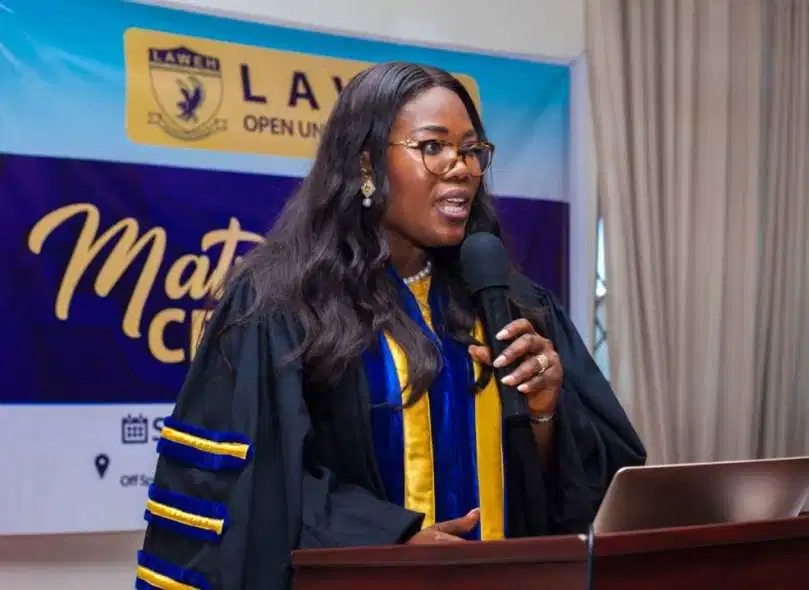
Prof. Alabi, whose lecture was steeped in statistical data noted, “Almost 60% of Africa’s population is under the age of 25, making Africa the world’s youngest continent. Without urgent action, the situation is likely to get worse as the region faces a rising demand for tertiary education due to the numbers that graduate from the secondary level. This youthfulness presents both opportunities and challenges for the continent. “
She disclosed that the 48 countries of Sub-Saharan Africa have a total population of over one billion, making it one of the largest regions in the world.
However, the current gross tertiary education enrolment ratio of 9.4%, and around 12% for the entire continent, are well below the global average of 38%.
She believed that besides ODeL and TVET, Commitment and Investments by African governments and policies that build confidence in ODeL and TVET could also help Africa meet the Pan African vision of Agenda 2063 of “an integrated, prosperous and peaceful Africa, driven by its own citizens and representing a dynamic force in the international arena.”
Prof. Alabi emphasised the need for a paradigm shift in education in Africa, from one of preparing learners for white-collar jobs to a focus on skills, competency, technology and entrepreneurial-based education.
Latest Stories
-
We can tackle multiple priorities – Sam George defends Anti-LGBTQ Bill push
5 minutes -
Statement: Ghana Chamber of Mines’ Response to Claims in Joe Jackson’s “Ananse Stories about the Economy of Ghana”
6 minutes -
GES opens 2026 teacher recruitment for licensed B.Ed graduates
8 minutes -
Ghana must value skilled trades, build resilient learners — Ibn Chambas
17 minutes -
Ghana must rethink education around relevance, resilience and responsibility — Ibn Chambas
19 minutes -
Prince Harry faces defamation lawsuit from charity he co-founded
21 minutes -
South Korea deploys thermal cameras to track escaped zoo wolf
23 minutes -
Calls for royal meeting with Epstein survivors grow ahead of US visit
26 minutes -
Ibn Chambas advocates blend of technology and human values in education
28 minutes -
UMA improves healthcare access in Asutifi North with GH₵700k ‘Kim Taylor Legacy’ Walkway
33 minutes -
Scholarships Authority and Fanaka University offer sponsorship for procurement and supply chain studies
36 minutes -
Bisa Kdei drops new single ‘Go N Look’ featuring Medikal
42 minutes -
Benin facing rising terrorism in north as French military presence faces growing criticism
43 minutes -
UEW Public Lecture Series 2026: Education debate ‘about the soul of Ghana’s future’ — Dr Ibn Chambas
44 minutes -
EU fingerprint and photo travel rules come into force from today
1 hour