

Audio By Carbonatix
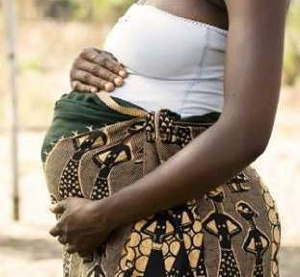
Statistics from the 2022 Ghana Demographic and Health Survey (GDHS) indicate that one in every 10 (10.9%) adolescent girls aged 15 to 19 years has had a live birth.
The survey carried out by the Ghana Statistical Service was to highlight challenges such as early marriage and childbearing, and deprivation of education that prevent young girls from reaching their full potential.
This was to mark the International Day of the Girl Child celebrated annually on October 11; this year’s theme is "Invest In Girls' Rights: Our Leadership, Our Well-being".
Findings from the survey indicate that;
The percentage of adolescents that have had a live birth increases with age, with 19-year-olds recording the highest rate of almost a quarter (23.8%).
In 10 out of the 16 regions, more than 10 percent of adolescents 15 to 19 years have had a live birth with the Bono East Region recording the highest, thus, one in every five (19.1%) girls in this age range have had a live birth.
The Savannah (17.5%) and the North East (17.5%) regions are tied for the second highest followed by the Ashanti Region (16.8%).
The Greater Accra Region (5.4%) has the lowest percentage and is the only region to record a figure less than half the national average.
The percentage of girls 15 to 19 years old that have had a live birth is almost twice in rural areas (14.4%) compared to urban (8.0%).
More than a quarter (26.5%) of adolescent girls with no education had had a live birth compared to 20.3 percent of those with primary education.
The percentage of girls with secondary education (8.6%) who had a live birth was less than half of those with primary or no education.
Adolescent girls in households in the lowest wealth quintile (17.5%) had the highest percentage with a live birth, more than four times the figure recorded for girls in the highest wealth quintile (3.7%).
Finally, about one in every 10 (9.1%) adolescents aged 15 to 19 years had been in a marital union during the 2021 Population and Housing Census: 5.5 percent were currently married, 3.2 percent were currently in informal unions or living with a partner, and 0.4 percent had formerly been married.
Latest Stories
-
US, Iran fail to reach peace agreement after marathon talks in Pakistan
3 minutes -
ECG kicks off Phase Two of transformer upgrades at Lashibi; brief outages expected
37 minutes -
Port crises loom as 11,000 drivers threaten four-day strike
1 hour -
A source of excellence across generations – Vice President Opoku-Agyemang lauds Mfantsipim
2 hours -
(Photos) Mfantsipim School launches historic 150th anniversary
3 hours -
Knights and Ladies of Marshall group backs Catholic Bishops’ stance on anti-LGBTQ+
4 hours -
Bright Simons writes: All the Filla in the Ibrahim Mahama/E&P – Gold Fields Saga
4 hours -
Monetise Idiocy In Ghana
4 hours -
The Ghanaian prophet and the mysterious death of his scottish wife Charmain Speirs
5 hours -
Nearly 400 sentenced in Nigeria for links to militant Islamists
5 hours -
Ghana’s recovery supported by gold strength despite global oil price pressures – Standard Bank Research
5 hours -
Methodist Church hails Mfantsipim@150; calls for “fresh consecration” to excellence
6 hours -
‘Excellence is our inheritance’ – Nana Sam Brew-Butler hails Mfantsipim’s 150-year reign in leadership
6 hours -
Kwaku Azar writes: A-G vs OSP
6 hours -
Mfantsipim–Adisadel rivalry built excellence, not division – Sam Jonah
6 hours