

Audio By Carbonatix
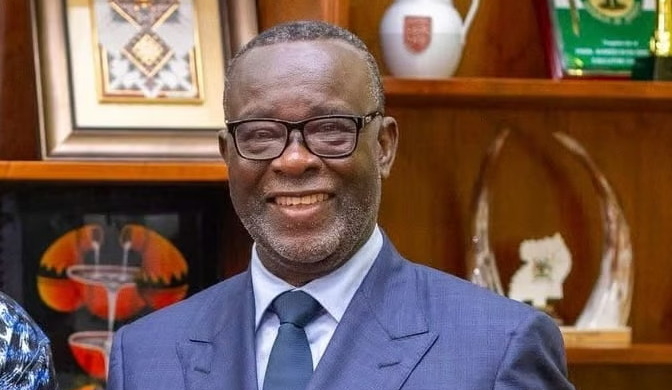
Dear Chief Justice,
From your appointment to the Supreme Court in 2008 to your elevation to the Chief Justice, your leadership has consistently strengthened judicial integrity, professionalism, and public confidence in the administration of justice.
Your contributions to Ghana’s legal development are extensive and widely respected. They include your pioneering work in electoral law reforms, authorship of the Manual on Election Adjudication, and your role in training judges and magistrates across the country. Your representation of Ghana before the ECOWAS Court of Justice and other international judicial bodies has further enhanced the country’s standing in the global legal community. Beyond shaping procedural standards and legal doctrine, your work has inspired generations of judicial officers and reinforced Ghana’s reputation as a jurisdiction committed to fairness, competence, and constitutional governance.
It is against this background of exceptional service and a clear commitment to judicial reform that I respectfully submit a set of recommendations aimed at further strengthening the judiciary’s capacity to manage extradition cases and other high-risk legal matters. Central to this effort is the need to deliberately assign specialised legal practitioners to cases that require particular expertise.
The credibility and effectiveness of state prosecutions depend heavily on the deployment of lawyers with precise professional competence. Matters involving international extradition, complex criminal prosecutions, human rights protections, immigration and transnational crime, as well as appellate and constitutional litigation, each require specialised legal knowledge and experience. Assigning counsel outside their areas of expertise creates unacceptable risks, including procedural missteps, misinterpretation of the law, avoidable delays, and reputational damage to the justice system. Only properly trained specialists possess the technical competence and professional judgment necessary to safeguard prosecutorial accuracy and protect Ghana’s standing both domestically and internationally.
Equally critical is the need for accuracy and investigative rigour in all cases, particularly those involving extradition. Prosecutions must be grounded in thoroughly verified intelligence and professionally conducted investigations. Careful attention at this foundational stage protects the courts from avoidable errors, strengthens the integrity of prosecutions, and ensures that justice is not undermined by faulty or incomplete information.
Judicial security, surveillance, and transportation also require urgent attention. There is a compelling need for dedicated, secure transportation for judges, prosecutors, and detainees, implemented through a coordinated, seamless system that mirrors best practices in security services. The safety and dignity of judicial officers and prosecutors must be treated as a priority, just as detainees must be transported securely in a manner that respects human rights and preserves the integrity of judicial proceedings. Special attention should be given to officers tasked with escort duties, ensuring that vehicles and equipment meet the highest standards of security and maintenance. This is not merely a logistical concern but a critical safeguard against vulnerabilities that could endanger lives, compromise detainee security, or undermine public confidence in the justice system.
Enhanced surveillance systems within and around court premises are equally important. Modern, real-time monitoring infrastructure supports rapid incident response, deters potential threats, and protects judges, staff, litigants, and the public. Such systems reinforce the judiciary's seriousness, professionalism, and security consciousness, thereby strengthening public trust. In the same vein, courtroom technology must evolve in step with global advancements. Contemporary courts require reliable audio-visual recording systems capable of capturing proceedings in real time, preserving accurate records, and supporting efficient appellate review. The design and management of these systems demand highly skilled specialists with internationally recognised expertise, ensuring that Ghana’s judiciary remains aligned with global best practices in transparency, accountability, and justice administration.
Institutional collaboration remains a further pillar of an effective justice system. Close coordination among the Ghana Police Service, the Judicial Service, and the Ghana Prisons Service is essential to safeguarding detainees, preserving evidence, and maintaining the integrity of judicial processes. When these institutions work cohesively, the judiciary is better positioned to operate efficiently, securely, and with minimal risk of data compromise or operational failure.
Your Lordship, the implementation of these measures goes beyond procedural reform. It represents a strategic investment in the very soul of Ghana’s judiciary. When courts are adequately supported, technologically equipped, and secure, justice is not only done but is manifestly seen to be done. This reinforces public trust and strengthens Ghana’s reputation as a country firmly anchored in the rule of law.
May I take this opportunity to wish Your Lordship a happy and prosperous New Year and a successful and impactful term of office. I am confident that under your visionary leadership, Ghana’s judiciary will continue to exemplify excellence, uphold justice with unwavering integrity, and inspire present and future generations within the legal profession. Your commitment, depth of knowledge, and leadership are deeply appreciated, not only by the legal fraternity but by all Ghanaians who value constitutional governance and the rule of law.
I remain respectfully at your disposal and would be honoured to offer any assistance that supports the effective implementation of these recommendations and the continued strengthening of our judiciary, in service of our beloved Motherland, Ghana.
Yours faithfully,
Nana Kweku Ofori Atta
Security Analyst
Latest Stories
-
Edmond Boateng takes up secretary role at Honorary Consular Corps of Ghana
59 minutes -
Gambia appoints British barrister to prosecute gruesome Jammeh-era crimes
1 hour -
Girl group Flo on entering into their ‘bombastic, confident, strong’ era
1 hour -
Germany suspends military approval for long stays abroad for men under 45
2 hours -
Liverpool face uphill Champions League task after PSG thrashing in Paris
2 hours -
‘Ketamine Queen’ sentenced to 15 years in Matthew Perry overdose death
2 hours -
Nigeria begins mass trial of 500 terrorism suspects
2 hours -
Atletico Madrid stun 10-man Barcelona to seize Champions League semi-final advantage
2 hours -
Black Stars coach to be announced by next week – Sports Minister
3 hours -
Chiefs, queen mothers and principal elders of Odau group denounce ‘rebellious Etweresohene’, pledges allegiance to Okyenhene
3 hours -
KNUST library dress code sparks online backlash over strict rules
3 hours -
Cultural Diplomacy in Action: Ghanaian youth leaders present symbolic smock to U.S. Chargé d’Affaires
3 hours -
Ghana Card payment activation under review – NIA breaks silence on financial integration
3 hours -
Ofori-Atta’s ICE release on bail positive; he poses no risk – Amanda Clinton
3 hours -
Ken Ofori-Atta’s passport seized after bail, set to reappear in US Court on April 27
3 hours