

Audio By Carbonatix
A private legal practitioner and a one-time President of the Ghana Bar Association (GBA), Sam Okudzeto, has highlighted the crucial role of the judiciary in interpreting the law.
According to him, “Parliament makes the law but Parliament doesn’t interpret the law.”
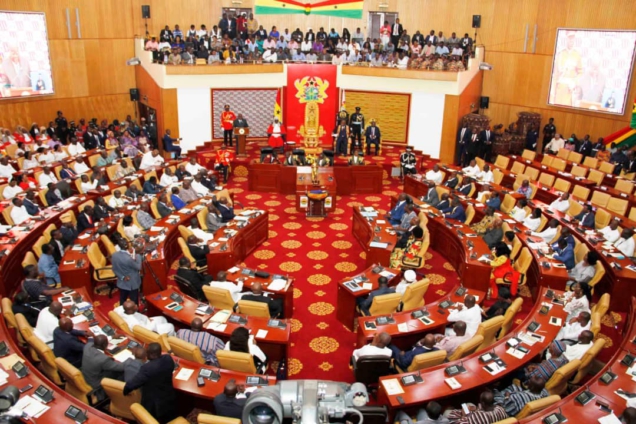
His comments come in the wake of the confusion over the leadership composition of Parliament after Speaker Alban Bagbin declared four parliamentary seats vacant on Thursday, October 17.
Three of the affected seats belong to the NPP, with the fourth held by the NDC. The decision therefore engendered a new leadership crisis in Parliament, with the NDC which has been the Minority now claiming to be in the Majority with 136 seats against the NPP's 135.
However, on Friday, October 18, the Supreme Court ordered a stay of execution on Speaker Alban Bagbin's declaration, ordering Parliament to recognise and allow the four MPs to fully represent their constituencies and carry out their official duties until the substantive case is held.
Nonetheless, the NDC caucus has vowed not to relinquish its newly attained Majority status insisting the Supreme Court cannot usurp the powers of Parliament as an independent arm of government that works with its rules.
Several legal luminaries have shared varied opinions on the matter.
Speaking on JoyNews' The Probe on Sunday, October 20, Mr Okudzeto expressed concern over the stance some lawmakers have taken on the issue, arguing that the interpretation of the Constitution remains the prerogative of the Supreme Court, not Parliament.
“The constitution is the Supreme law of the land. It was not Parliament that made the constitution; it was the people of Ghana and the power to interpret the Constitution has been given to the Supreme Court,” he said on Sunday.
Mr Okudzeto criticised some of his colleagues in Parliament for what he described as the use of sentiments over legality in the interpretation of constitutional provisions.
He emphasised that the controversy surrounding the declaration of vacant seats should be resolved by the Supreme Court, as it is the institution constitutionally mandated to interpret the law.
“It is rather surprising that my legal colleagues in Parliament don’t want to apply their minds to legality but are instead trying to use sentiments to interpret the law, and I don’t think it is in the interest of Ghana,” he noted.
Latest Stories
-
“Who should compensate whom?” – Afenyo-Markin sparks heated Parliamentary debate over slavery reparations
38 minutes -
Iran strikes injure US troops at Saudi base
40 minutes -
NPP deploys regional heavyweights to oversee polling station and electoral area polls
1 hour -
Akufo-Addo to lead ECOWAS election observers for Benin’s high-stakes presidential transition
2 hours -
Callistus Mahama writes on slavery reparation: ‘We cannot confuse participation with responsibility’
3 hours -
‘The gravest crime against humanity’: What does the UN vote on slavery mean?
3 hours -
Catholic Bishops back Mahama after US university rescinds honorary degree over LGBTQ stance
4 hours -
Ablakwa expresses disappointment over US ‘no’ vote on the UN Slavery Resolution
4 hours -
Britain led the fight to end slavery; we shouldn’t be paying for a crime we helped eradicate – Kemi Badenoch
5 hours -
Luxury watches and cash theft: Joy Sports Editor Fentuo details what happened at the Black Stars camp before the Austria game
5 hours -
India grants ‘penalty-free’ exit window for overstayed Ghanaian nationals
5 hours -
Panic selling sweeps GSE: Market cap sheds GH¢44billion in two days
5 hours -
This Saturday on Prime Insight: Experts to probe slavery and next NDC flagbearer
6 hours -
This Saturday on Newsfile: ‘No-bed syndrome’ and sole-sourcing under the lens
6 hours -
Amid steep sell-off, GSE posts fourth consecutive decline
6 hours