

Audio By Carbonatix
Every new year arrives with noise. Resolutions are made. Promises are written down. We promise ourselves that this is the year everything changes. But the truth is, January 1st is just a calendar date. The sun rises and sets just as it did in December.
The new year is not magic. It is just another day. What makes it different is the pause it gives us to reflect on where we are and where we are going. One area many people avoid reflecting on is their financial life.
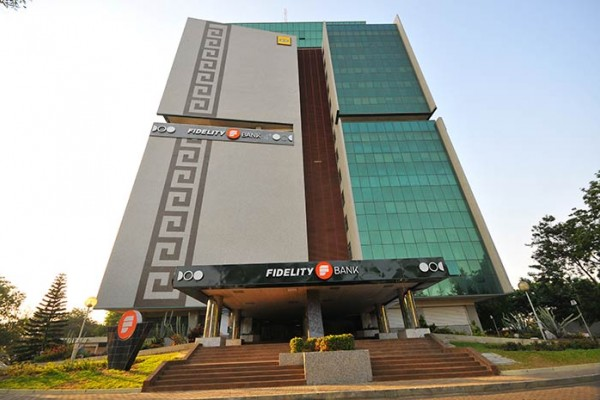
We recently sat down with the team at Fidelity Securities to unpack the reality of investing in 2026. The consensus was clear: the biggest risk you face isn’t the stock market dropping or interest rates changing. The biggest risk is assuming that because you were okay in 2025, you will be okay today without making adjustments.
When Life Changes but Your Plan Does Not
There is a common misconception that financial planning is only for the wealthy or the desperate. You might hear someone say, "I have a steady salary, so I’m fine." Another might say, "I don’t earn enough to plan."
But here is the reality: If you are trading your time and energy for money, you are working for money. The entire philosophy of investment is simply flipping that dynamic. It is time to give your money a job, so it starts working for you.
Life is not static. If you set a financial plan in 2020, think about how much has changed since then. Maybe your family has grown. Maybe you have changed jobs. And certainly, the economy has shifted. Remember 2022, when inflation hit 54%? If your plan assumed a 12% average inflation rate, it is no longer protecting you.
“I’m Earning, So I’m Fine”… Or Am I?
One of the most profound insights from our session was a simple biological metaphor: Income is the blood of the financial body.
Without flow, nothing lives. For those currently without a job, the priority isn't complex investment strategies; it’s generating that flow, building skills, and finding opportunities. But even for those earning a modest allowance or a starter salary, the principle remains: habits are formed in the lean years, not the abundance years.
The myth that "investing is for rich people" is perhaps the most damaging belief of all. You do not need thousands to start. With collective investment schemes, such as mutual funds or unit trusts, you can start with as little as the cost of a modest lunch. That goal could be land, education, business growth, retirement, or financial peace of mind. The amounts will differ. The timelines will differ. But the principle remains the same. Investment planning is not about how much you earn. It is about how intentional you are.
The Twin Diagnosis
A doctor wouldn’t prescribe the exact same medication to identical twins without first diagnosing them individually. Yet, in personal finance, we often try to take our neighbour’s "prescription."
We see a friend buying land or investing in high-risk stocks and think, "I should do that too." But we fail to ask the critical questions:
- When do they need that money back?
- What is their risk tolerance?
- Are they investing for growth or for income?
If you need your money for rent in six months, you have no business putting it into a volatile equity fund. If the market dips—which it does—you will be forced to sell at a loss just to keep a roof over your head. Personal finance is exactly that: personal.
The Antidote to Emotion: Automation
Money is emotional. And many of the decisions people make are driven by beliefs and feelings rather than facts. We are human. We get excited in January, and by March, the school fees are due, the car needs repairs, and our investment resolve fades.
The solution to this human behaviour is automation.
Standing instructions (direct debits) are your best friend. They take away the need to constantly decide whether to save or spend. By authorising your bank or fund manager to move a specific amount into your investment account the moment your salary hits, you pay your future self first. You adjust your spending to what is left, rather than investing what is left (which is usually nothing).
Living With Volatility Without Panic
Markets move. Prices rise and fall. That is normal.
The problem is not volatility. The problem is panic.
Volatility is not necessarily a sign of a bad investment; it is often just the nature of the beast. The way to survive it is consistency. By investing a fixed amount regularly (dollar-cost averaging), you buy more units when prices are low and fewer when prices are high. Over time, this smooths out the bumps.
However, you can only afford to ride out the storm if you have a safety boat. This is your Emergency Fund: 3 to 6 months of living expenses in a low-risk, accessible account (such as a Money Market Trust). This fund ensures that when life happens, you don’t have to raid your long-term investments to survive. Remember, preparation makes all the difference. Diversification spreads risk. Regular investing smooths out price swings. Separating emergency funds from long-term investments prevents forced decisions at the wrong time.
The Cost of Doing Nothing
One of the most dangerous financial decisions is not making one at all.
If you want to sabotage your 2026, keep waiting for the "perfect" time. Keep copying your friends blindly. Keep letting your money sit idle while inflation erodes it.
But if you want a different outcome, stop overcomplicating it. There is a belief that successful investing must be complex. That is, if it sounds simple, it cannot work. But simplicity is often a strength.
You don’t need to be Warren Buffett. A clear plan, followed consistently, usually beats a complicated strategy that cannot be sustained. Even experienced investors emphasise that discipline matters more than sophistication.
Learning can happen along the way. What matters is starting with something you understand and can maintain.
If you feel late, start anyway. If you feel unsure, start small.
There is an old saying: "The best time to plant a tree was 20 years ago. The next best time is now."
Don’t let another year pass wishing you had started. Start small, start simple, but please, start.
Latest Stories
-
I have supported highway authority financially to fix roads in my constituency – A Plus
17 minutes -
US, Iran fail to reach peace agreement after marathon talks in Pakistan
40 minutes -
ECG kicks off Phase Two of transformer upgrades at Lashibi; brief outages expected
1 hour -
Port crises loom as 11,000 drivers threaten four-day strike
2 hours -
A source of excellence across generations – Vice President Opoku-Agyemang lauds Mfantsipim
3 hours -
(Photos) Mfantsipim School launches historic 150th anniversary
3 hours -
Knights and Ladies of Marshall group backs Catholic Bishops’ stance on anti-LGBTQ+
4 hours -
Bright Simons writes: All the Filla in the Ibrahim Mahama/E&P – Gold Fields Saga
5 hours -
Monetise Idiocy In Ghana
5 hours -
The Ghanaian prophet and the mysterious death of his scottish wife Charmain Speirs
6 hours -
Nearly 400 sentenced in Nigeria for links to militant Islamists
6 hours -
Ghana’s recovery supported by gold strength despite global oil price pressures – Standard Bank Research
6 hours -
Methodist Church hails Mfantsipim@150; calls for “fresh consecration” to excellence
6 hours -
‘Excellence is our inheritance’ – Nana Sam Brew-Butler hails Mfantsipim’s 150-year reign in leadership
6 hours -
Kwaku Azar writes: A-G vs OSP
7 hours