

Audio By Carbonatix
The Association of Ghana Industries is lamenting about the recent hike in the Bank of Ghana’s policy rate to 19%, saying, its members have been gravely affected by the increment which has increased the cost of loans.
According to its Chief Executive, Seth Twum Akwaboah, the policy rate hike has pushed lending rates significantly up and has escalated production cost per unit of most manufacturing firms.
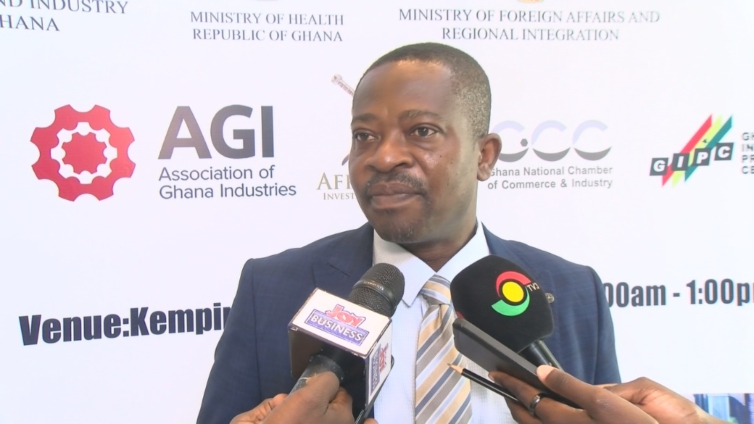
Speaking to a cross-section of the media at the Arab-African Economy Summit, Mr. Akwaboah admitted that though the hike in the Central Bank’s key lending rate is to control inflation the move is having a great toll on industry, particular local businesses.
He further explained that the policy rate hike would derail the activities of the private sector due to high interest rates and high cost of credit.
“We understand the policy rate is to slow down inflation, but the bottom line is that when such measures are taken the implication is clear as interest rate goes up highly. And it gets to a point where banks are even interested in investing in government bonds and treasury bills and all that. It means it is crowding out private sector access to financing”, he said.
Seth Twum Akwaboah also bemoaned that if the hike in the policy rate prolongs, there is the tendency it might take a lot of business out of operations which will largely affect the economy.
“If we don’t have a choice, but to have a policy of this nature and its goes on for too long it will have a great impact on businesses and the economy“, he lamented.
On the way forward as an association, he indicated that his outfit is engaging the Central Bank to influence the commercial banks to provide credit to industry at relatively lower rate.
“We have to look at the immediate and the long term impact. We have been engaging the Bank of Ghana and will continue to do that. If we continue to engage, we will amicably solve this”, he added.
The Monetary Policy Committee of the Bank of Ghana adjusted its key lending rate by 200 basis points, from 17% to 19% in May 2022.
The move was to help control the rising inflation which has affected disposable incomes of most workers.
Latest Stories
-
Why diaspora investors are using Accra real estate to hedge against global uncertainty in 2026
4 minutes -
GWL urges public support to stem water thefts
5 minutes -
Fire guts 2-storey apartment at Ashaley Botwe
7 minutes -
Come down and account, it’s a constitutional requirement – Martin Kpebu to Ofori-Atta
15 minutes -
The power of the private courtyard: How regalia is redefining resort-style living in Accra
27 minutes -
Beyond roads and bridges: Understanding the true role of your MP
28 minutes -
UK says Russia ran submarine operation over cables and pipelines
29 minutes -
NPRA recovers GH¢27m in 2025, 30% of defaulted pension contributions
32 minutes -
Power fluctuations slash Ashanti region water production by 959,000 cubic metres in March
37 minutes -
Beyond the festivities: Gomoa must turn visibility into development
46 minutes -
DVLA clarifies it is not responsible for Toyota Voxy commercial operations
47 minutes -
Calls for Ofori-Atta’s return a non-issue if trial proceeds in absentia – Pius Hadzide
50 minutes -
France names Ghana first beneficiary of newly established National Health Compact
56 minutes -
US Immigration, extradition outcomes likely to influence each other in Ofori-Atta case – Amanda Clinton
58 minutes -
29-year-old woman rescued after hiding in drain to escape attackers
1 hour