

Audio By Carbonatix
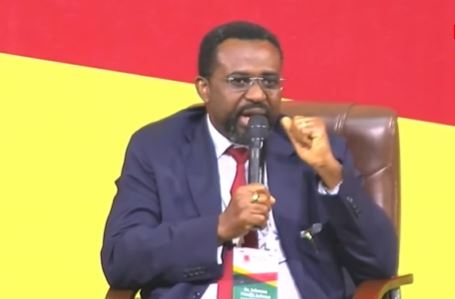
The Institute of Public Policy and Accountability (IPPA) believes the Bank of Ghana rushed in increasing its policy rate by 100 basis points to 28%.
According to the policy think tank, though inflation remains high, above 20%, it has declined for two consecutive months, and therefore, the Monetary Policy Committee of the Bank of Ghana could have observed the inflationary trend for some time before adjusting its policy rate upwards.
“The Institute of Public Policy and Accountability though recognises the above challenges the hike in the policy rate is coming at a wrong time. Inflation is still above 20% but has witnessed two consecutive declines (marginally). Therefore, the Committee could have observed the situation for some time before adjusting the policy rate up”.
“An increase in the policy rate is a disincentive to businesses and household consumers as they grapple with the high cost of operations and living. We therefore want the Bank of Ghana to take a second look at its inflation targeting framework. We think that the Bank cannot continue to depend solely on that policy to control money supply. Many questions have been asked regarding the efficacy of the inflation targeting framework purely because the current drivers of inflation are supply-side and not demand-side”, it said in a statement.
There was a split decision by the 5-member MPC over the policy rate, with three proposing an increase while the remaining two dissented.
IPPA said the high policy rate is a disincentive to businesses as many grapple with high borrowing and operational costs.
It also questioned the government's appetite for borrowing and poor fiscal management, urging the Bank of Ghana not to lend to the government and criticise the government if necessary.
“A disciplined government is important in keeping the macroeconomic fundamentals (lower interest rates, lower inflation, reduced borrowing, stable exchange rate) stronger and opening the economy for growth. Inconsistency in fiscal prudence has been our bane over the years. We, therefore, urged the Bank of Ghana not to shy away from criticising the government or pulling the plug anytime it foresees the government exhibiting poor fiscal management”.
“It [Bank of Ghana] should not succumb to executive pressure by lending to the government or printing monies. We also want the government to be disciplined by not borrowing excessively or spending beyond its means. Again, borrowed funds should be invested in productive sectors of the economy”, it added.
Latest Stories
-
Standard Chartered Bank delivers strong returns and sustainable shareholder value
4 minutes -
Akufo-Addo’s role in the artificial cedi stability is indisputable — Facts do not bend to political convenience
6 minutes -
Breaking Bad actor RJ Mitte dies aged 34
13 minutes -
Wontumi pleads not guilty in GH¢30m Exim Bank loan case
18 minutes -
Beyond the Flyer: Awareness without screening is not enough
24 minutes -
Bekwai MP donates GH¢100,000 to hospital for specialist equipment
32 minutes -
Van Vicker sues Lil Win for defamation, demands GH¢10m
38 minutes -
FIFA/ FIBA agency Pep Sports moves to admit Ghana’s 7-Foot Basketball talent to its Ultra-Modern Sports campus after MyJoyOnline report
40 minutes -
GAUA strike disrupts academic plans at University of Ghana as students, parents express frustration
44 minutes -
Dad’s Army/African Polistas crowned champions of 2026 Accra Polo Club Trustees’ Cup
51 minutes -
Mahama approves Integrated Basic Education Model, with funding expected in 2027 under GETFund formula
54 minutes -
Money-driven elections fuelling corruption – Haruna Iddrisu
58 minutes -
Excessive borrowing ‘cracked’ Ghana’s economy under Akufo-Addo – Haruna Iddrisu
1 hour -
NPP’s silence on economic indicators suggests Mahama is doing better – Haruna Iddrisu
1 hour -
GoldBod must be more accountable to Ghanaians – Haruna Iddrisu
2 hours